
Introduction
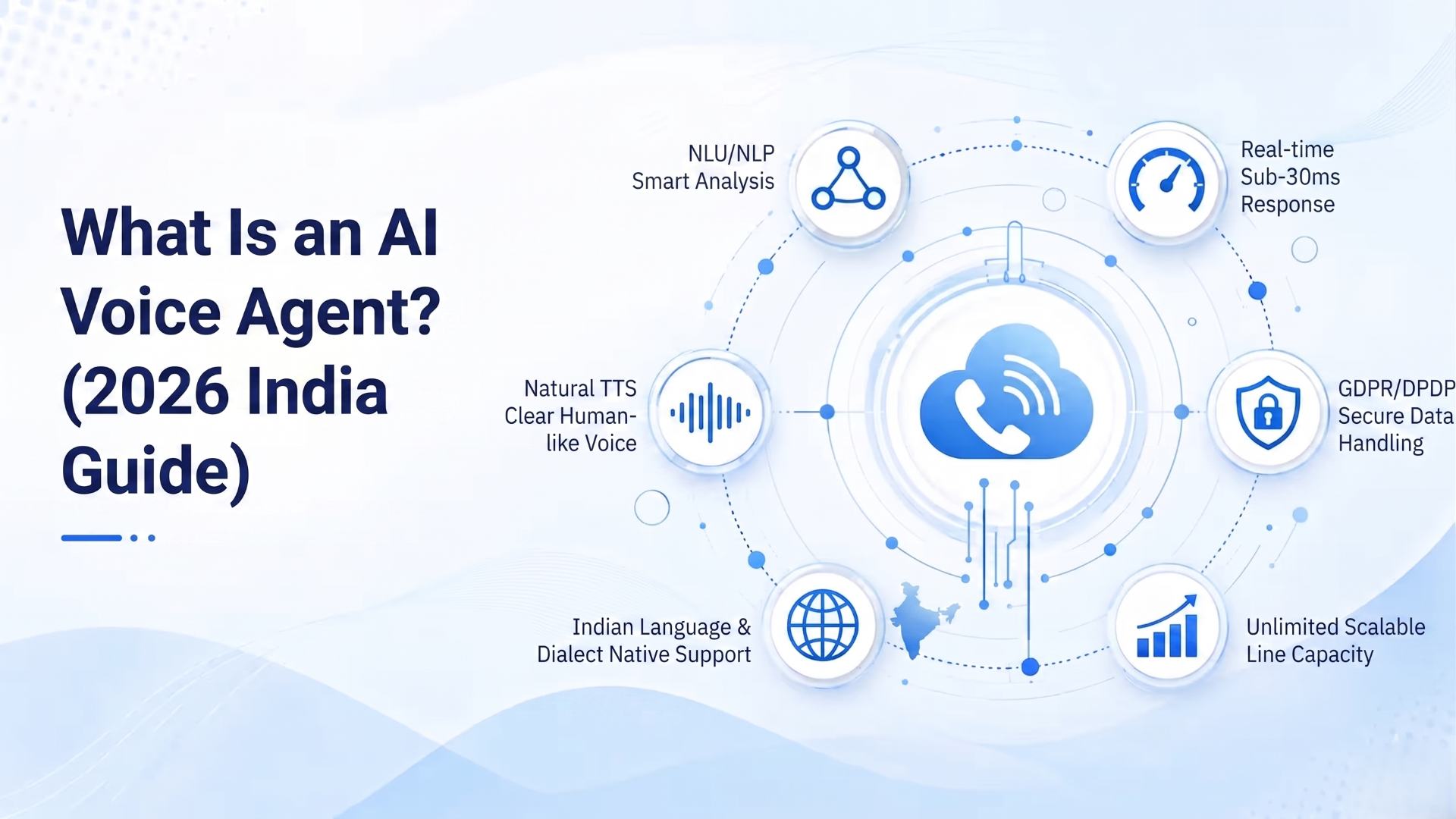
In a couple of years, AI voice agents have gone from a curiosity to something Indian businesses quietly rely on every day, often without the caller noticing. This guide walks through what they are, how they work, and where they actually earn their keep, no jargon required.
What an AI voice agent actually is
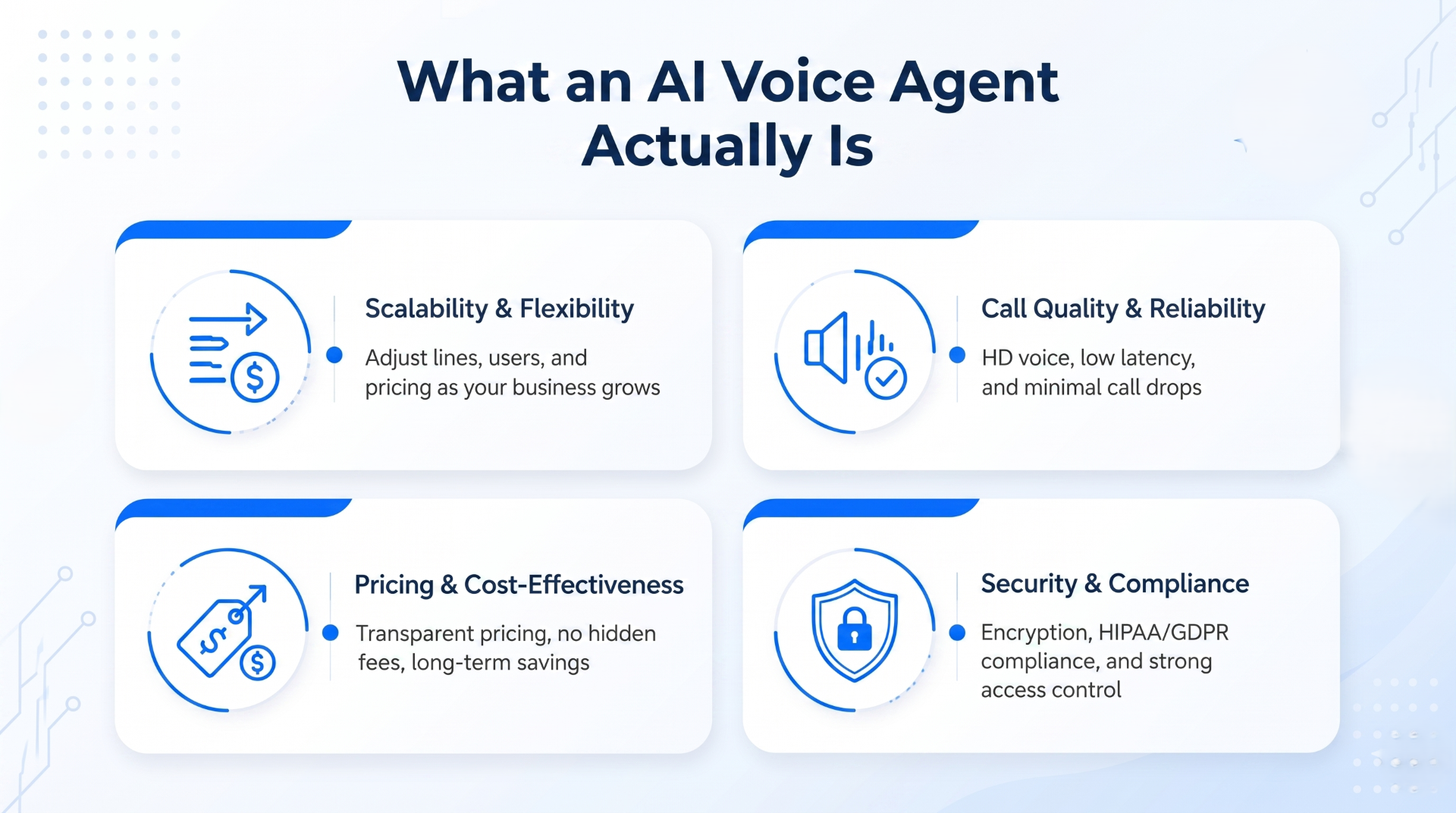
An AI voice agent is software that can hold a real phone conversation. It picks up an incoming call, listens to what the person says, works out what they mean, and replies in a natural-sounding voice, all on its own, with no human on the line. That, in one sentence, is the AI voice agent meaning most people are searching for: a voice bot that talks and listens like a person rather than reading from a fixed script.
Picture the gap between the old "press 1 for sales, press 2 for support" menu and someone who just answers with "Hi, how can I help?" and then actually helps. The menu is a recording. The agent is a conversation. It's also a different thing from voice search, where you ask Google a question out loud, and from the chatbot on a website. We're talking about the phone here.
It helps to be precise about the words, because they get used interchangeably. A voice bot usually means any automated voice on a call, including rigid menu systems. An AI calling agent is the outbound version that dials out to make calls. And conversational voice AI is the capability that lets the agent understand free-form, mixed-language speech instead of waiting for a single keyword. A modern AI voice agent is all three at once: it answers inbound calls, places outbound ones, and holds a genuine back-and-forth either way.
How it works, in four steps
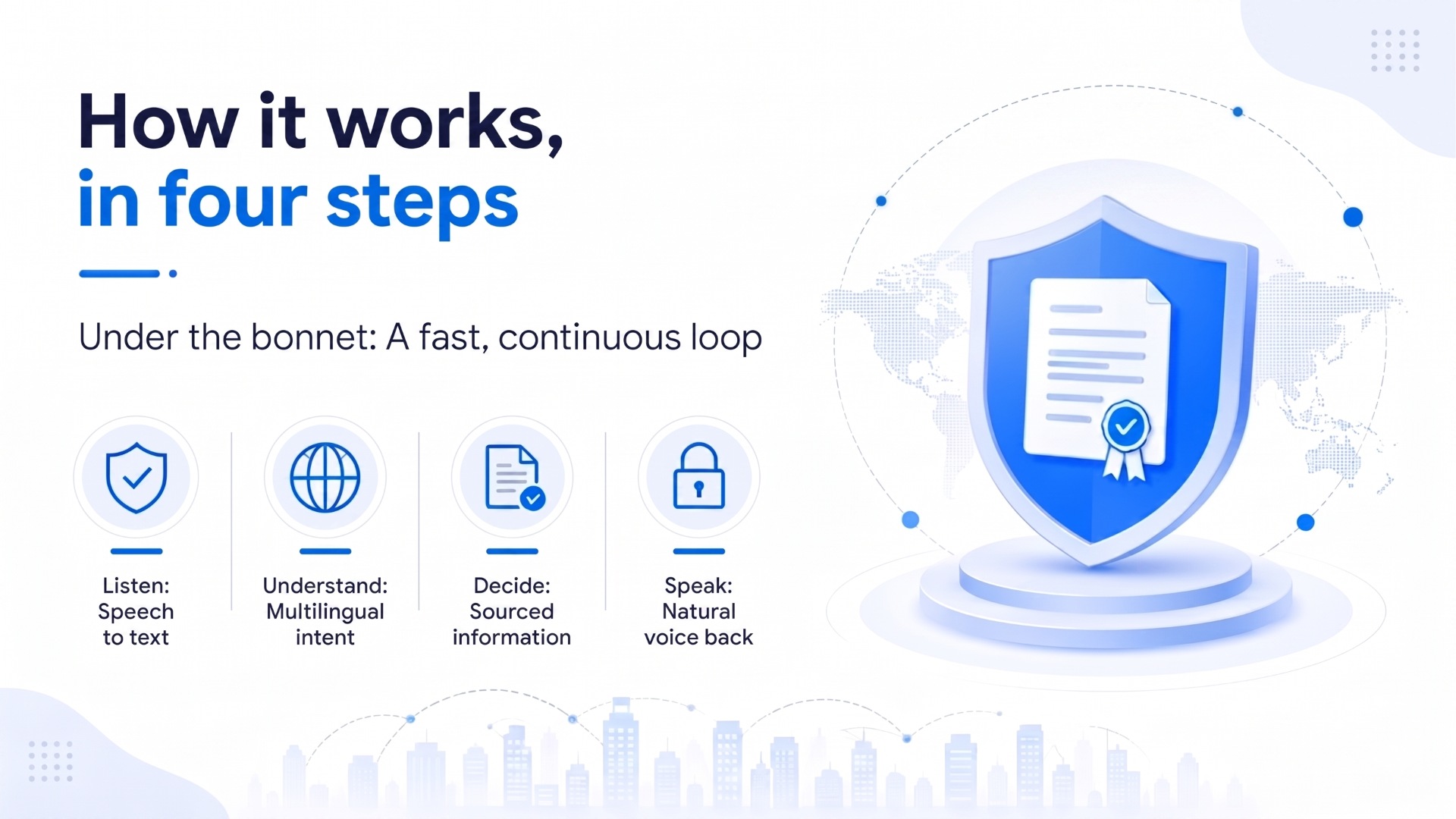
Under the bonnet, most voice agents run the same four steps in a fraction of a second, on a loop, for the whole call. First they listen, turning your speech into text as you talk. Then they understand, figuring out what you actually want even when you phrase it loosely or slip between Hindi and English. Next they decide what to do, pulling the answer from the business's own information. And then they speak back in a natural voice, and round it goes again.
Speed is the whole game. Leave a long, awkward pause after the caller stops talking and the call feels robotic, and people hang up. The newer systems run on a single audio-native model instead of bolting separate tools together, which is what kills most of that lag. The "decide" step is also where the agent connects to your business: it can look up an order in your CRM, check appointment availability in a calendar, or read from a knowledge base of your own FAQs, so the answer it speaks is grounded in your real data rather than a generic guess.
Understanding how AI voice agents work in these four steps explains why two agents that look identical on a feature list can sound completely different on a live call. If you want to picture the loop in order, it runs like this:
- Listen — speech-to-text converts the caller's words into text in real time, even with background noise or an accent.
- Understand — the model interprets intent, not just keywords, so "I need to move my appointment" and "can we do another day?" land the same way.
- Decide — it chooses a response and pulls any needed facts from your systems.
- Speak — text-to-speech turns the reply into a natural voice, then the loop repeats until the call ends.
What it can do on a call
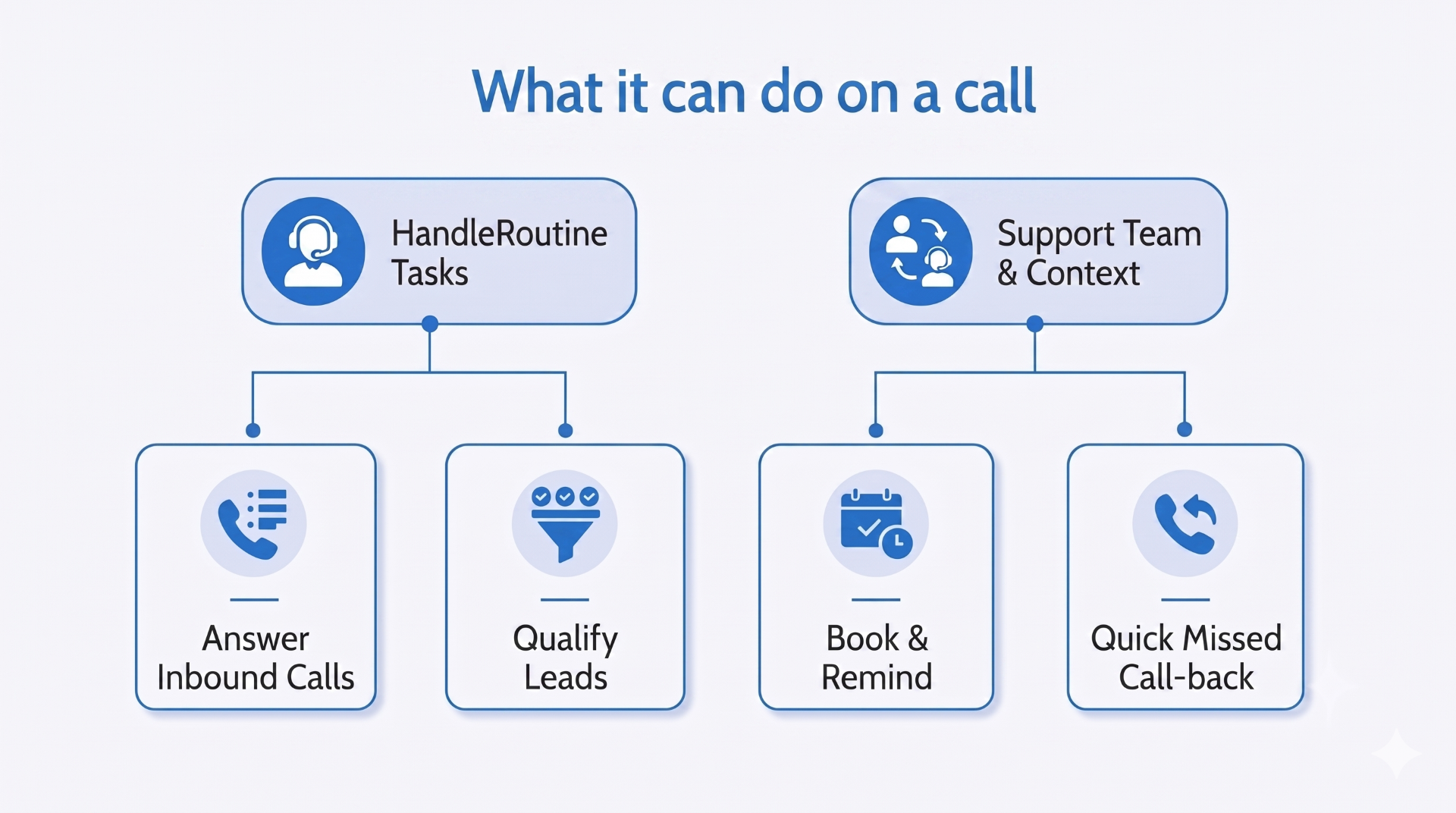
Quite a lot, as long as the job is clearly defined. The work Indian businesses hand over most often: answering inbound calls so nobody ever hits a busy tone, qualifying leads before a salesperson steps in, booking and reminding (appointments, site visits, EMI dates) with a WhatsApp confirmation to follow, and calling back missed numbers within minutes instead of the next day.
A concrete example makes it click. A clinic's agent answers an after-hours call, recognises the patient is asking to reschedule, offers two open slots, books the new one, and fires off a WhatsApp confirmation, all in under a minute and without a receptionist on duty. A lender's outbound AI calling agent rings customers a few days before an EMI is due, confirms they remember the date, and flags anyone who wants to talk to a human to a real agent the next morning. The pattern is the same: take a repetitive, high-volume task and let the agent run it consistently, at any hour, across hundreds of calls at once.
Where it struggles is the open-ended, emotional, or genuinely odd conversation. An upset customer with a one-off mess still belongs with a human. So the sensible setup is a hybrid: the agent takes the routine 70-80%, and passes the rest to your team with the context already gathered, so nobody starts from scratch. If you want to see how this plays out by sector, our industry use cases show the jobs agents handle in healthcare, real estate, lending and more.
Why the India angle matters
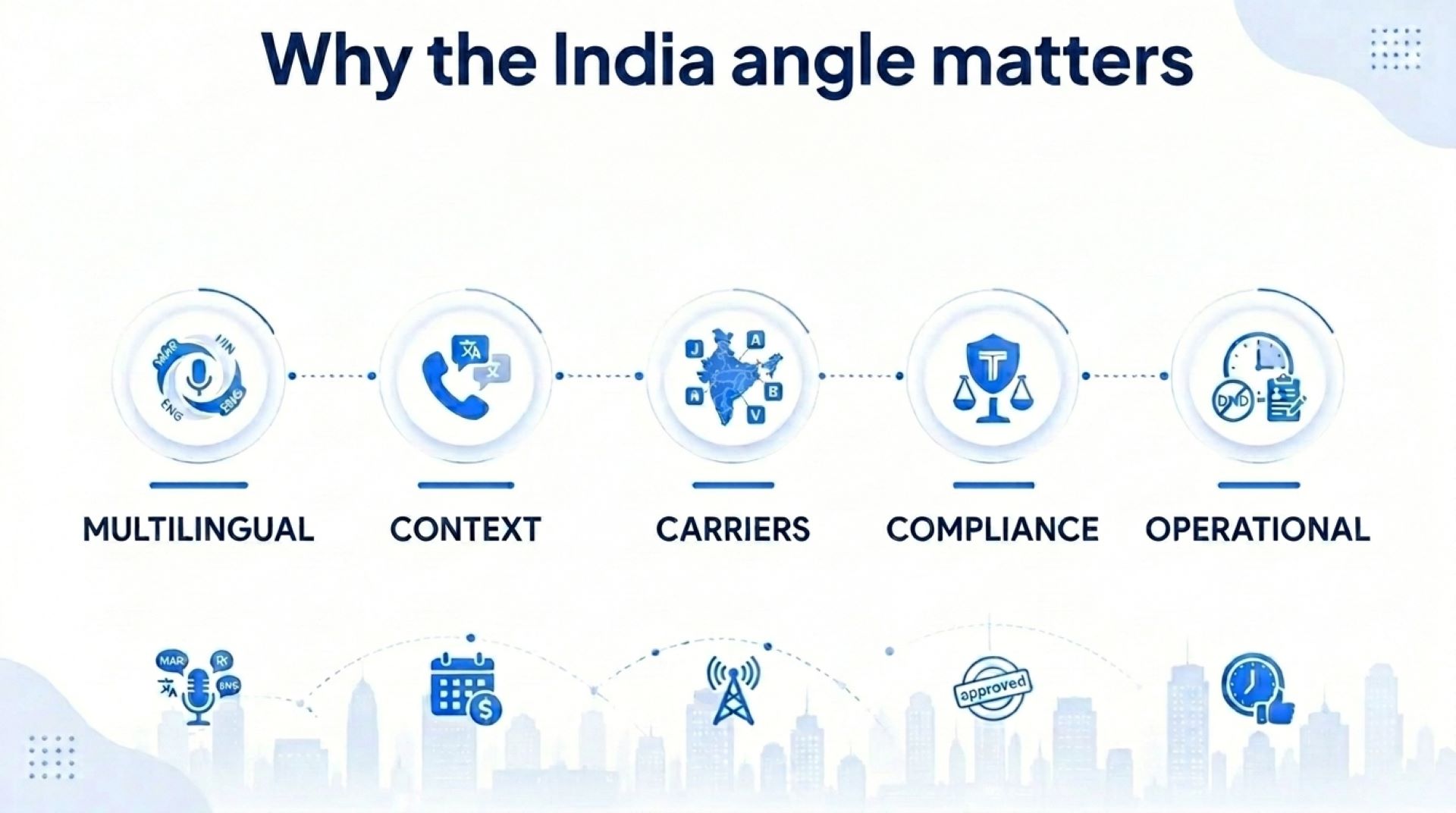
A voice agent built for the US won't just slot in here. Real Indian calls rarely stay in one language. A customer in Pune might open in Marathi, shift to Hindi, then reach for English when it's time for numbers and dates. An agent that can't keep up with Hinglish loses the call in the first ten seconds. The calls also have to run cleanly over Jio, Airtel, BSNL and Vi on local numbers, and they sit under India's telecom rules. TRAI treats AI voices as "artificial" voices, which means commercial calls need DND scrubbing, a 9am-9pm window for promotional calls, consent, and telemarketer registration.
This is why "an AI calling agent for India" is a genuinely different product, not a translated version of a Western one. The accents, the way people say numbers, the habit of code-switching mid-sentence, and the carrier behaviour are all local. Compliance is part of the product too, not an afterthought: the Digital Personal Data Protection (DPDP) Act governs how you store and use the customer data the agent collects, so consent and call recording handling need to be set up properly from day one. The upside is that an agent that is built for these conditions handles them automatically, leaving you to focus on what the agent should actually say.
What it costs, and the value
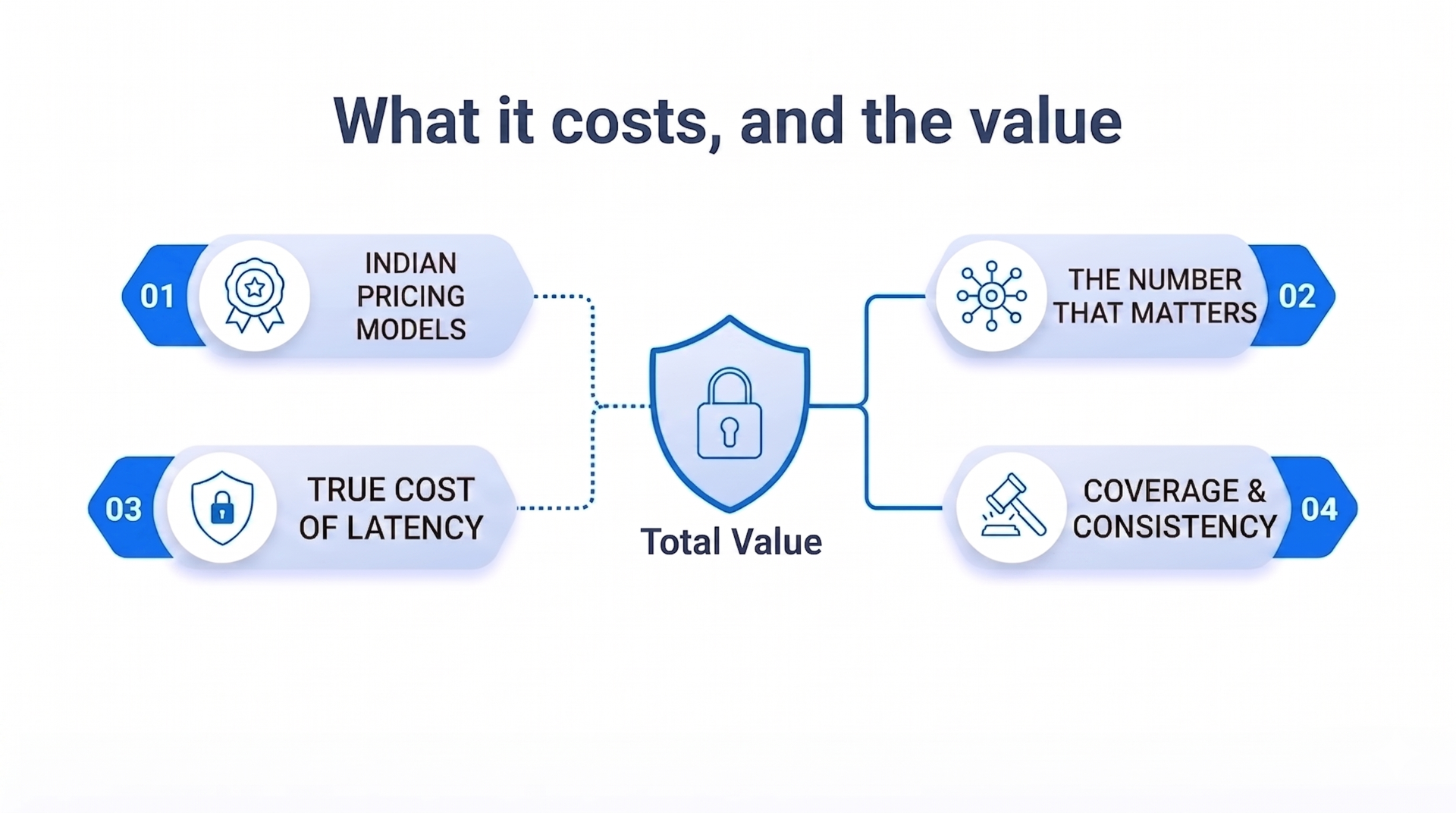
Pricing in India usually pairs a monthly plan with a per-minute rate, landing somewhere around ₹3-15 per connected minute depending on quality and features. The number that actually matters, though, is cost per resolved outcome: a qualified lead, a booked appointment, a recovered payment. A cheap agent that replies a beat too slowly, missing the sub-300ms mark where speech still feels human, fumbles the conversation and turns out to be the expensive one. We break the maths down in our guide to AI calling costs in India. And the honest reason to put one in isn't "fire your team", it's coverage and consistency: every call answered, every lead followed up the same way, without hiring more people each time you grow.
How to choose the right AI voice agent
Once you know what an AI voice agent is, the practical question becomes which one to trust on your phone lines. A few criteria separate a tool you'll keep from one you'll quietly switch off after a month. Test these on your own scripts before committing, because demos are always smooth and real customer calls rarely are.
- Latency — does it reply fast enough to feel human, ideally under the 300-millisecond mark, without long dead-air pauses?
- Language depth — can it actually hold a Hinglish or regional-language call, not just read a Hindi script, and switch languages mid-call?
- Integrations — will it connect to your CRM, calendar and WhatsApp so bookings and follow-ups happen automatically?
- Compliance built in — does it handle DND, consent and the 9am-9pm window for you, in line with TRAI rules?
- Ease of setup — can a non-technical person build, test and launch an agent without writing code?
If you're comparing specific tools, our roundup of the best AI voice agents in India walks through how the main options stack up on exactly these points, and our pricing page shows what a realistic plan looks like for a small or mid-sized team.
Conclusion
So an AI voice agent is just software that holds real phone conversations, and in India whether it works for you comes down to three things: how well it handles the languages your customers actually speak, how cleanly it runs on the local carriers, and whether compliance is built in from the start.
You won't need engineers for any of this. A modern platform lets you describe the agent in plain English, point it at your documents and tools, test it in a sandbox, and go live on an Indian number the same day. Pick one narrow job to begin with, returning missed calls is a good one, prove it pays off, then widen the scope. If you'd rather see it than read about it, you can build your first agent or hear a live demo first.
Ready to put a voice agent on your phones?
Native-audio AI agents in 15+ Indian languages, on Jio/Airtel/BSNL/Vi, live in hours.
Build your first agent