
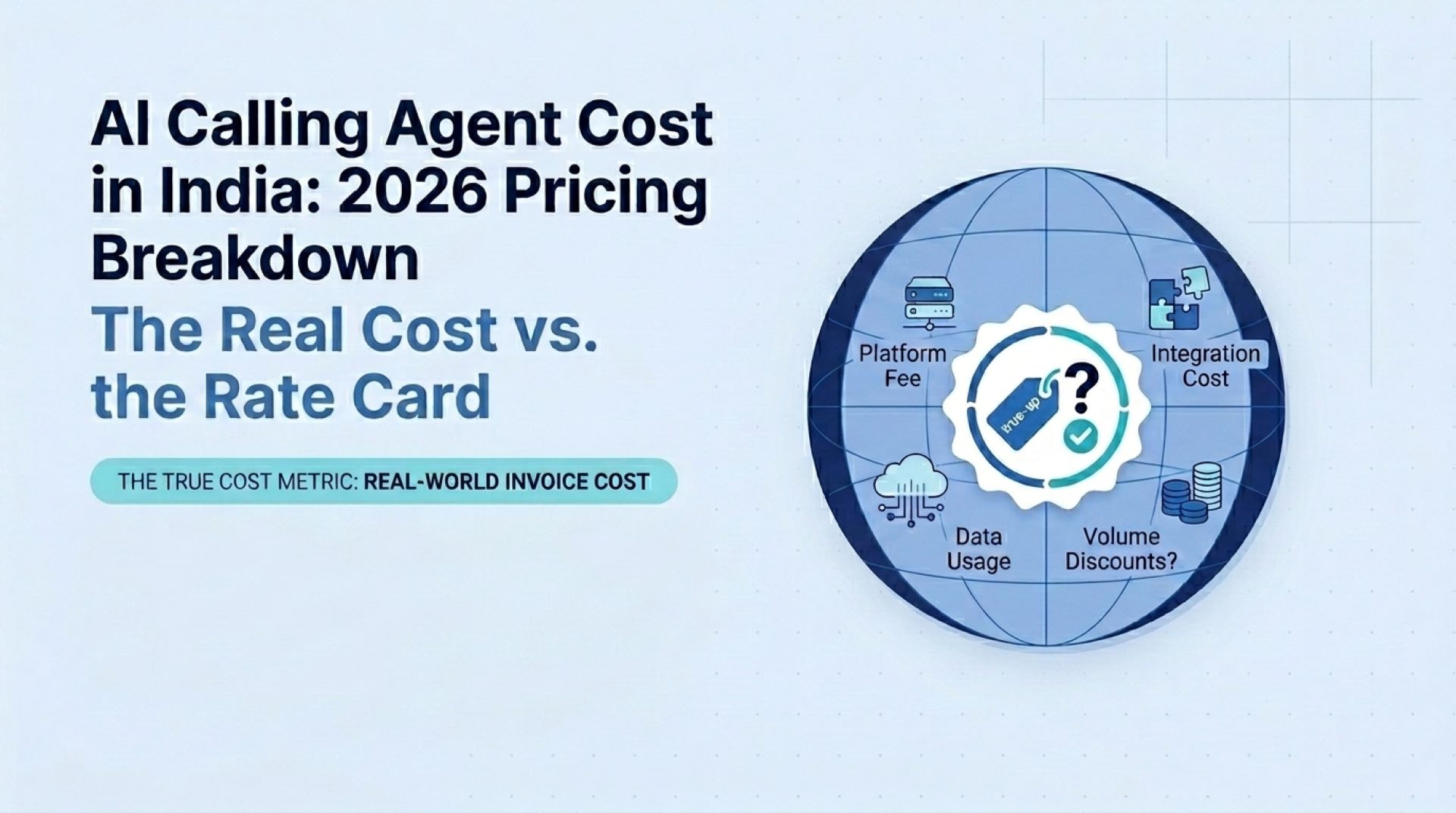
Introduction
Pricing is where most buyers get confused, and a fair few get overcharged. Before you line up vendors against each other, you need to know how the billing is structured and which number actually predicts your monthly bill. The two are rarely the same.
The AI calling agent cost in India has fallen sharply over the past two years, which is exactly why so many small and mid-sized businesses are now putting voice agents on their phones for lead qualification, appointment reminders, payment follow-ups and first-line support. But cheaper headline rates have also made the market noisier. A clinic in Pune, a lending NPA team in Mumbai and a D2C brand in Bengaluru all have very different call patterns, and the same per-minute rate can produce wildly different invoices for each of them. The goal of this guide is to give you a clear mental model of AI voice agent pricing so you can read any rate card in under a minute and know what your real spend will be.
The three pricing models you'll see
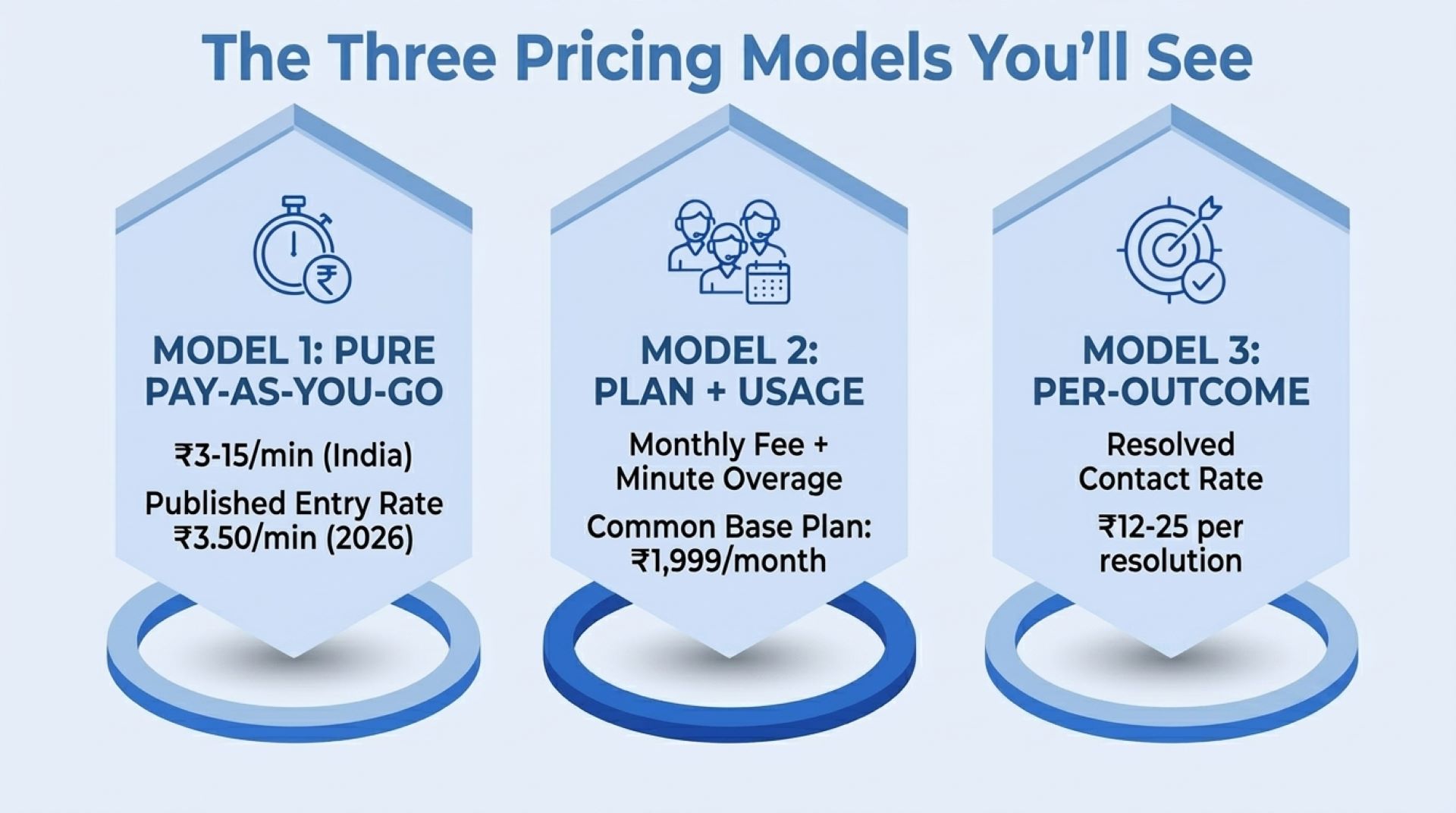
Ask three vendors what they charge and you'll hear anything from ₹3 a minute to ₹15 a minute, with nobody explaining the gap. Here's the shape of it. Most agents bill you as a monthly plan plus a per-minute rate, and that per-minute rate is the least trustworthy number in the whole quote. You'll run into three models. Pure pay-as-you-go, often ₹3-15/min in India. Plan plus usage, where a monthly fee includes a block of minutes and you pay overage on top. And per-outcome, where you pay for a result, typically ₹12-25 per resolved contact. Published entry rates in 2026 sit around ₹3.50/min, with base plans commonly near ₹1,999/month.
Each model rewards a different kind of buyer. Pure pay-as-you-go suits seasonal or low-volume use, where you might run a festive campaign for two weeks and then go quiet, and you do not want a recurring commitment. Plan-plus-usage is the workhorse for Indian businesses with steady daily call volumes, because the bundled minutes lower your effective per-minute rate and the overage rate keeps a busy month predictable. Per-outcome pricing aligns the vendor's incentive with yours, which is attractive for performance marketing and collections, but it only works when you and the vendor agree precisely on what counts as a resolved outcome. Before you compare any two quotes, confirm you are even comparing the same model, because a ₹4/min plan and a ₹15-per-outcome plan are not remotely the same thing.
What the per-minute number leaves out
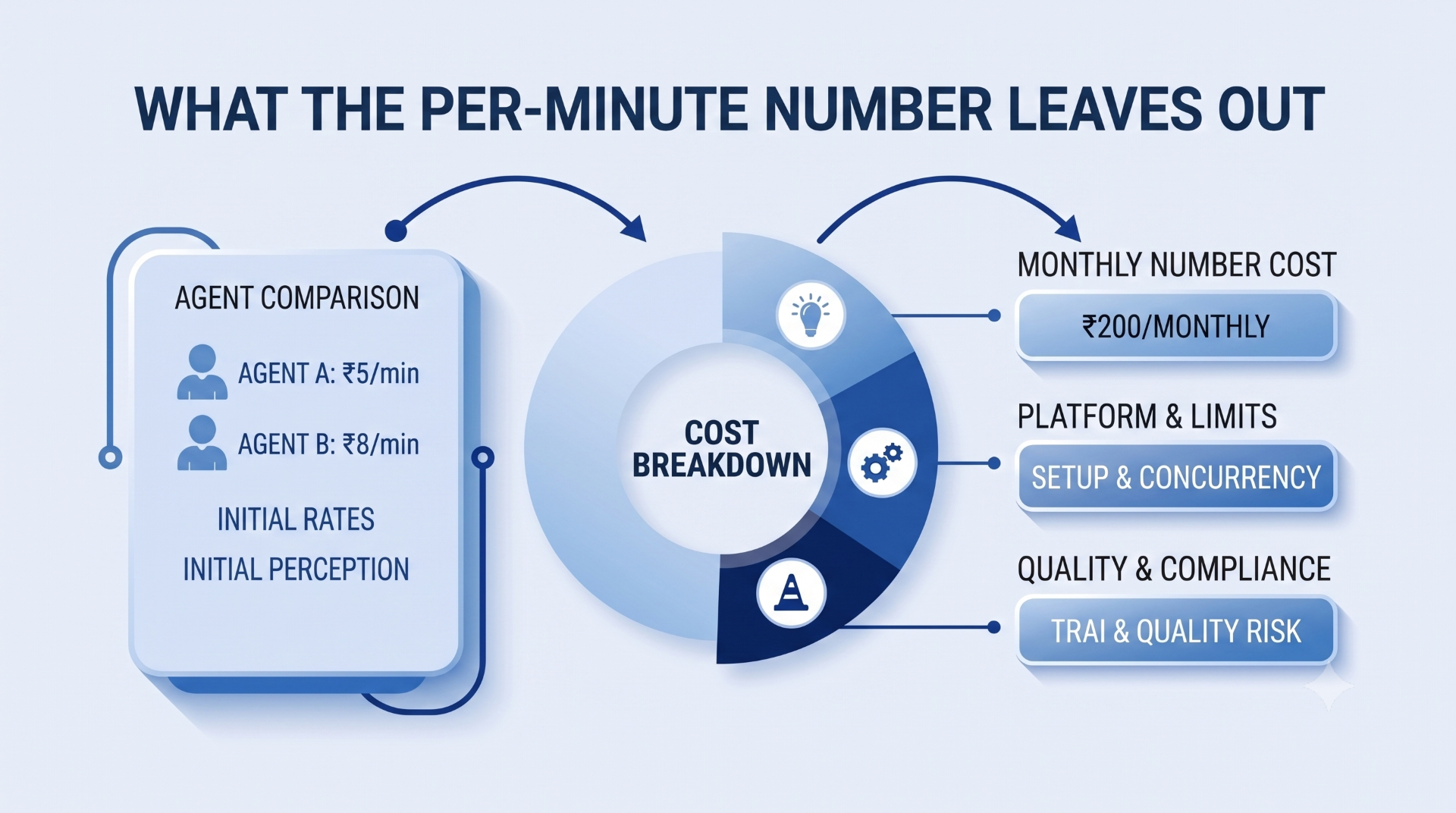
This is where buyers get burned. The advertised rate almost never covers the full picture. Indian phone numbers usually cost around ₹200/month each and are billed separately. Then come one-time setup fees, premium voices parked on a higher tier, concurrency caps that quietly limit a cheap plan to 2-3 simultaneous calls, integration and support charges, and minute expiry on prepaid blocks. And a suspiciously low rate is its own warning. Pricing that looks too good often means weaker conversation quality, thin compliance support, or shaky reliability, and all three carry real risk under India's TRAI and DLT rules.
It helps to keep a simple checklist of the line items that hide behind a headline per-minute price. When you ask a vendor for a quote, make sure each of these is spelled out in writing:
- Telephony and DID numbers — Indian phone numbers are usually billed per number per month, separate from minutes.
- One-time setup or onboarding fees — sometimes waived on annual plans, sometimes not mentioned until the contract.
- Premium voices and languages — natural-sounding Hindi, Tamil or Marathi voices may sit on a higher tier than the default.
- Concurrency — the number of simultaneous calls; a cheap plan capped at 2-3 lines will choke during a campaign.
- Minute expiry and rollover — prepaid blocks that expire at month-end quietly inflate your effective cost.
- Integrations and support — CRM connectors, webhooks and priority support are common paid add-ons.
Two vendors quoting the same ₹5/min can land 40% apart on the final invoice once these are added up. This is the single biggest reason AI voice agent pricing in India looks so inconsistent, and why the all-in monthly figure is the only quote worth comparing.
The metric that actually matters
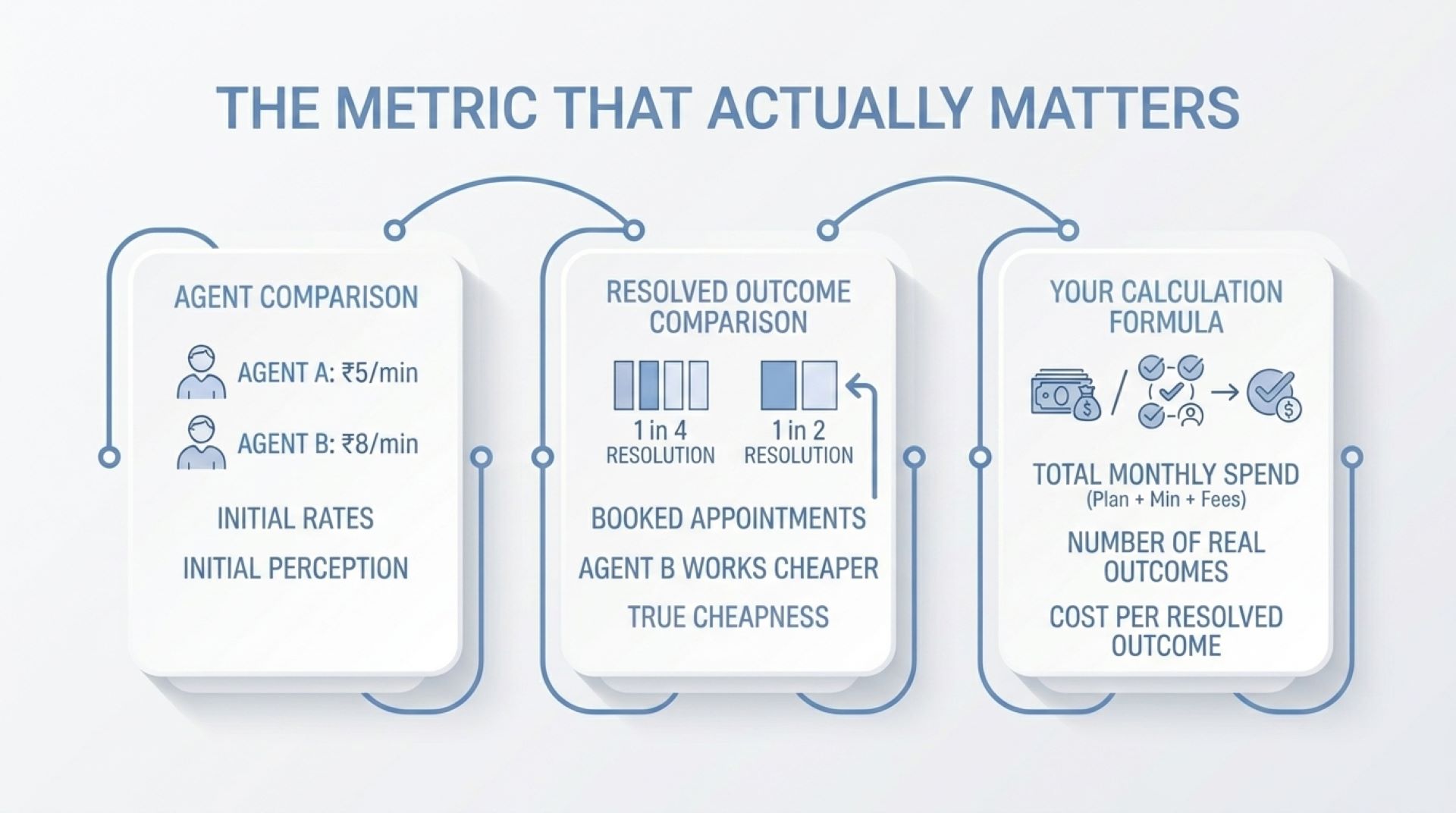
Take two agents. Agent A costs ₹5/min and resolves one call in four. Agent B costs ₹8/min and resolves one in two. If what you want is booked appointments, Agent B works out far cheaper per appointment, higher minute rate and all. This is why people who have bought this before compare cost per resolved outcome rather than the rate card. Working out yours is straightforward: take your total monthly spend (plan, minutes, numbers, fees) and divide it by the number of real outcomes. That one figure cuts through the sales talk.
The reason cost per outcome beats the per-minute rate is that the rate only measures input, not value. Two things move the outcome number: how many calls actually connect, and how many of those the agent carries to a useful end. In India both depend heavily on the call experience. An agent that handles code-mixed Hinglish naturally, recovers gracefully when a caller interrupts, and pronounces names and amounts correctly will resolve far more conversations than a robotic one, even at a higher per-minute rate. So when you benchmark vendors, log your own cost per qualified lead, cost per booked appointment, or cost per recovered payment, and treat the rate card as a footnote. If you are weighing this against your existing team, our breakdown of AI voice agent vs human telecaller costs walks through the same per-outcome maths side by side.
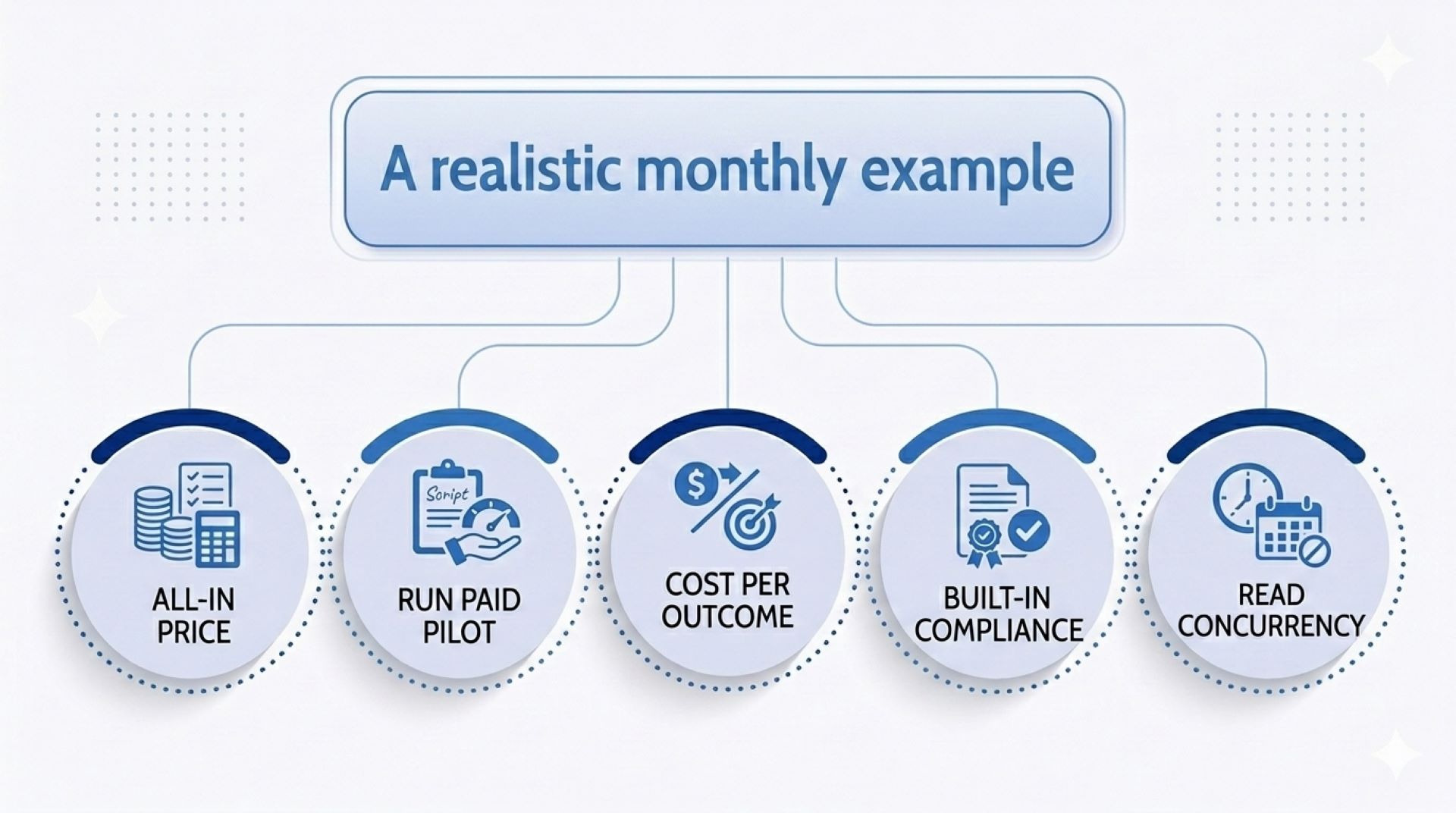
A realistic monthly example
Picture a mid-sized real-estate firm qualifying inbound leads. A ₹5,999 plan covers roughly 900 minutes. Add 1,100 extra minutes at about ₹7 and three Indian DID numbers at ₹200, and you're at around ₹14,300 a month for ~2,000 minutes. If that volume produces 150 qualified leads, your cost per qualified lead lands near ₹95, a number you can now hold up directly against a human telecalling team. We run exactly that comparison in our AI vs human telecaller analysis.
Notice how the per-minute rate becomes almost irrelevant once you reach that final ₹95 figure. If the same firm switched to an agent at ₹6/min that connected and qualified better, its total spend might rise slightly while its cost per qualified lead actually fell, because more of those 2,000 minutes turned into real leads. That is the trap of optimising the rate in isolation. The smarter exercise is to model two or three realistic volume scenarios for your own business, plug in the all-in monthly cost, and see which vendor gives the lowest cost per outcome at the volume you actually expect to run. Industry-specific patterns matter too here: a healthcare clinic booking appointments and a fintech team chasing collections will see very different connect and resolution rates, which is why we publish dedicated playbooks under industries.
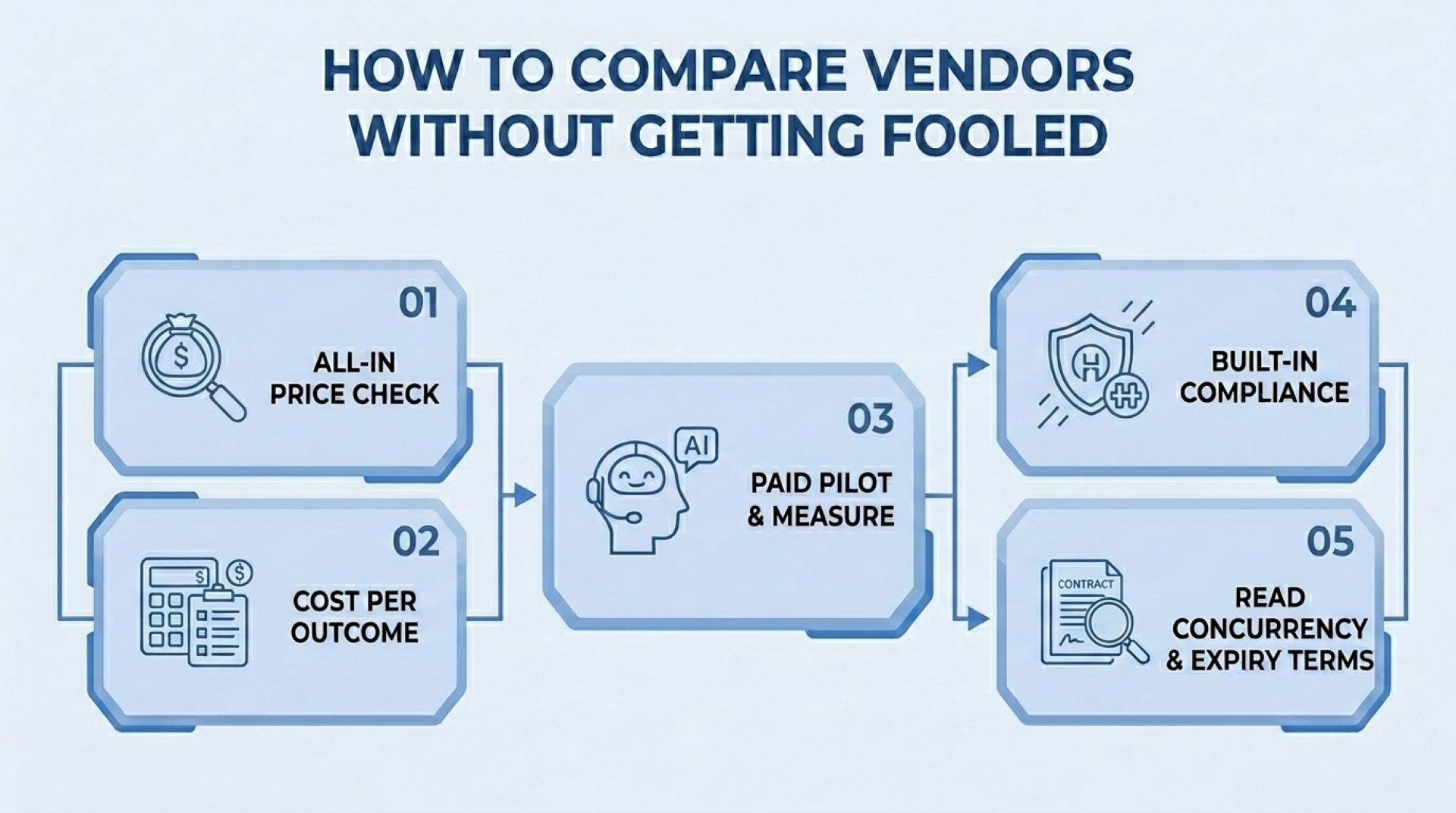
How to compare vendors without getting fooled
Five checks will keep you out of trouble. First, ask for the all-in price: plan, overage, numbers, setup, premium voices, concurrency, the lot. Second, run a paid pilot on your own scripts and measure the resolution rate yourself rather than trusting a deck. Third, divide total cost by real outcomes so you're comparing cost per outcome, not headline rates. Fourth, confirm compliance is built in and not a paid add-on. And fifth, read the concurrency and minute-expiry terms before you sign anything.
How compliance quietly shapes the cost
In India, calling at scale is not just a technical exercise; it is a regulated one. TRAI's rules and the DLT (Distributed Ledger Technology) framework govern how commercial calls and messages are sent, and a serious AI calling setup has to respect consent, calling-time windows, opt-outs and proper sender registration. Vendors handle this in one of two ways. Some bake compliance into every plan, so the guardrails are simply there. Others treat it as a premium add-on, which makes the headline rate look cheaper while pushing risk and cost onto you later. When you tally the true AI calling agent cost in India, count compliance as part of the price, not an optional extra. A penalty or a blocked sender ID will dwarf any per-minute saving you thought you were making.
Quick tips to keep your AI calling costs predictable
Once you have chosen a vendor, a few operational habits keep the monthly bill from drifting. These are the levers Indian businesses pull most often to control AI voice agent spend without hurting results:
- Match plan minutes to real volume. Review usage monthly and right-size the plan so you are not paying overage every cycle or hoarding minutes that expire.
- Tighten the script. A focused conversation that gets to the point shortens average call length, and shorter connected minutes directly lower per-minute cost.
- Clean your contact lists. Calling dead numbers and wrong segments burns minutes for zero outcomes, which inflates cost per result more than any rate change.
- Pick the right concurrency. Size simultaneous lines to your campaign peaks, not a flat guess, so you neither queue calls nor pay for idle capacity.
- Track cost per outcome weekly. Catching a drop in resolution rate early is cheaper than discovering it on the invoice.
Conclusion
It comes down to three habits: ignore the headline per-minute rate, insist on the all-in price, and judge vendors on cost per resolved outcome.
Never buy on the per-minute rate alone. Get the all-in number, run a pilot on your own calls, and compare cost per resolved outcome. At 9278.io the pricing is wallet-based, with the effective rate and included minutes shown up front, Indian numbers from ₹200/month, a GST invoice in the box, and compliance standard on every plan. Have a look at the full pricing page, or start with a small top-up and run the pilot yourself.
Ready to put a voice agent on your phones?
Native-audio AI agents in 15+ Indian languages, on Jio/Airtel/BSNL/Vi, live in hours.
Build your first agent