
Introduction
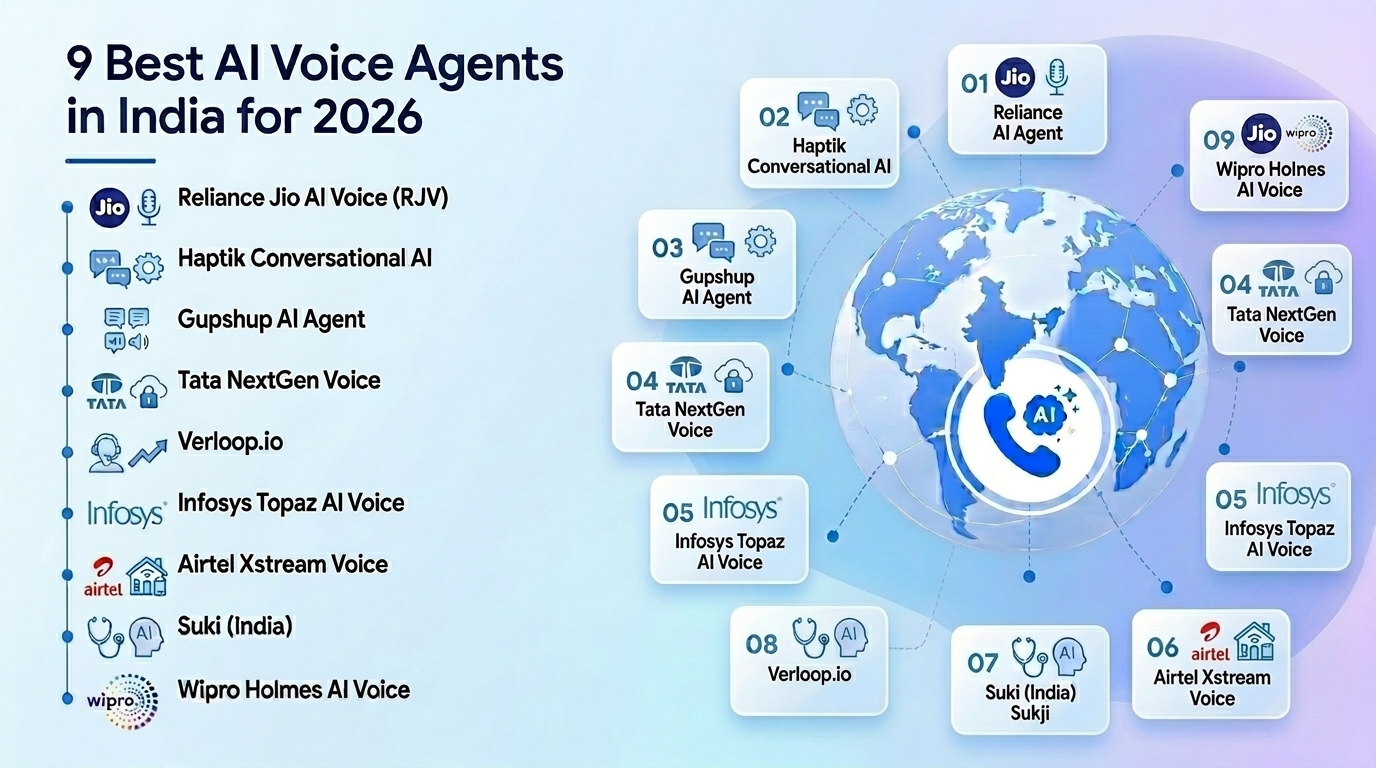
Picking an AI voice agent in India is mostly an exercise in seeing through marketing. This guide hands you a simple way to judge any platform on its merits, then walks through the main options for 2026 without pretending one wins for everyone.
The phrase "best AI voice agent India" hides a trap: the right answer for a Mumbai NBFC chasing overdue EMIs looks nothing like the right answer for a Bengaluru SaaS startup automating inbound support, or a Tier-2 clinic that just needs an appointment line that speaks the local language. So instead of a leaderboard, treat what follows as a buyer's checklist. When you compare voice AI vendors, the goal is not to find the platform that wins the most categories on paper; it is to find the one that wins the categories your calls depend on. If you are still new to the basics, our plain-English guide to AI voice agents is a good primer before you start shortlisting.
The 6 things that actually decide it
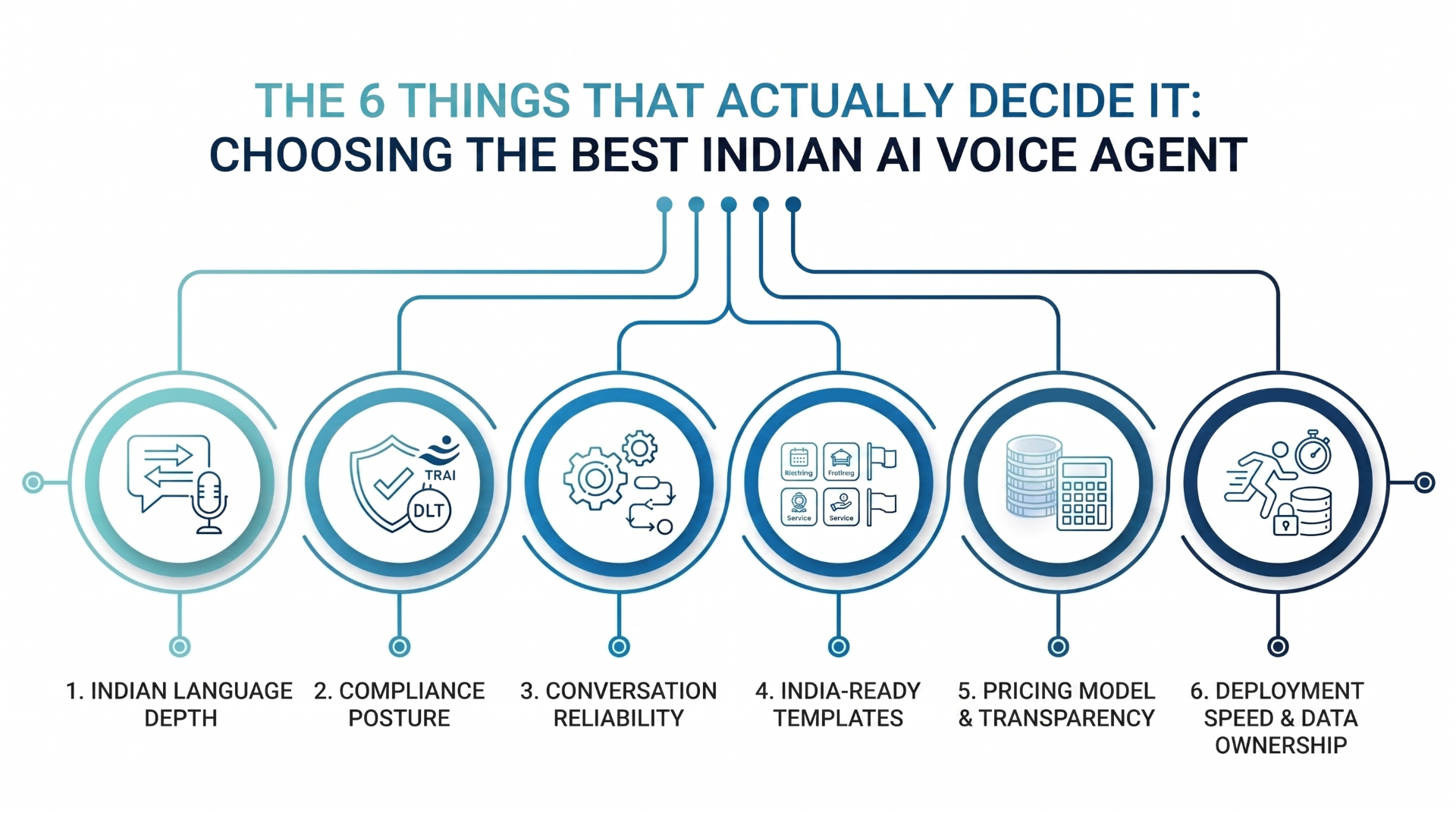
Search "best AI voice agent in India" and you'll wade through a dozen listicles, each one ranking the publisher's own product at the top. Handy for them. Not much use to you. Before we name a single vendor, then, here's the framework I'd hold every one of them against. Six dimensions. First, Indian language depth: does it handle real Hinglish, or does "supports Hindi" mean a robotic voice reading a textbook? Then compliance posture, which is whether TRAI, DLT and DPDP are built in rather than promised later. Conversation reliability, meaning it can actually hold a multi-turn call without falling apart. After that, India-ready templates, the pricing model and how transparent it is, and finally how fast you can deploy and who owns the data once you do.
It helps to make this concrete. Use a simple scorecard and rate each platform from 1 to 5 on every dimension below, then weight the rows that matter most to your business:
- Indian language depth — native Hindi, fluent Hinglish, and the specific regional languages your customers actually speak, with the ability to switch mid-sentence the way real Indian conversations do.
- Compliance posture — TRAI and DLT handling for outbound, plus a DPDP-aware stance on where call recordings and transcripts are stored and who controls them.
- Conversation reliability — holding a multi-turn call, handling interruptions, recovering from "sorry, say that again" without collapsing into a loop.
- India-ready templates — prebuilt flows for collections, lead qualification, appointment booking and delivery confirmation, so you are not starting from a blank prompt.
- Pricing model and transparency — whether you are billed per minute, per outcome, or on a plan-plus-usage basis, and whether the real all-in cost is easy to predict.
- Deployment speed and data ownership — how fast you can go live, and whether your data stays in your environment or theirs.
None of these are exotic. What separates AI voice agent platforms in 2026 is not whether they claim each capability, but how well they deliver it on a noisy phone line with a customer speaking three languages in one breath.
The main options in 2026
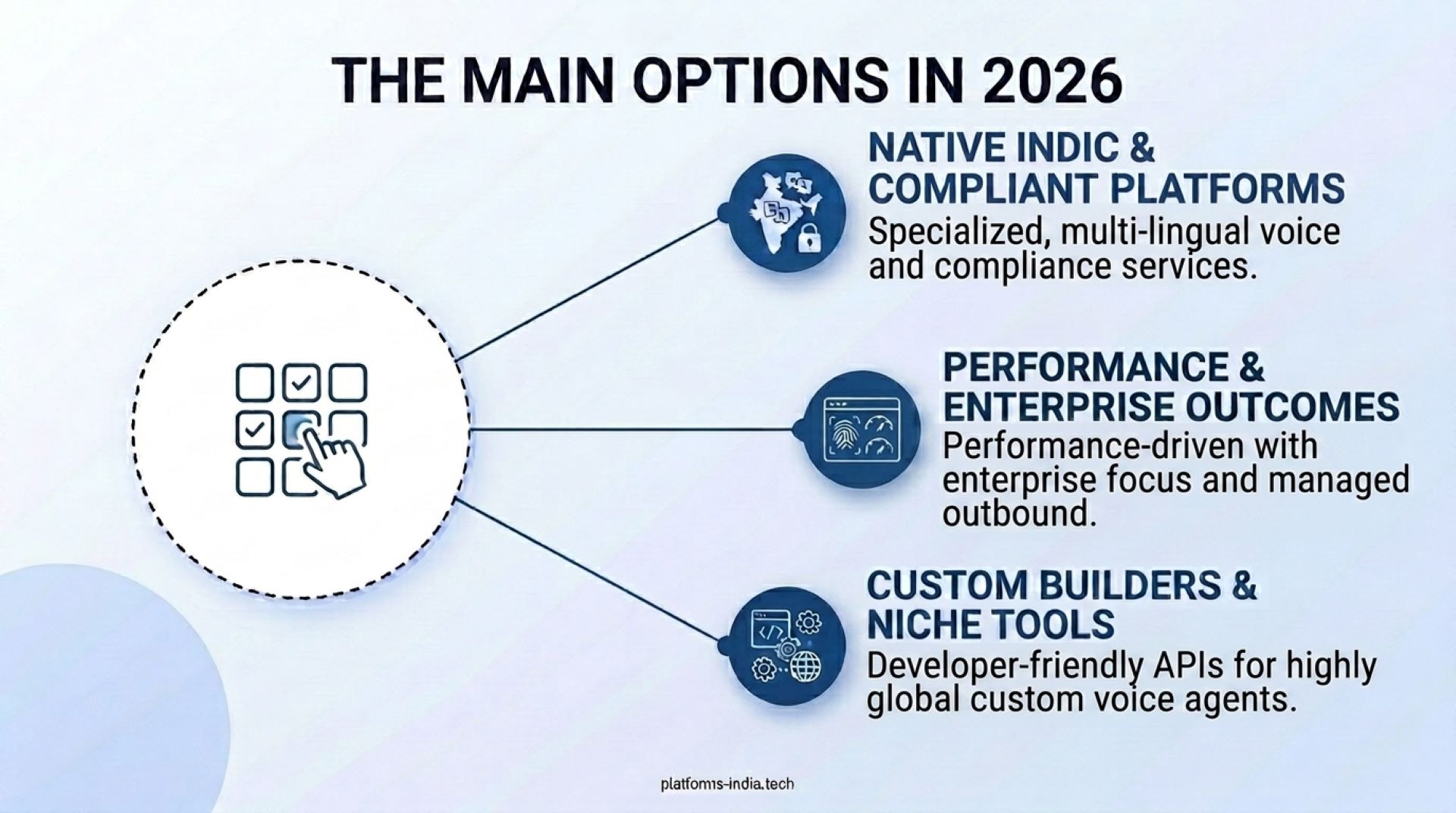
Here's an honest read on the platforms Indian buyers shortlist most. 9278.io is for India-first teams that want ownership and compliance baked in from the start: a native-audio model, 15+ languages, and a self-hosted control panel. Bolna suits India-first builders who are comfortable configuring their own flows. SquadStack sells outbound as a managed outcome and brings 600M+ minutes of Indian sales calls behind it. Gnani goes after large enterprises and leans on voice biometrics. Ringg AI is built for high-volume Indic operations where latency matters. HuskyVoice covers SMBs that just want a receptionist on the phone. Vapi and Retell are developer platforms for building global custom agents. Sarvam offers a sovereign Indian-language model layer. Pricing on all of these moves around a lot, so confirm current rates before you commit.
A few patterns are worth naming out loud. The managed-outcome players, like SquadStack, take on the agent design and optimisation for you and bill against results, which is attractive if you have a high-volume outbound motion and would rather buy conversions than operate software. The India-first builder tools, such as Bolna and Ringg AI, give you more direct control over flows and latency, at the cost of doing more configuration yourself. The global developer platforms, Vapi and Retell, are the most flexible if you have engineers and want to ship a custom agent, but the Indic language tuning, accent handling and compliance wiring largely fall on your team. And the model-layer providers like Sarvam are best thought of as a building block other tools sit on top of, rather than a finished calling product. Where 9278.io aims to land is the overlap of all three concerns Indian buyers raise most: deep Indic language coverage, compliance and data ownership by default, and a setup you can run yourself rather than rent.
How to read the shortlist
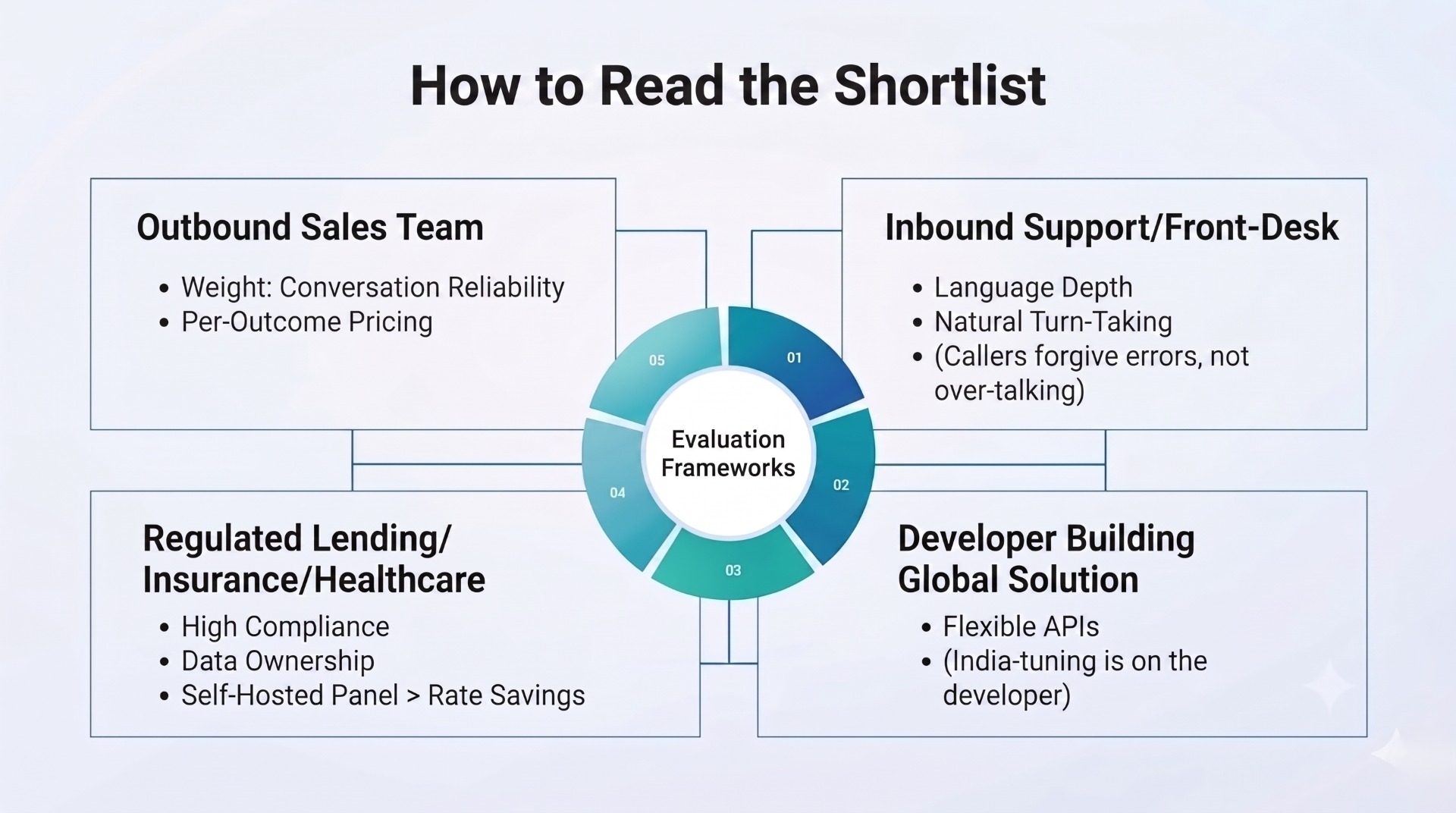
Run an outbound sales team? Weight conversation reliability and per-outcome pricing above everything else. For an inbound support or front-desk operation, language depth and natural turn-taking come first; callers forgive a lot, but they won't forgive an agent that talks over them. If you're a regulated business in lending, insurance or healthcare, compliance and data ownership jump to the top of the list, and a self-hosted control panel is worth far more than shaving a paisa off the per-minute rate. And if you're a developer building something global, flexible APIs are what you want, with the understanding that the India tuning is on you.
A worked example makes the weighting obvious. Say you run collections for a lending business. Conversation reliability and compliance dominate your scorecard, language depth matters because borrowers across states answer in different tongues, and per-outcome economics are tempting because every recovered account has a clear value. A front-desk team at a multi-specialty clinic flips that: natural turn-taking and regional language depth come first, compliance still matters for patient data, but per-minute predictability beats per-outcome because "booked an appointment" is a softer outcome to price. Map your own situation to the right column and the shortlist shrinks fast. If you want sector-specific detail, our industries pages break down what each vertical typically prioritises.
A quick word on the market
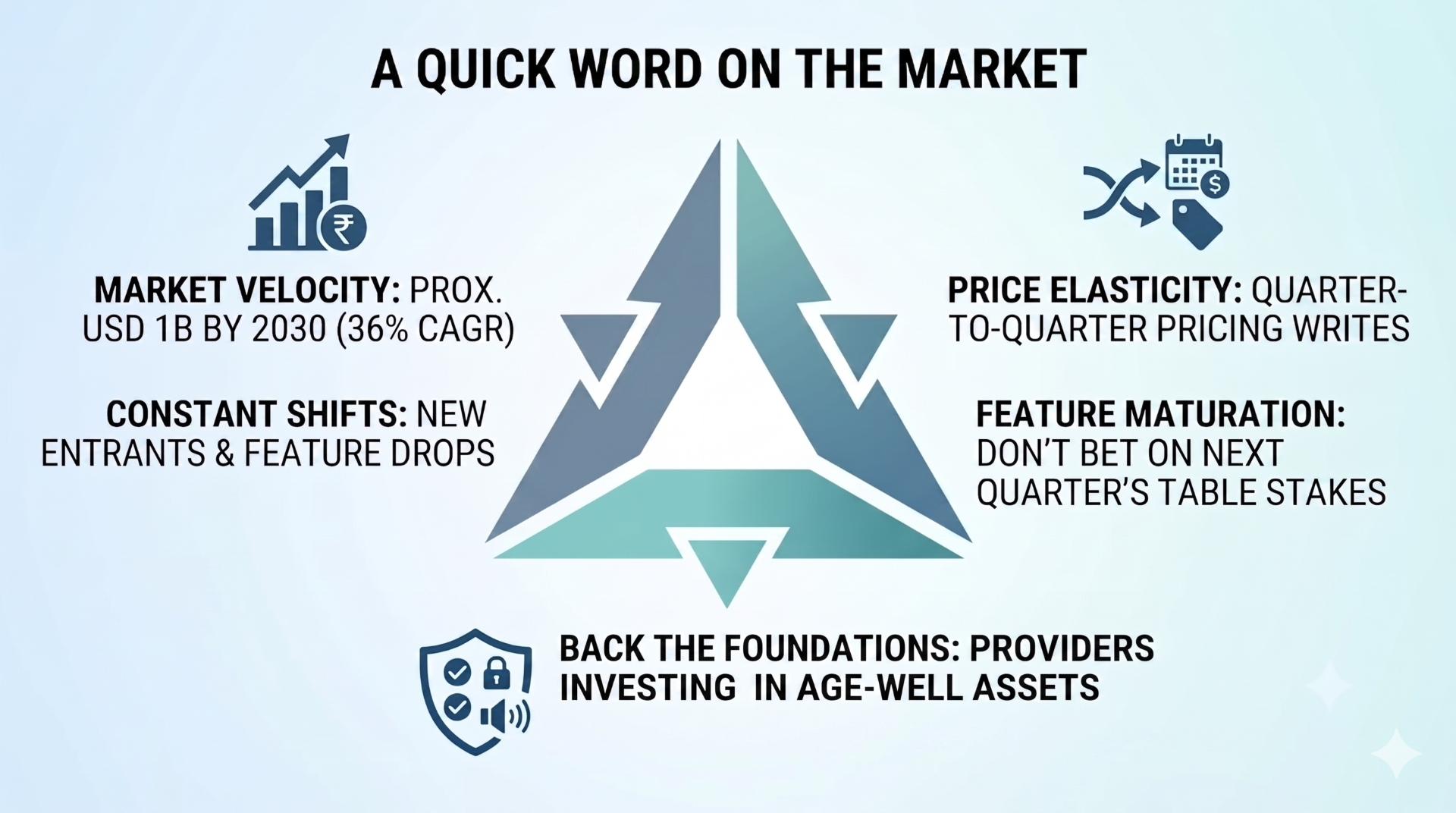
Part of why any list like this dates quickly is the sheer pace of the category. India's voice AI market sat near USD 153 million in 2024 and is projected to reach roughly USD 958 million by 2030, a compound growth rate of about 36%. In practice that means new entrants every few months, a steady drip of feature launches, and pricing that gets rewritten quarter to quarter. The lesson: don't fall in love with a single feature that could be table stakes by next quarter. Back the providers investing in the things that age well, namely language depth, compliance and reliability.
The regulatory backdrop is moving just as fast. With the Digital Personal Data Protection (DPDP) framework taking shape and TRAI continuing to tighten rules around automated and commercial calling, the platforms that treat compliance as an afterthought will keep playing catch-up. That is a quiet but real reason to favour vendors who can tell you exactly where your call data lives and how consent is captured, rather than ones who wave the question away. When you compare voice AI vendors a year from now, the feature gap will have narrowed; the compliance and data-ownership gap is the one likely to still be there.
Don't skip the pilot
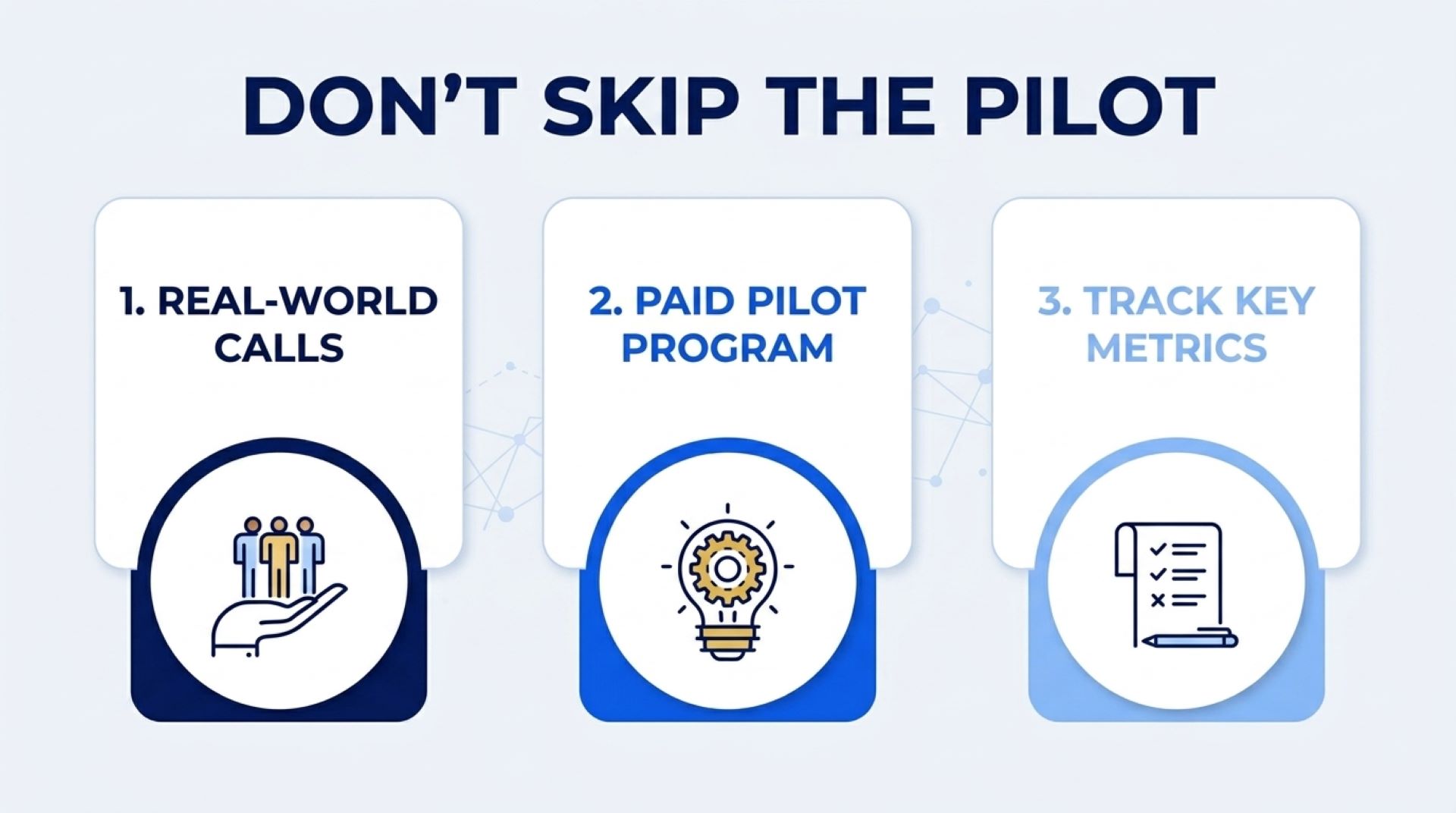
Every platform demos beautifully on the script it was tuned for. That tells you nothing. The real test is your calls: your customers' accents, the objections they actually raise, the languages they switch between, the noisy phone lines they call from. So run a small paid pilot, measure the resolution rate and the cost per outcome (our pricing breakdown shows how), and let the numbers settle the argument.
Keep the pilot small but real: a few hundred calls, your live scripts, your actual phone numbers across Jio, Airtel, BSNL and Vi, and the languages your customers genuinely use. Watch for the things demos hide — how the agent behaves on a dropped or noisy line, whether it switches languages cleanly when the caller does, and how often a human has to step in. Then put the two finalists side by side on a single number that ignores marketing entirely: cost per resolved outcome. A platform that costs more per minute but resolves twice as many calls is usually the cheaper choice.
Common mistakes when choosing a vendor
Most buyers who end up switching platforms within a year made one of a handful of avoidable errors. The biggest is buying on the demo: a flow tuned for a single happy-path script tells you almost nothing about real Indian calls. A close second is anchoring on the per-minute rate while ignoring resolution quality, which is how teams end up paying less per call and more per outcome. Others over-index on a single shiny feature, voice biometrics or a particular accent, that turns out to be table stakes a quarter later.
Two more are specific to India. Underestimating language depth is common: "supports 15 languages" can mean a stilted text-to-speech voice rather than fluent, code-switching conversation, and the difference only shows up when a real customer answers. And glossing over compliance and data ownership is the one that hurts most in regulated sectors, where it surfaces during an audit rather than a sales call. Slow these decisions down, insist on a pilot, and check current pricing before you sign, because rates in this category genuinely change quarter to quarter.
Conclusion
So there is no single best AI voice agent in India. There's only the best fit for your call type, your languages and your compliance load, and the only way to find it is to score the contenders honestly and pilot the top two.
If India-first language coverage, carrier-grade connectivity across Jio, Airtel, BSNL and Vi, and compliance-by-default sit at the top of your scorecard, that's the exact problem 9278.io was built to solve. You can build your first agent or hear a live demo in a couple of minutes.
Ready to put a voice agent on your phones?
Native-audio AI agents in 15+ Indian languages, on Jio/Airtel/BSNL/Vi, live in hours.
Build your first agent