
- TRAI decides who can call you, not just what a call costs, through rules on consent, timing, and sender identity.
- The DND registry blocks registered telemarketers, not every unsolicited number that rings your phone.
- Five or more complaints within ten days trigger enforcement, up to a one-year telecom disconnection.
- A business calling its own customers still falls under these rules, even for a reminder rather than a sales pitch.
TRAI, the Telecom Regulatory Authority of India, decides which calls are allowed to reach a phone in this country and which ones a business needs permission to place in the first place. Get that permission wrong and a customer reminder call looks exactly like the spam this regulator has spent the last two years cracking down on, landing your number in a block list instead of a booked appointment. This article explains what the authority actually oversees, how its DND registry and spam rules work in practice, and what changes the moment your business starts calling customers instead of only receiving calls from them. Read on before your next automated reminder turns into a compliance problem you did not know existed.
Who Regulates the Calls Reaching Your Phone, and Why
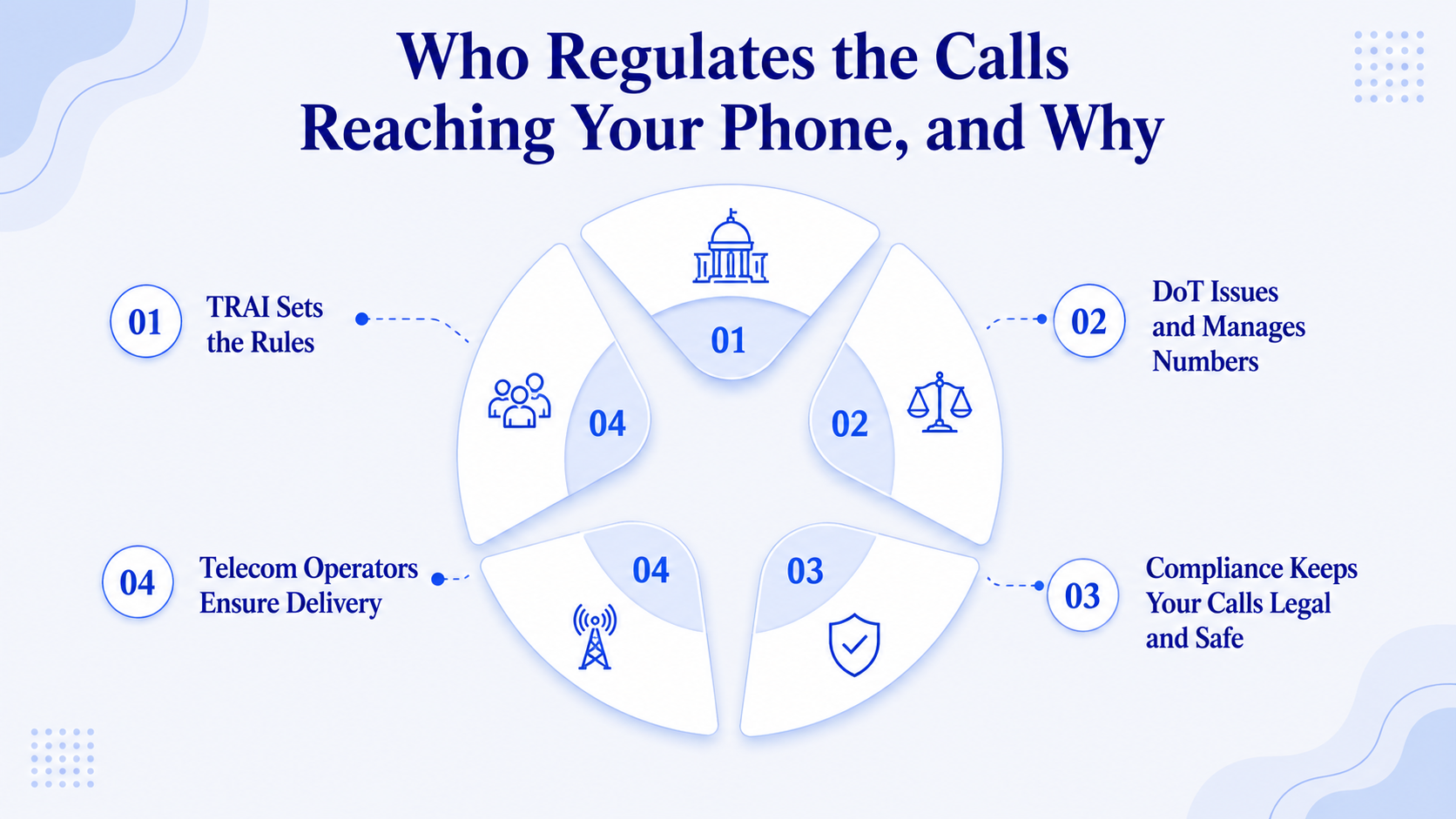
TRAI, the Telecom Regulatory Authority of India, was set up by an Act of Parliament in 1997, soon after private telecom operators entered a market the government had run alone until then. Its original job was tariff regulation, deciding what an operator could charge for a call or a data plan, but its mandate has since grown into adjudicating disputes between operators, setting service-quality benchmarks, and now governing the flow of calls and messages themselves. A chairperson and a small panel of full-time and part-time members, all appointed by the central government, sign off on the rules that follow, so the standards a business meets today can shift the next time that panel revisits a regulation.
The regulator does not answer to a single telecom company; it answers to Parliament, which is why its rulings apply to every operator and every business placing a call over an Indian network, whether that call comes from a call centre in Gurugram or an automated system dialling on behalf of a clinic in Pune. A dispute between two operators over interconnection charges gets resolved by the same body that decides how many complaints it takes to disconnect a spammy number, which is easy to forget until your own business ends up on the wrong side of a ruling. That scope is exactly why 9278.io designs its AI answering service around consent rules from day one, rather than treating compliance as an afterthought bolted on after a business has already scaled its calling volume.
The DND Registry Most People Set Up and Then Forget
Most Indians who registered for the TRAI DND service did it once, years ago, after one too many loan calls interrupted dinner, and never thought about it again. It works by blocking commercial calls and SMS from telemarketers registered with the authority, activating within seven working days of a request made by dialling 1909 or using the DND app, and it costs nothing to set up or maintain.
What the registry will not do is touch a personal call, an OTP, a bank alert, or a call your own business places to a customer who already gave you their number for a booking or an appointment. That distinction matters more than most businesses realise, because DND registration alone does not excuse a business from the rest of the rules governing outbound calling, and treating it as a blanket shield is exactly how a compliant-looking call turns into a complaint. The registry itself has been renamed and rebuilt more than once, moving from a basic do-not-call list to the fuller preference system in use today, so a screenshot of an old process from a few years back is not something to rely on.
How a Number Actually Gets Marked as Spam
Spam call rules do not rely on someone reporting a bad feeling about a call; they rely on a specific number of complaints piling up in a short window. A number that draws five or more complaints within ten days crosses the threshold, and the regulator does not wait for the pattern to repeat before acting on it. The consequences scale with repetition, and most businesses only learn where they sit on that scale after the first warning arrives. That escalating structure exists so a genuine mistake, one slightly mistimed batch of calls, does not carry the same weight as a number that keeps offending after being warned.
- First violation. The sender is barred from sending any commercial communication for 15 days, across every channel it uses to reach customers.
- Repeat violation. Telecom resources get disconnected across every operator for up to a year, not just the one network the number was registered with.
- Blacklisting. A number reported often enough can be blocked from being reassigned for calling use at all, effectively retiring it from commercial service.
- Reporting window. Complaints must be filed within 7 days of receiving the call or message for that report to count against the number.
What Changes the Moment Your Business Places an Outbound Call
Everything above describes calls arriving at a phone. The rules shift the moment your business dials out, because a reminder call and a telemarketing call look identical to a system reading call detail records rather than hearing the intent behind the call. Most businesses discover this the hard way, after a helpful reminder gets reported by a customer who simply did not recognise the number calling them. 9278.io builds these checks into outbound calling by default, and our pricing plans already include this compliance layer rather than charging extra for it once your call volume grows.
- Recorded consent. The person being called must have agreed to receive that category of call before it goes out, not after someone complains.
- Registered sender identity. The number or ID placing the call has to be registered and traceable back to your business by name.
- Calling window compliance. Outbound calls stay inside permitted hours, not placed whenever happens to suit your team's schedule.
- DND-aware dialling. A number on the DND list still needs a transactional framing, not a promotional one, to stay on the right side of the rule.
The Penalty Businesses Rarely See Coming
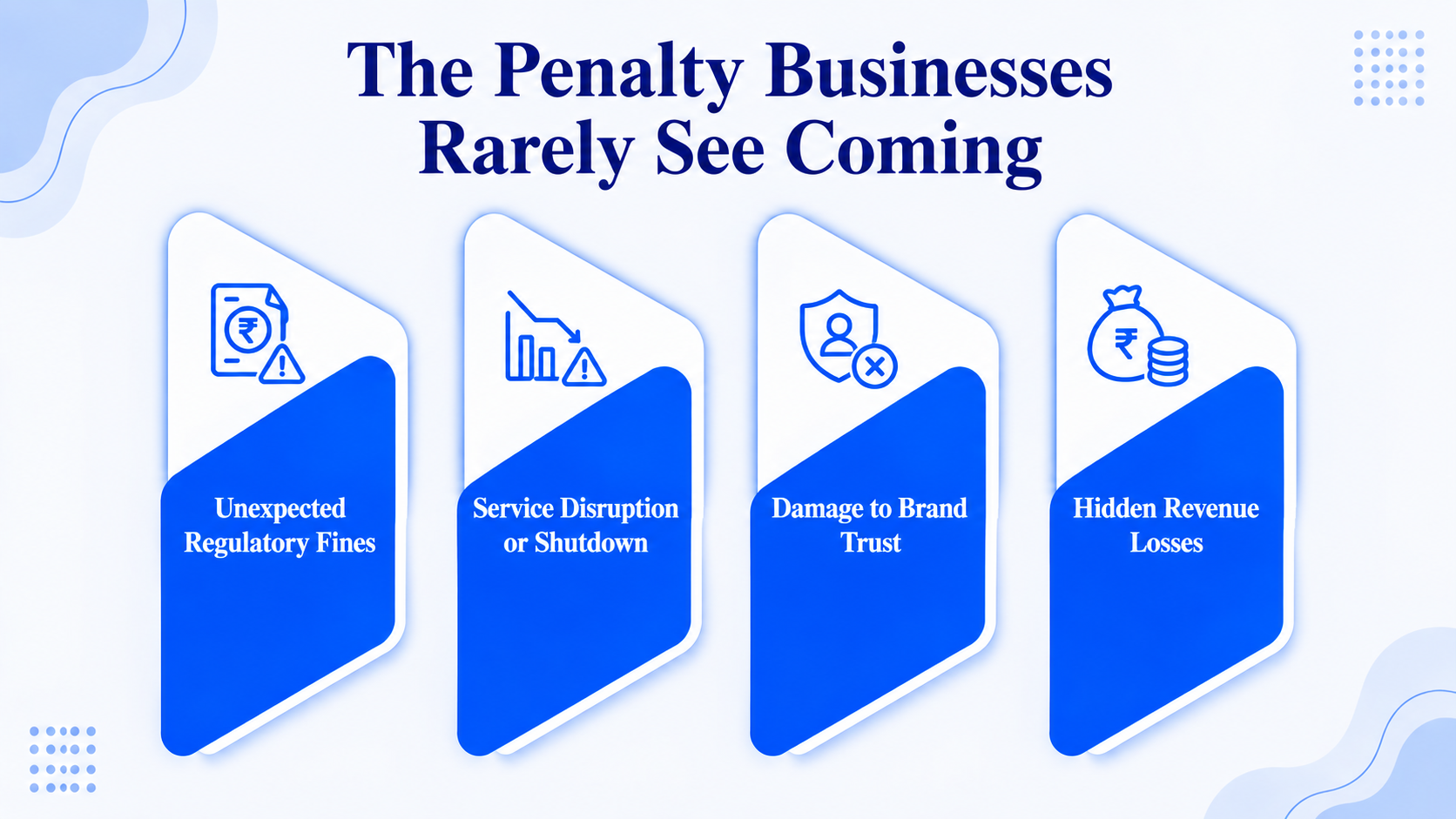
Most businesses assume these penalties are aimed at telemarketing companies blasting promotional messages, not a clinic sending appointment reminders or a gym confirming a renewal. That assumption breaks the first time a patient reports a reminder call as spam, because the enforcement system checks volume and consent, not the intent behind the call. A dentist's office calling forty patients about a Saturday closure looks, on paper, exactly like a lender calling forty strangers about a loan offer, and the system does not pause to ask which one you meant to be.
The official TRAI guidelines spell out the fifteen-day bar for a first violation and the one-year disconnection for repeat ones, so it is worth checking where your own number currently stands before assumption turns into exposure. A number disconnected for a year does not just lose the ability to call; it loses every customer relationship that was routed through that number, which costs a business more than the fine itself ever could.
Where an AI Voice Agent Fits Inside These Rules
An AI voice agent placing hundreds of calls a day needs these checks built into the platform itself, not remembered by whoever configured the system last month. 9278.io logs consent, checks calling windows, and keeps sender identity registered before a single outbound call goes out, which matters more as call volume grows past what a person could track by hand.
Treating TRAI regulations as a legal footnote instead of a design requirement is how businesses end up disconnected over a feature they never actually tested. The safer approach checks these four requirements against your own call logs on a normal week, rather than waiting for the first complaint to reveal a gap nobody had noticed. That kind of check takes an afternoon when volume is still low and turns into a genuine crisis once a hundred calls a day depend on getting it right.
Conclusion
TRAI is not just the body that sets your mobile tariff; it decides whether your business's outbound calls stay legal, whether a customer's DND registration protects them from you, and how fast a spam complaint turns into a disconnected number. Reminder calls, booking confirmations, and follow-ups all fall under the same regulations that govern telemarketing, so consent, sender identity, and calling windows need checking before volume, not after a complaint arrives. 9278.io treats compliant calling as a default setting rather than a configuration step a business has to remember, which is the difference between scaling outbound calls safely and losing a number to a rule nobody flagged in time. Read your own call logs against these four checks this week, and close the gap while it is still a checklist item rather than a fifteen-day bar.
Ready to see it on your own calls?
9278.io answers every call in the caller's own language, with TRAI-compliant, per-second billed calling built for Indian businesses.
Start free trial