
- An AI answering service should take repetitive calls, never emotionally loaded ones.
- Sort a real week of calls by repetition before you automate a single flow.
- A clean handover to a person matters more than pretending the AI knows everything.
- Resolution rate and repeat-call rate tell you more than "calls answered" ever will.
An AI answering service can pick up every call your business receives, and this guide covers the harder question of which calls it should actually keep. It matters because the fastest way to damage a customer relationship is to put an automated voice in front of someone who needed a human — the caller chasing a delayed order, the client whose payment failed, the buyer ready to negotiate. You will learn how to sort your own calls before automating anything, how to design escalation so handovers feel deliberate, and which numbers reveal whether the system is genuinely working. Most articles on the subject stop at "it answers 24/7"; this one is about running the thing well once it does.
The Three Calls You Should Never Let an AI Answer
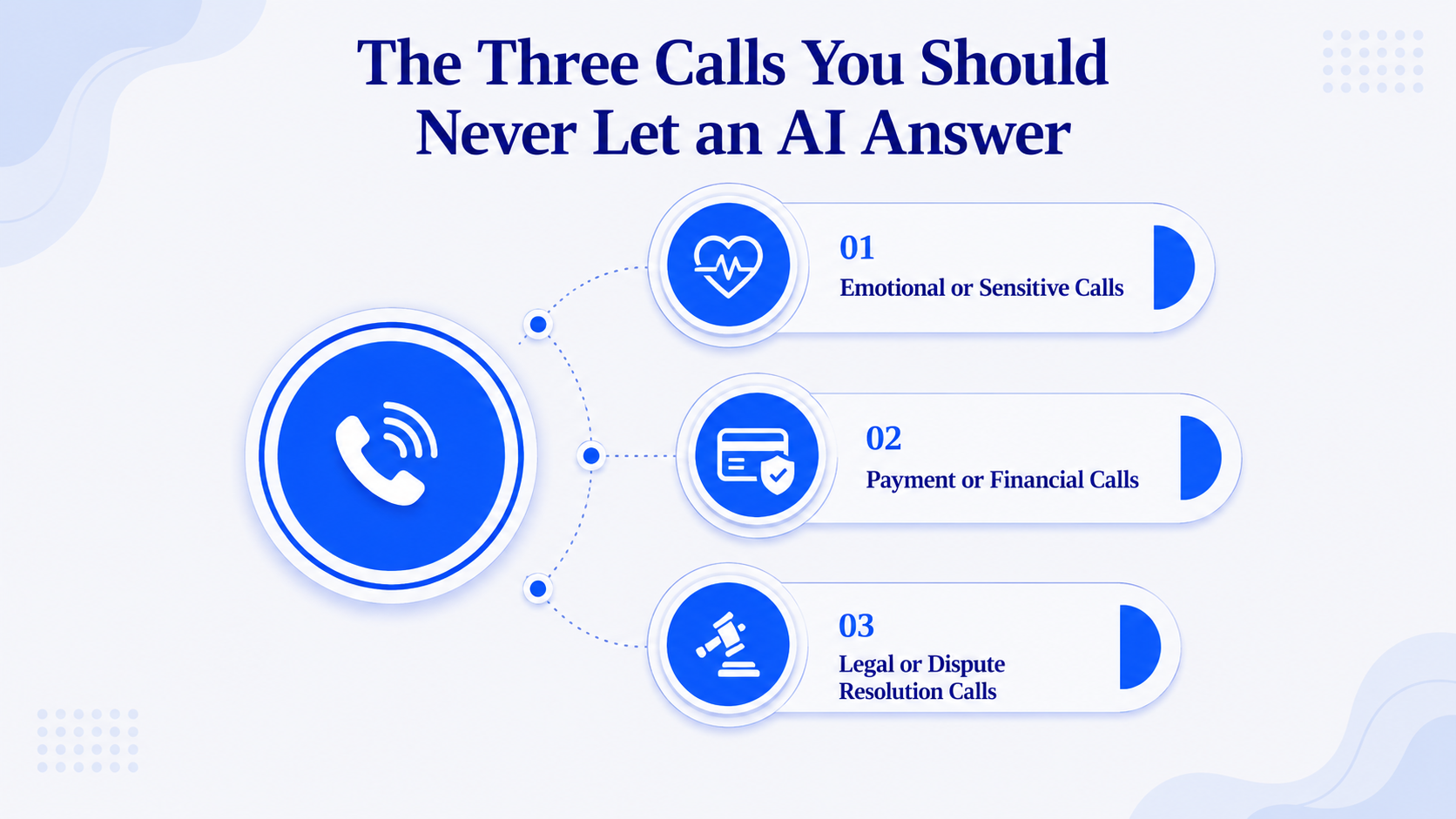
An AI answering service is capable of taking any call that comes in. That is not the same as it being the right thing to do, and the exceptions are consistent across industries. If you automate these three, you will feel it in your reviews before you see it in your reports, which is the practical case for reading our take on AI versus humans before you draw the line.
The pattern behind all three is emotional load. An AI answering service handles information brilliantly and emotion poorly, so the real test is not whether a call is complex but whether the caller needs to feel heard. Sort on that and the boundary becomes obvious.
- The already-angry caller. Someone ringing in frustrated wants to be heard by a person, and an automated voice reads as the business dodging them.
- The live negotiation. Discounts, payment terms and closing conversations turn on judgement your agent does not have and should not fake.
- Your own mistake. A wrong delivery, a billing error or a missed appointment needs someone who can apologise and authorise a fix.
- The honest exception. These calls can still be answered instantly by the AI and passed on within seconds, which beats ringing out entirely.
Mapping Your Call Handling Before You Automate Anything
Most failed rollouts skip this step and automate whatever seemed obvious in a meeting. An hour spent sorting a real week of calls will tell you more than any vendor demo. Sort along three axes and the first automation picks itself.
Write the list down rather than working from memory, because memory over-weights the dramatic calls and forgets the boring ones. The boring, repeated call is exactly where automated call handling returns the most, and it is the one nobody raises in a meeting.
Sort by repetition
Count how often the same question arrives. The one your team answers thirty times a week is where automated call handling pays for itself immediately.
Sort by outcome
Ask what a successful version of that call produces — a booking, a captured lead, an order status. Calls with a clean, defined outcome automate well; open-ended ones do not. Write that outcome down as a sentence, and if you cannot, the call is not ready for an AI answering service yet.
Sort by hour
Mark when each call arrived. Anything landing after 8 PM or on a Sunday is pure upside, because the alternative today is nobody picking up at all. Evening and weekend call handling is also the safest place to start, since a mistake there costs you a call you were already losing.
What Changes in Week One of Running an AI Answering Service
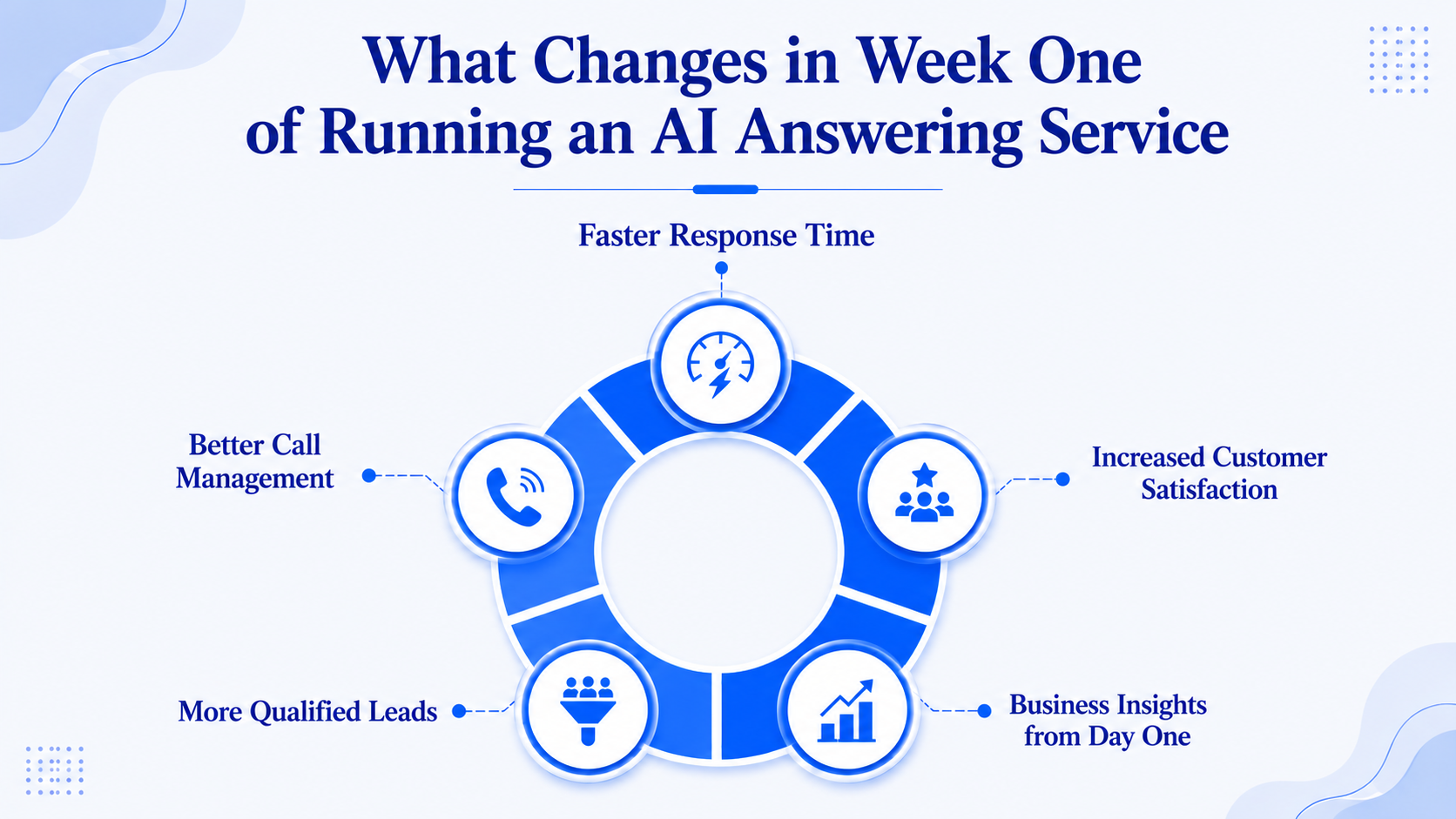
The first week rarely exposes a weakness in the technology. It exposes how vaguely your business had written down its own answers. Teams discover their published timings are wrong, two people quote different prices, and nobody had ever defined what happens when a caller asks for a refund.
That is uncomfortable and genuinely useful, because those gaps were already costing you calls before any AI answering service arrived. Plan the first week as tuning rather than launch: read transcripts daily, fix the answers that fumbled, and resist judging the system on day two. If you are still choosing a platform at this stage, our guide to compare providers covers that decision separately. Whichever platform you land on, including 9278.io, the tuning week looks much the same.
Escalation Design: The Setting Most Teams Get Wrong
Escalation is treated as a fallback and configured last, which is backwards. It is the part of call handling your most valuable callers will actually experience, so design it first and make it feel intentional rather than apologetic.
An AI answering service that hands over well earns more trust than one that never needs to. Callers forgive a machine for not knowing something; they do not forgive being trapped in a loop. Platforms like 9278.io let you set these rules yourself in the dashboard rather than filing a request.
Trigger it early
Hand off after one failed attempt, not three. A caller who has repeated themselves twice has already decided the system is useless. Count attempts explicitly rather than trusting the model to sense frustration, because it usually will not.
Make the handover sound deliberate
"Let me get someone who handles this" beats a loop of apologies. The caller should feel routed, not abandoned. Naming the next step, even roughly, keeps people on the line through the transfer.
Decide who receives it
A ringing phone nobody answers is not an escalation path. Name the person, the hours and the fallback before you switch anything on. Out-of-hours escalation should capture a callback number and a summary instead of promising someone who is asleep.
Can an AI Answering Service Really Handle a Hindi-Speaking Caller?
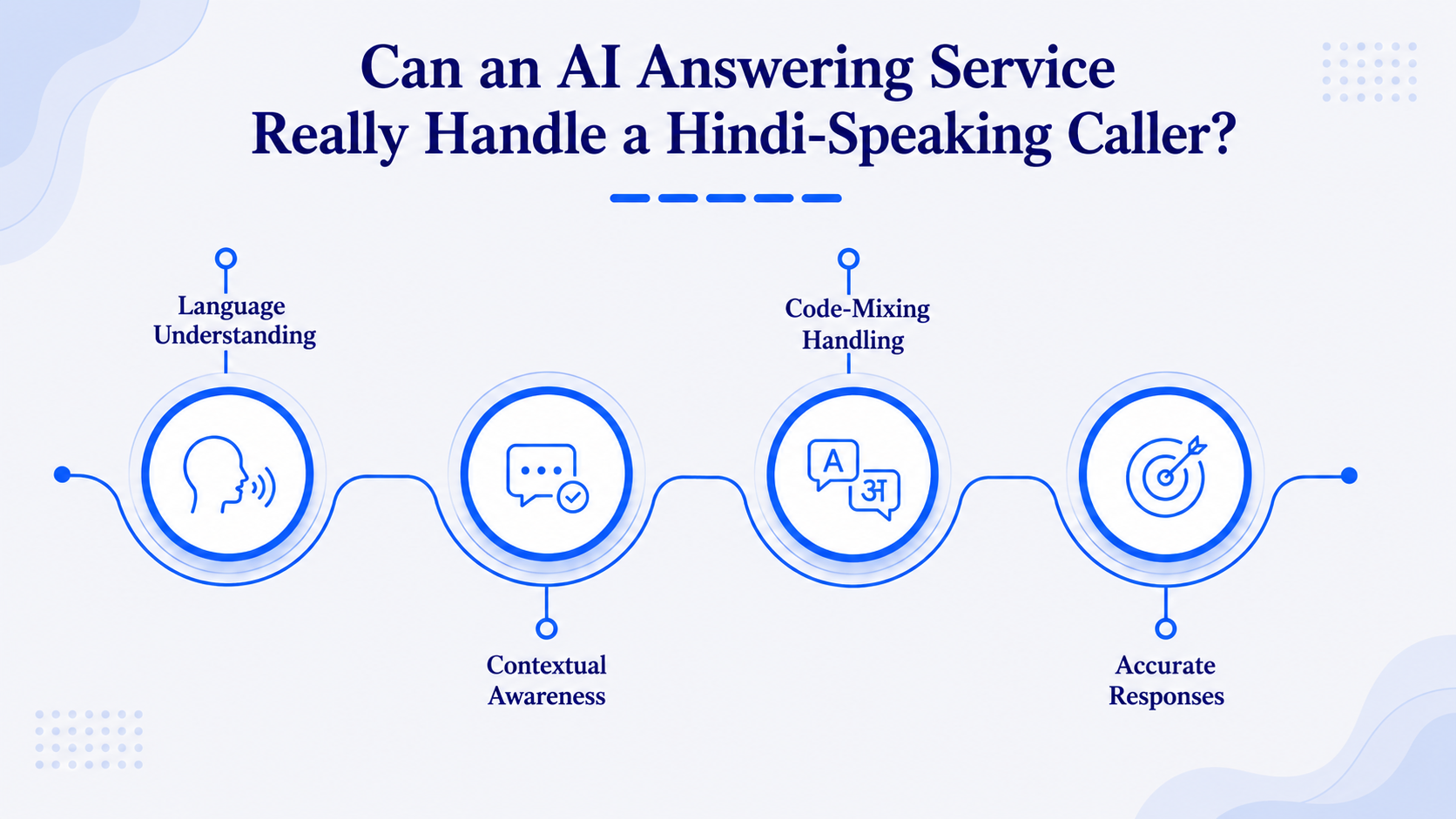
It depends entirely on what the platform was built for. A system tuned for English-only callers will transcribe a Hindi sentence badly, mispronounce the name it repeats back, and lose a caller who switches language halfway through — which is how most Indian conversations actually run. India-first platforms such as 9278.io support 10+ languages including Hindi, Tamil, Telugu, Bengali, Marathi and Punjabi, with the switching handled mid-sentence rather than chosen at the start.
This is also where the old keypad menu finally loses its argument. An interactive voice response tree forces every caller down a fixed path in one language, while a conversational agent simply listens and replies in whichever language the caller opened with. For a business serving three states, that difference removes an entire layer of configuration, and it is the clearest single reason an AI answering service outperforms a menu tree in India.
Measuring an AI Answering Service Beyond "Calls Answered"
Answer rate is the vanity metric of call automation, because a system that picks up every call and helps nobody still scores 100%. Judge an AI answering service on what callers actually got, and review the numbers weekly for the first month rather than monthly.
Set a baseline before you switch anything on. Note today's missed-call count, your average response time and what a converted enquiry is worth, so the first month of running an AI answering service can be measured against something real instead of a feeling.
- Resolution rate. The share of calls where the caller got what they rang for without a human stepping in.
- Escalation rate. Useful in both directions — too high means weak answers, near zero often means it is refusing to hand off.
- Repeat-call rate. The same number ringing back within a day usually means the first call failed quietly.
- Cost per resolved call. Divide the monthly bill by resolved calls, not total calls, to compare honestly against staffing.
- After-hours share. How much of your volume now lands outside office hours, which is revenue you previously never saw at all, and usually the easiest win to show your team.
Monday Morning, Six Weeks In
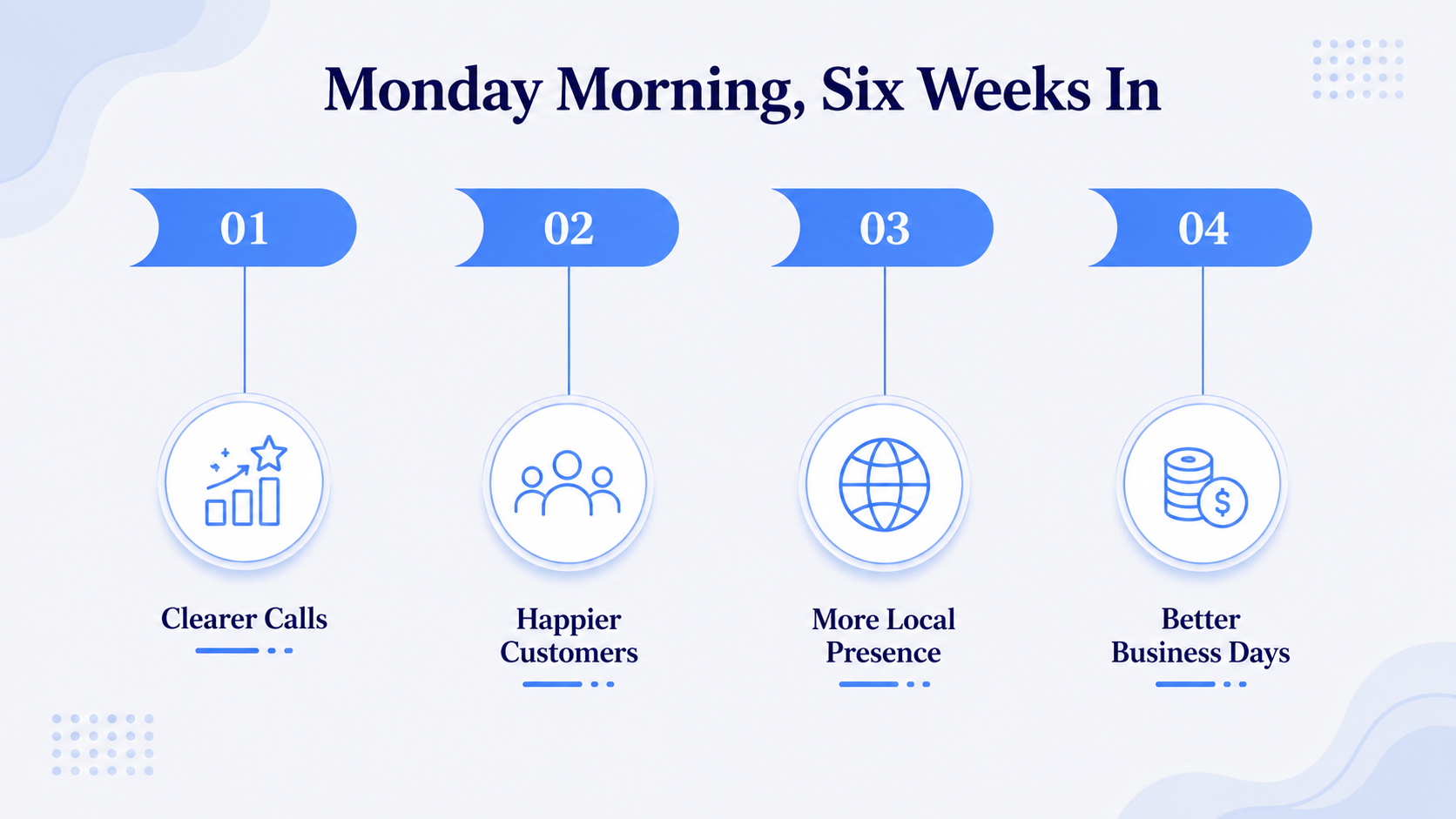
The change most teams report is not dramatic. The phone still rings, but it rings for the calls that genuinely need a person. Nobody spends the first hour of Monday working through weekend voicemails, because the weekend callers already got what they rang for.
That shift is easy to miss on a dashboard and obvious on the floor. Staff stop switching between the front desk and the handset, follow-ups happen the same day instead of three days later, and the calls that do reach a human arrive with the details already captured.
Conclusion
An AI answering service earns its place when it takes the repetitive calls off your team and hands the human ones over cleanly, and that split is a decision you make rather than a feature you buy. Sort a real week of your own calls first, automate the most repeated one with a clear outcome, and design the escalation path before you go live. Judge the result on resolution and repeat-call rate, because those numbers show whether callers were genuinely helped or merely answered. Platforms like 9278.io are self-serve and billed per second, so you can run this experiment on your evening traffic without committing to a contract. Start with the call your team is tired of repeating, and let the transcripts tell you what to automate next.
Ready to see it on your own calls?
9278.io answers every call in the caller's own language, with TRAI-compliant, per-second billed calling built for Indian businesses.
Start free trial