
- An AI phone answering service answers, understands and completes the call rather than routing it to voicemail.
- It replaces the repetitive calls, not the receptionist who handles judgement calls.
- Indian plans start around ₹2,999 a month, and per-second billing beats a low headline rate on short calls.
- Server location, language depth and TRAI compliance decide whether a global platform works on Indian lines.
An AI phone answering service picks up your business calls, holds a real conversation and finishes the task the caller rang about, and this guide compares your options on Indian terms. It matters because the calls you lose are the ones nobody sees — the 9 PM enquiry, the fourth caller while your receptionist is on three lines, the lead who rang once and then rang your competitor. You will learn what these systems actually do on a call, how they compare with a receptionist or an IVR menu, what they cost in rupees, and the India-specific checks that decide whether one works here at all. Global "best of" lists skip every one of those checks, which is exactly where the money is won or lost.
What Actually Happens When Your AI Phone Answering Service Picks Up
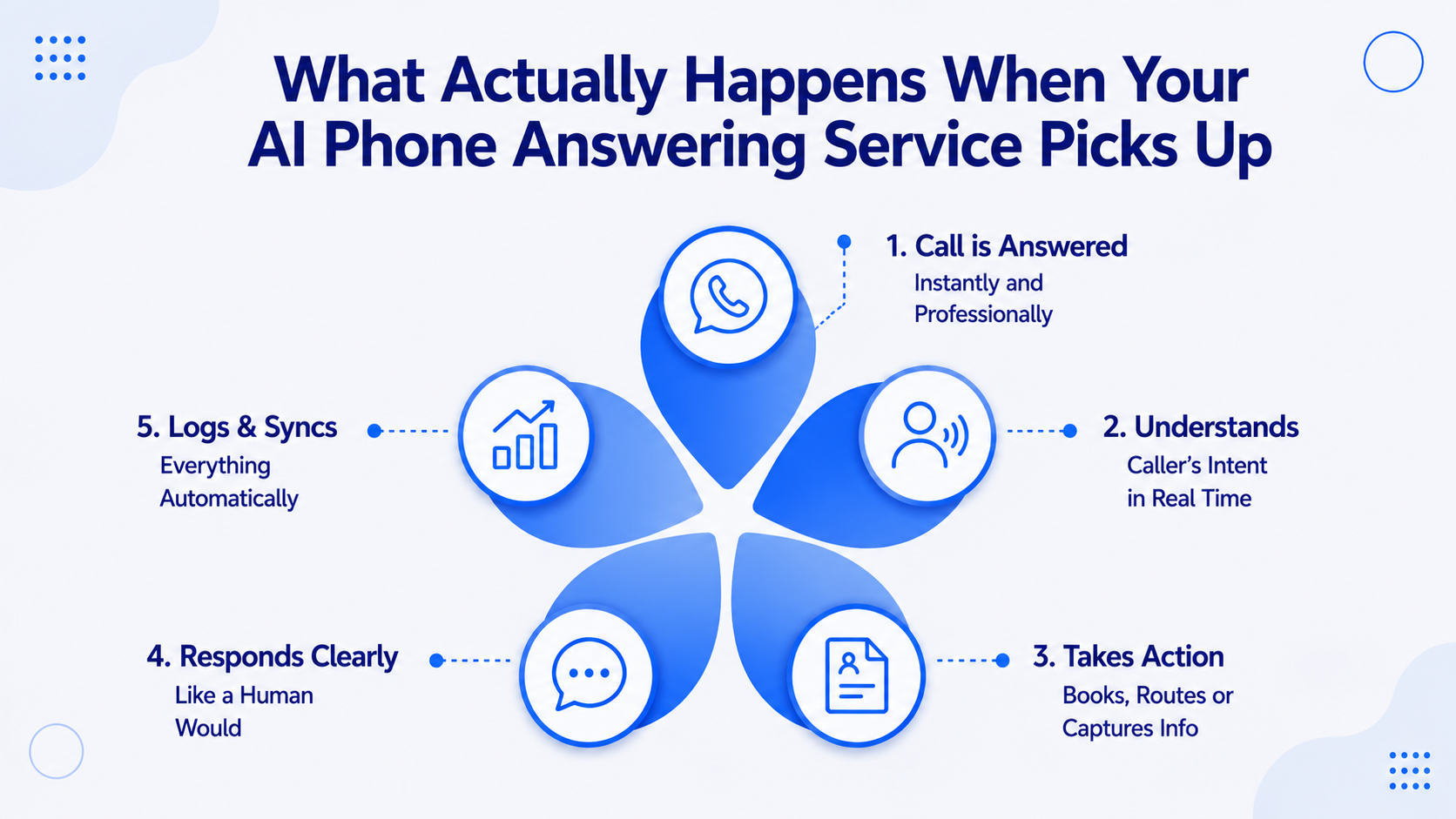
The phrase sounds like an upgraded voicemail, which undersells it badly. A modern AI phone answering service runs a full conversation: it hears the caller, works out what they want, and then does something about it inside your systems. Three things happen in the seconds after it answers.
The difference from an old answering machine is that an AI phone answering service acts rather than records. Platforms such as 9278.io finish the job while the caller is still on the line.
It hears and understands
The caller speaks normally, with no menu and no "press 1 for sales." The system transcribes as they talk and works out intent from the words, not from a keypad.
It answers in context
It pulls from what you have taught it — your services, timings, prices, policies — and replies in a natural voice. Unexpected questions get handled rather than dead-ended.
It completes the task
Booking a slot, capturing lead details, checking an order, sending a WhatsApp confirmation, or transferring a genuinely urgent caller to a person. The outcome lands in your CRM before the call ends.
Missed Calls Cost More Than You Think — Here's the Arithmetic
Do this with your own numbers rather than an industry statistic. Take the calls you miss in a week, multiply by the share that would have become customers, then multiply by what a customer is worth to you. Most owners run that sum once and stop arguing about the monthly fee.
The hidden half is that a missed call rarely waits. The caller does not leave a voicemail and try again tomorrow; they ring the next number on the search results page. That is why call answering after hours behaves less like a convenience and more like a leak in the top of your funnel, and it is why the fix is worth costing properly.
Human Receptionist, IVR Menu, or AI Phone Answering Service?
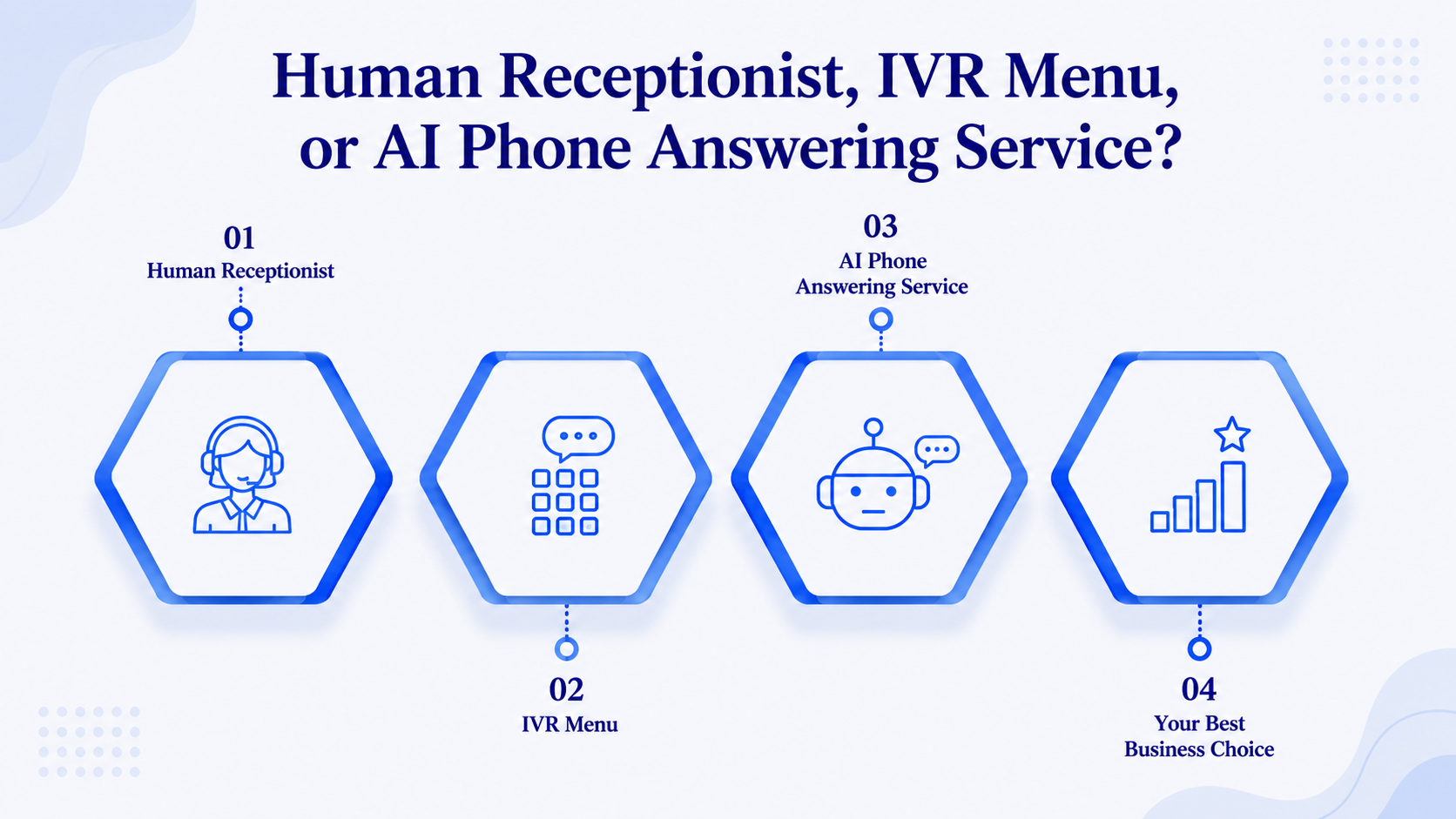
These three are not rivals so much as tools for different jobs, and most businesses end up with two of them. The honest comparison is about which calls each one handles well, not which is "better." Our guide to an AI receptionist goes deeper on the staffing side of this decision.
Cost shapes the choice too. A receptionist is a salary, an IVR is a fixed licence, and an AI phone answering service is usage-based, so it scales down on quiet days.
- Human receptionist. Unbeatable on judgement, escalation and an upset customer, but limited to one call at a time and office hours.
- IVR menu. Cheap and predictable, yet callers routinely mash zero to escape it, and it cannot answer anything you did not anticipate.
- AI phone answering service. Handles many calls at once, all day, in several languages, and completes routine tasks end to end.
- Where AI struggles. Genuine negotiation, sensitive complaints and anything needing a human relationship still belong to a person.
- The usual split. Route repetitive and after-hours calls to the AI, and let your team spend their day on the calls that actually need them.
The After-Hours Test Most Indian Businesses Fail
Call your own business number tonight at 9:30 PM and listen to what a customer hears. For most Indian firms it rings out, hits a voicemail nobody checks, or reaches a switched-off phone. The enquiry was real; the business simply was not there to take it.
An AI phone answering service does not resent a Sunday shift, which is the whole argument for using one outside office hours. Those calls were previously going to whoever picked up next.
The evening window is not small
Salaried customers research and enquire after work. Property, education, fitness, healthcare and services see genuine intent long after the office closes.
Weekends behave the same way
Saturday and Sunday enquiries often carry the highest intent of the week, and they land when the fewest people are available to answer.
Coverage is the whole product
This is where AI voice agents earn their fee fastest, because the alternative is paying salaries for hours when call volume is thin but not zero.
Why an Imported Phone Assistant Struggles on Indian Calls
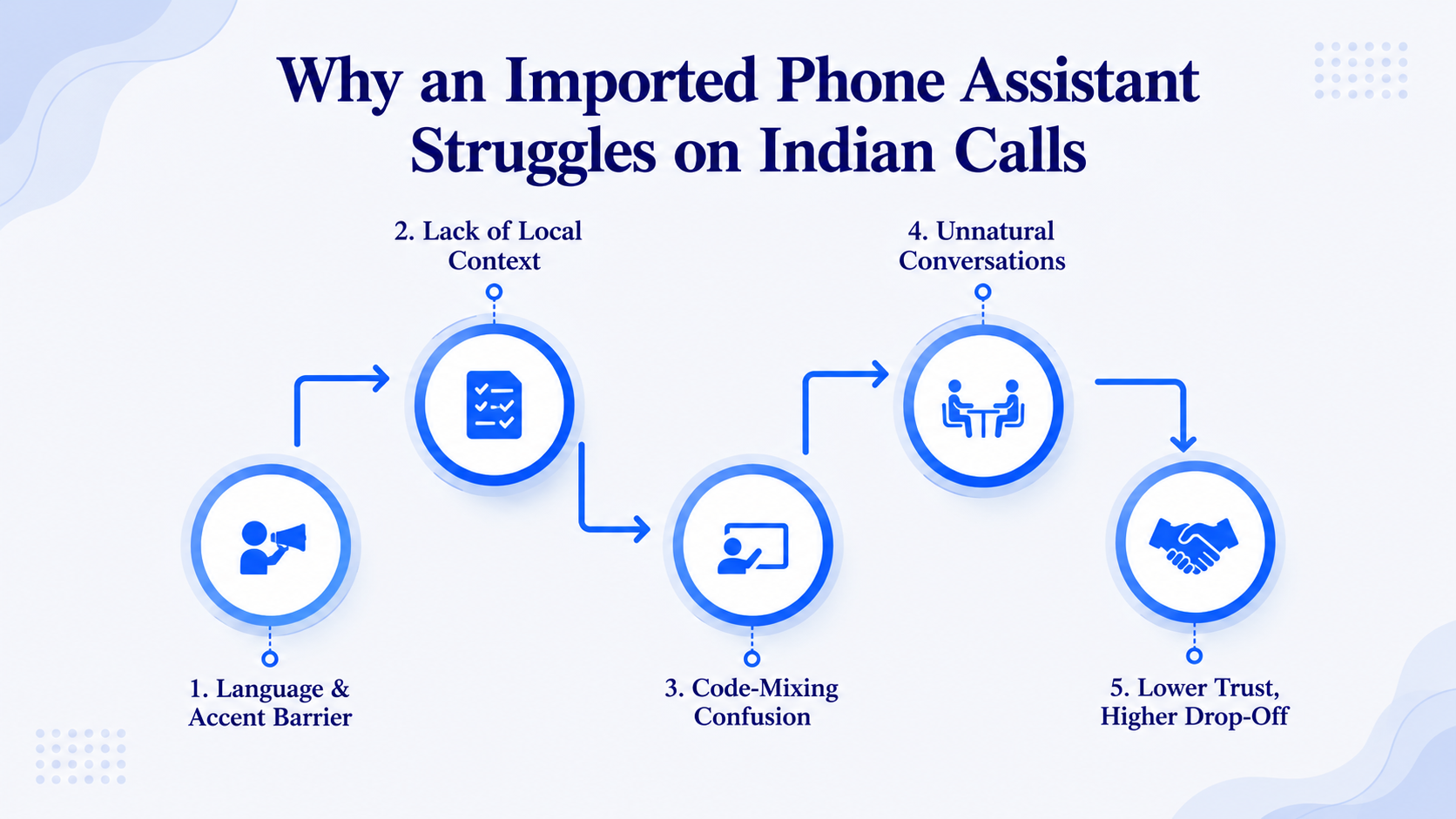
A US-built AI phone answering service is not wrong, it is just tuned for different conditions. Its servers sit in North America, so every exchange makes a long round trip and the reply lands a beat late on a mobile call. Its voices expect English-only callers, so Indian names, localities and rupee amounts come out mangled.
Compliance is the other half. Commercial calling in India sits under TRAI's rules on consent, calling windows and registered sender identity, and the current framework is published by the regulator in its TRAI guidelines. A phone assistant that treats this as a checkbox leaves the risk with you, which is a poor trade for a slightly lower monthly rate.
How Much Does an AI Phone Answering Service Actually Cost?
Headline pricing hides more than it reveals, because the same rate can mean very different bills depending on how the seconds are counted. Work out your real cost per handled call before comparing any two providers.
An AI phone answering service is bought on cost per handled call, not the monthly figure. Two plans with identical headline pricing can differ by a third once rounding, number rental and overage are included.
What you are actually billed for
Usually a monthly plan with included minutes, then a usage rate beyond it, plus roughly ₹400 a month for an Indian number. Agent count and concurrency sit inside the plan tier.
Why per-second billing matters
Answering calls produces lots of short conversations. Rounding a 20-second call up to a full minute triples its cost, so per-second billing changes the arithmetic more than a lower advertised rate does.
Indian pricing in practice
Plans from India-first platforms such as 9278.io start at ₹2,999 a month for two agents and 250 included minutes, with larger tiers bringing the effective per-minute rate down and adding priority support.
Going Live This Week: A Realistic Setup Path
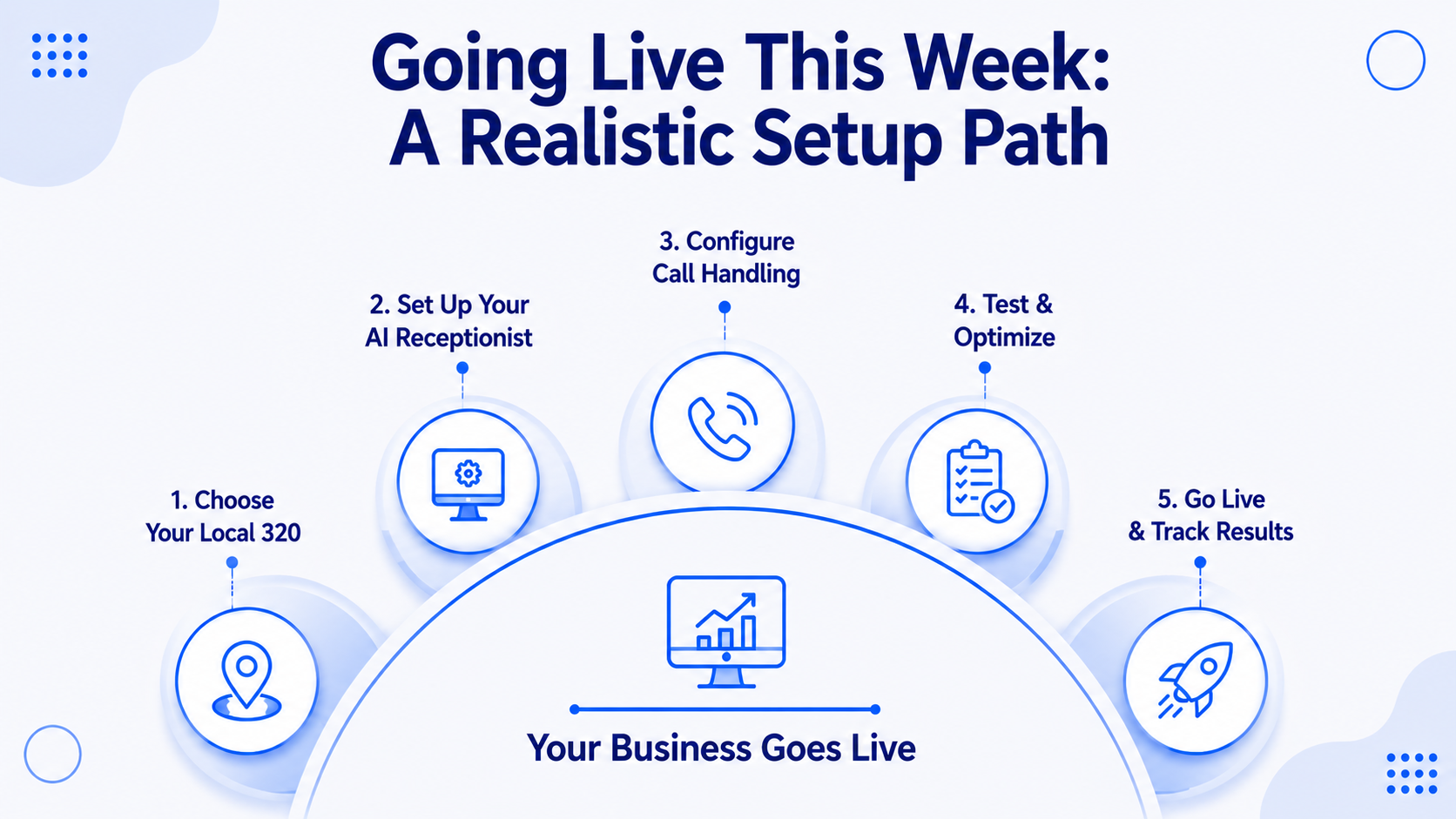
Self-serve platforms let you build an agent in an afternoon, but a phone assistant that sounds ready on day one usually is not. Plan for a short tuning period on real traffic rather than a single big launch, and the rollout stays calm.
Treat the first fortnight as tuning, not launch. Every AI phone answering service improves fastest on your own transcripts, and 9278.io keeps those in the dashboard for you to edit directly.
- Start with one job. Pick your highest-volume repetitive call — enquiries, bookings or order status — and automate only that.
- Feed it your real answers. Timings, prices, policies, locality names and product names, written the way your team actually says them.
- Test on a real phone. Judge it over an actual call on your network, never on a laptop preview.
- Run it after hours first. Evenings and weekends give you live data with no risk to your daytime calls.
- Read the transcripts weekly. The questions it fumbled are your next week's training list.
- Set the handover rule. Decide early which calls go straight to a human, and make that path obvious to the caller.
Conclusion
An AI phone answering service is no longer an experiment; it is a practical way to stop losing the calls that arrive when nobody is free to pick up. The comparison that matters is not which platform tops a global list, but which one speaks your customers' languages, answers fast enough on an Indian mobile network, bills by the second, and keeps your calling inside TRAI rules. Start by pricing your own missed calls, then test any phone answering setup on your real evening traffic before you commit to a plan. Platforms like 9278.io are self-serve and billed per second, so the trial costs you an evening rather than a contract, and the transcripts will tell you within a week whether the calls you were losing are worth automating. Answer the next one, and you will already be ahead of the version of your business that let it ring out.
Ready to see it on your own calls?
9278.io answers every call in the caller's own language, with TRAI-compliant, per-second billed calling built for Indian businesses.
Start free trial