
- A smart chatbot handles typed, asynchronous questions well but has no way to answer a ringing phone.
- Text-based bot logic built for clean English rarely survives a live Indian call in Hindi or a mixed language.
- Seat-priced chat tools say nothing about what a phone call actually costs to resolve.
- A chat platform and a voice system solve different problems, and most businesses need both rather than one instead of the other.
A smart chatbot answers typed questions on a website or app instantly, and this article compares what it genuinely solves against what it cannot touch at all. A receptionist juggling five lines, or a lead going cold because nobody picked up the phone after 9 PM, is a problem no chatbot on your site was ever built to fix, and it is a cost most comparison guides never even try to measure. You will learn where a smart chatbot earns its place, where it quietly stops working, and what an Indian business needs instead the moment a customer picks up the phone rather than opening a chat window. Read on before you assume the chatbot on your homepage is covering more ground than it actually is.
What a Smart Chatbot Actually Solves Well
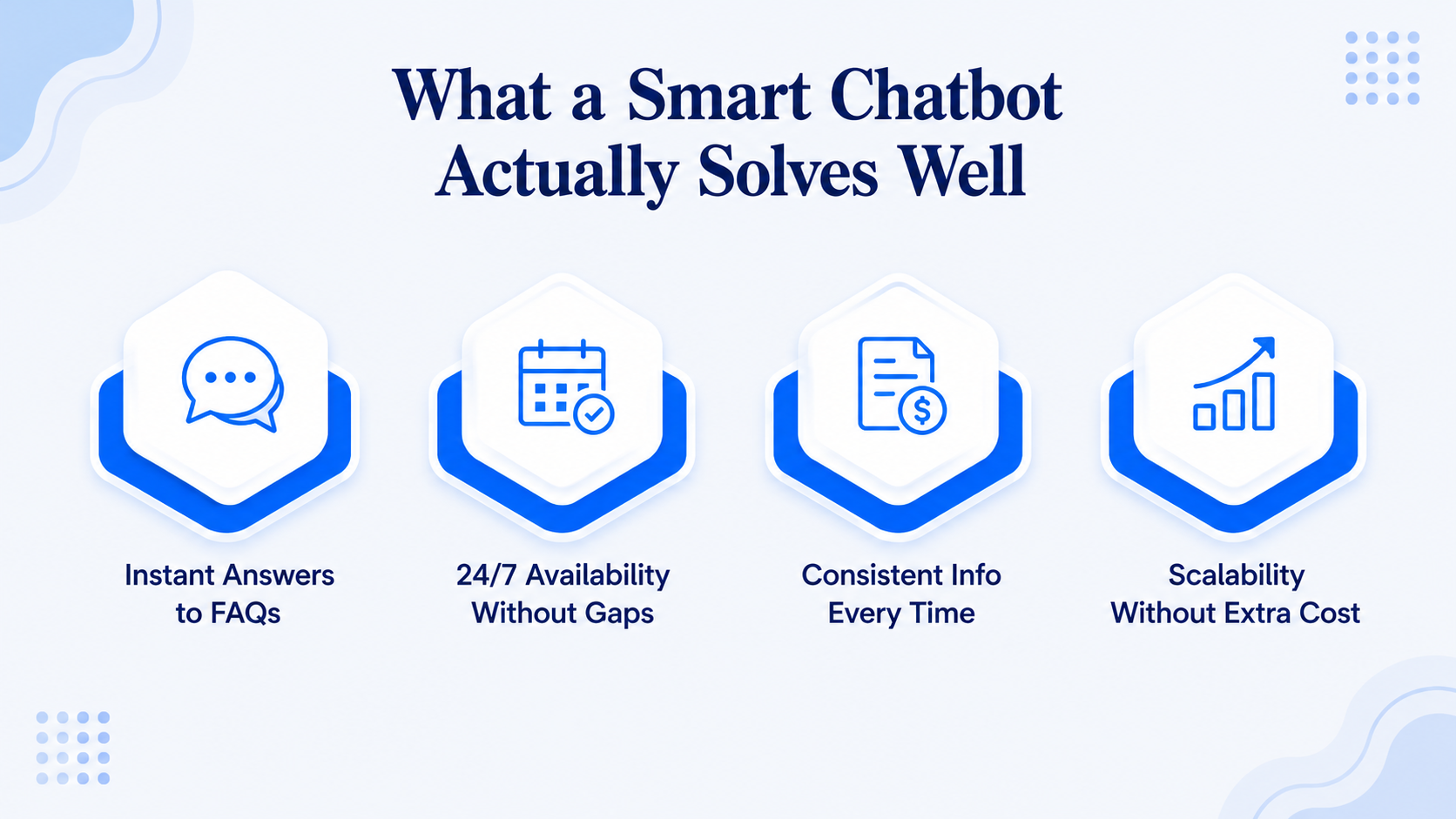
A smart chatbot earns its keep on a website answering repetitive questions instantly, day or night, without a person watching a chat window. It handles order tracking, FAQs, and simple self-service tasks well, because the customer can read, scroll, and take their time replying, which is exactly the kind of interaction text was built for. A visitor comparing two products at midnight, or checking a return policy before checkout, gets exactly what they need without waiting for a person to become available, and that alone justifies the investment for most websites. None of that changes the fact that a smart chatbot only ever sees the customers who chose to type, never the ones who picked up the phone instead.
The Moment a Smart Chatbot Can't Help: Your Phone Ringing
The gap shows up the instant a customer picks up the phone instead of opening a chat window, since a smart chatbot has no way to answer a call, however well it performs on text. A missed call after hours or a lead going cold while a receptionist juggles five lines is a cost the chatbot on your homepage was never built to prevent, and most comparison guides never mention this because they were written entirely around the chat channel. Judging a smart chatbot's success by how many chat conversations it resolved says nothing about the calls that never got answered on the very same day, and a business tracking only the metric it can see ends up blind to the one it cannot.
Chat Bot Logic Doesn't Transfer to a Live Indian Call
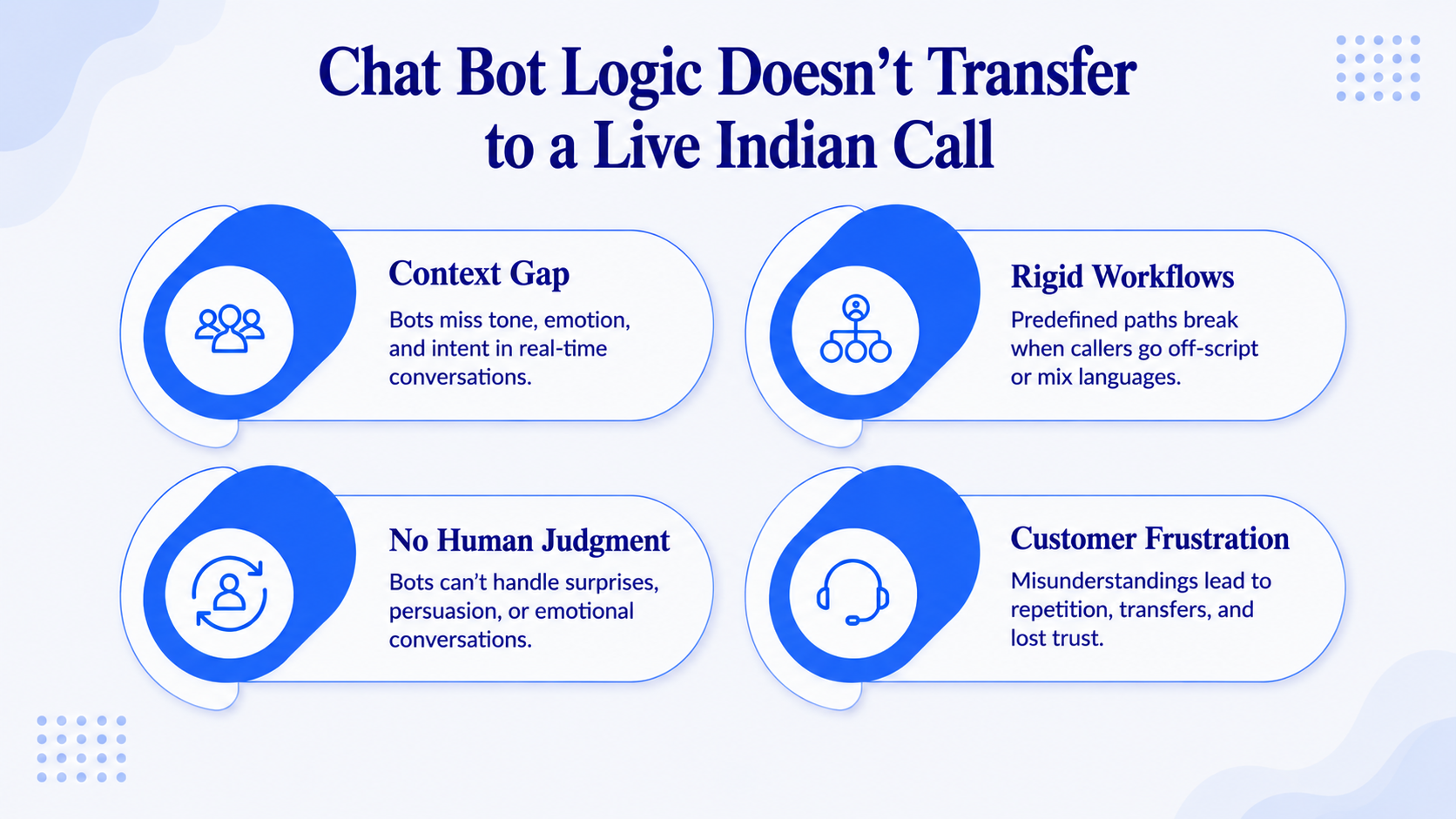
Most engines behind a typical chat interface are tuned on clean, typed English text, and that tuning does not transfer cleanly to a spoken Indian call where a customer switches from Hindi to English mid-sentence. Text gives a system time to process a full sentence before responding, correct a typo, or scroll back and reread; a live call demands the same understanding instantly, over a patchy mobile signal, with no chance to reread what was said and no keyboard to fall back on. A model that scores well on typed benchmarks can still stall completely the moment it has to transcribe a fast, accented sentence in real time rather than parse a message that already arrived as clean text. 9278.io supports 10+ Indian languages, including Hindi, Tamil, Telugu, Bengali, Marathi, and Punjabi, built specifically for that kind of mid-call switch, and our Hindi voice agent breakdown covers exactly this scenario in more depth.
What Bot Chat AI Misses About Consent and Calling Windows
A text-based assistant answering typed messages has an easy compliance story, since nobody objects to a business replying to its own website visitor whenever it likes. The moment any system starts placing outbound phone calls instead, a reminder, a confirmation, a payment nudge, Indian telecom rules apply in a way no chat platform's terms of service ever needed to cover, because a phone call reaches someone whether or not they chose to open it. Most chat-first vendors never mention this at all, since outbound phone compliance simply never came up building a product meant to sit inside a browser tab. A business that adds voice calling on top of an existing chatbot without checking these rules first inherits a compliance risk the chat side of the business never had to think about.
- Recorded consent. The customer must have agreed to that category of call before it goes out, not after someone complains about it.
- Registered sender identity. The number placing the call has to be traceable back to your business by name, not an anonymous line.
- TRAI-compliant calling windows. Outbound calls stay inside permitted hours, per TRAI guidelines, rather than whenever convenient for your team.
- DND-aware framing. A number on the do-not-disturb list still needs a transactional tone, not a promotional one, to stay compliant.
- Complaint thresholds. Five or more complaints against a number within ten days can trigger enforcement action, up to a year-long disconnection.
Pricing a Chatbot AI Seat Versus a Resolved Phone Call
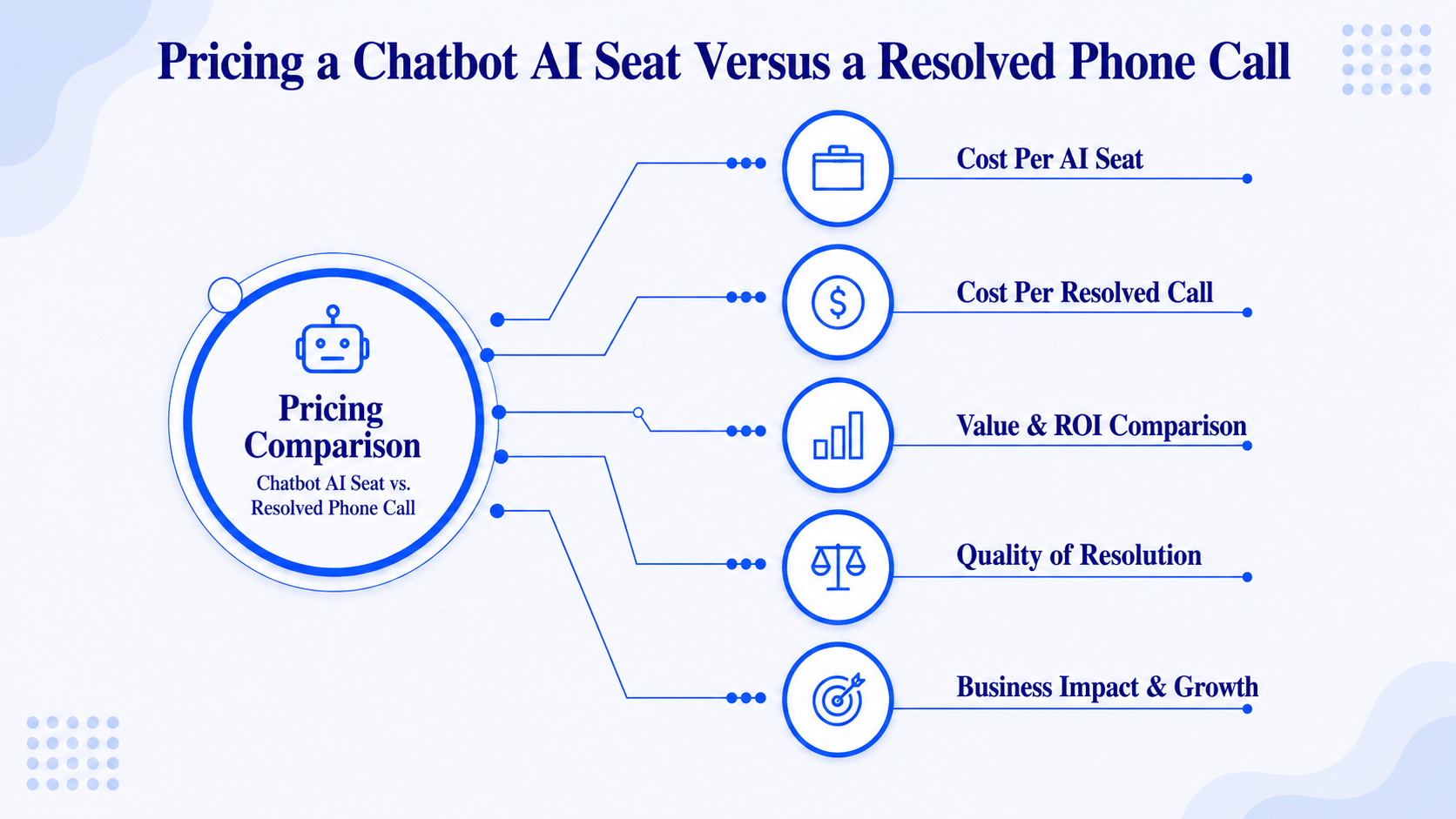
Most text-based assistant tools are priced per seat or per agent, a model that maps reasonably well to a text conversation but breaks down completely once you try to apply it to phone call volume, since a single seat cannot represent a hundred simultaneous calls the way it represents a hundred open chat tabs. A seat handles unlimited typed conversations across a month at no extra cost, while a phone line has to answer one caller at a time and pay for every second of actual talk time, so the two pricing models were never built to be compared directly. 9278.io prices voice calls per second instead, with plans starting around ₹2,999 a month, so a short callback costs a fraction of what a rounded-up minute would, and our pricing plans show exactly what that looks like across real call volumes.
- Per-second billing. A twelve-second call costs a fraction of a full minute instead of getting rounded up like most enterprise contracts round every call.
- No long-term contracts. A business can scale calling volume up in festival season and down afterward without renegotiating anything.
- Published starting prices. A number on the page tells you more than a "request a demo" button ever will, even a rough one.
- Separate from chatbot pricing. Seat-based chat pricing and per-second call pricing measure two completely different things, so compare them on their own terms.
- Growth-tier clarity. A mid-tier plan around ₹8,799 a month with ten agents shows the actual jump in cost as call volume grows.
A Retailer Running Both a Chatbot and a Phone Line
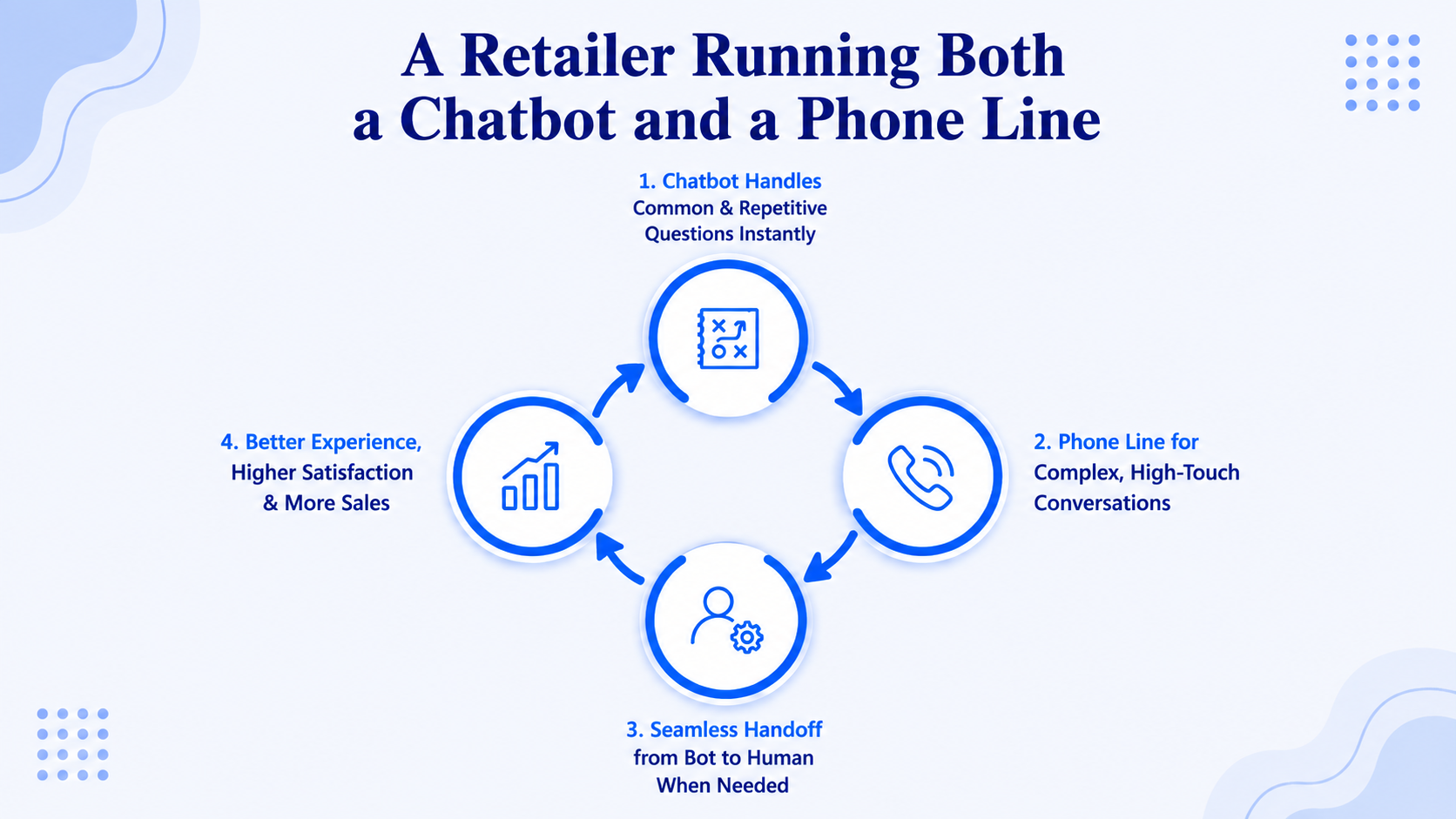
Picture a small electronics retailer in Ahmedabad whose website chatbot handles delivery-status questions all day without anyone watching it, while the store's phone line still rings through to a single busy salesperson. A customer messaging about a return gets an instant, accurate reply, while a customer calling about the same return waits on hold or gives up entirely, because the chatbot on the website has no reach into the phone system at all. The owner sees the chat metrics improving every month and assumes the whole customer experience is getting better, never noticing the calls that quietly stopped coming in from customers who tried once and gave up. Adding a voice-specific system alongside the existing smart chatbot means both channels finally get the same standard of instant response, rather than one channel working well and the other quietly losing customers, and 9278.io was built specifically to be that second half of the pair.
Conclusion
A smart chatbot deserves its place on a website for exactly the questions it was built to answer, but it was never designed to pick up a ringing phone, and no amount of chat bot polish changes that. Bot chat ai priced per seat and chatbot ai marketed as an all-in-one solution both skip the reality that phone calls need a different system, with different language depth and different compliance rules entirely. 9278.io was built specifically for that gap, with 10+ Indian languages, per-second billing, and TRAI-compliant calling as defaults rather than add-ons. Judge your smart chatbot on what it actually does well, and judge your phone line separately, because pretending one tool covers both channels is how businesses end up losing calls they never even knew they were losing. Test a voice-specific system on your own real call volume for a week before assuming your smart chatbot is quietly handling more than it actually is.
Ready to see it on your own calls?
9278.io answers every call in the caller's own language, with TRAI-compliant, per-second billed calling built for Indian businesses.
Start free trial