
- It must perform just as well on a phone call as it does in a chat window, not treat voice as an afterthought.
- Real language depth means switching mid-sentence between Hindi, Tamil, or English, not a single generic "multilingual" checkbox.
- Per-second billing shows the actual cost of an answered call, while "custom pricing" pages hide it until you sign.
- TRAI's consent and calling-window rules apply the moment it places an outbound call in India.
A conversational AI platform is the software layer that lets your business hold automated conversations with customers, whether that happens over chat or over a ringing phone line. Picture a lead calling after 9 PM, hearing four rings, and hanging up, because nobody answered and that lead rarely calls back. This article breaks down what it actually needs to do well on a phone call, how to judge language depth and pricing beyond the marketing page, and where Indian calling rules fit into the decision. Read on before you sign a contract built for a market that isn't yours.
Why "Best Platform" Lists Barely Mention the Phone Line
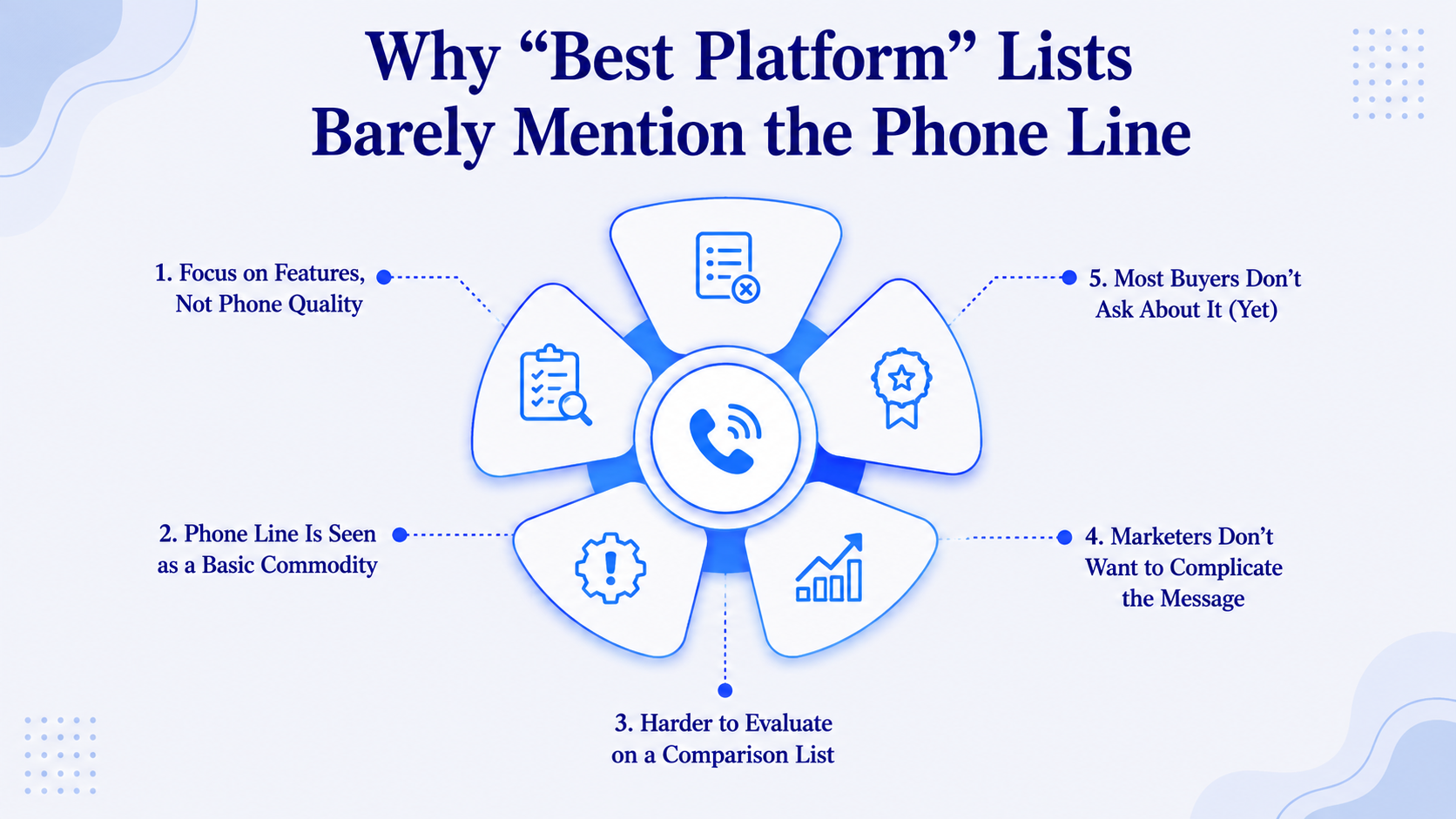
Most roundups of a conversational AI platform are written by comparing chat widgets, since a chat bubble is easy to screenshot for a listicle. A phone call is harder to show on a landing page, so voice gets one bullet point buried under WhatsApp and web chat. That gap matters more in India, where a large share of customer contact still happens by ringing a business directly rather than opening an app. A genuine platform treats phone support as core infrastructure, not a stretch goal bolted onto a chat roadmap.
Chat-first platforms often bolt voice onto an existing text engine later instead of building it as a core feature, and chat transcripts make easier marketing content than a phone call transcript ever will. Comparison articles tend to copy each other's platform lists, which is why the same chat-heavy names repeat across roundups. A business answering 200 calls a week needs the phone experience judged on its own rather than assumed from a chat demo, so ask any vendor directly how many of their live customers actually use the phone channel versus chat alone.
What Happens in the First Three Seconds After Someone Calls
A conversational AI platform earns its place on a phone line in the first few seconds, before the caller decides whether to stay on. Three things need to happen in order, and skipping any one shows up immediately as a frustrated caller repeating themselves. Many voice platforms skip straight to a scripted reply, which is why so few of them survive a real, noisy phone call.
First, it needs to hear without a menu: the caller speaks a full sentence, not "press two for billing," and the system transcribes it correctly even over a patchy mobile signal, background noise included. Second, it needs to understand the actual ask, matching intent to your business's real answers rather than a scripted FAQ that dead-ends the moment a caller asks something unexpected. Third, it needs to finish the task, so a booking, a callback number, or an order update lands in your system before the call ends, not in a transcript nobody reads until next week.
Does Your Chatbot Speak Marathi, or Just English With Subtitles?
Marketing pages love the word "multilingual," and an AI chatbot that lists ten languages sounds impressive until a caller switches from Hindi to English mid-sentence and the system stalls. Real language depth is tested by code-switching, not a dropdown menu of options nobody uses in a live conversation. An AI customer service chatbot that only lists languages on a features page, without proving code-switching live, has not solved this problem.
- Live language test. Ask for a demo in the exact language mix your callers use, including Hinglish, not a scripted English demo.
- Mid-call switching. Check whether the platform switches languages inside one call or forces the caller to restart a session.
- Production-ready languages. Confirm which of the 10+ languages, such as Hindi, Tamil, Telugu, Bengali, Marathi, and Punjabi, are actually live rather than "in beta."
- Local pronunciation. Test names and places, since a caller stops trusting a system that mangles their own city's name.
- Proof, not a features page. Read how Hindi voice AI handles code-switching in a live call before you shortlist any platform.
Comparing "Contact Sales" Pricing to a Per-Second Bill
Most platforms listed in enterprise roundups show "custom pricing," which usually means a sales call and a quote sized to your company, not your usage. That works for a 500-seat support desk, and it makes almost no sense for a clinic answering 40 calls a day. 9278.io publishes per-second billing instead, so the price on the page stays close to the price on the invoice. Our pricing breakdown walks through the exact math behind that number.
- Per-second billing. A 12-second callback costs a fraction of a full minute, unlike platforms that round every call up.
- Wallet-based billing. Top up as usage grows instead of renegotiating a contract every quarter.
- Unused minutes. Ask what happens to them, since some enterprise plans forfeit them at month end.
- A published starting price. Even a rough one tells you more than a "request a demo" button ever will.
- Effective per-minute rate. Compare it across plan tiers, since higher tiers usually lower it.
One TRAI Rule Most Voice AI Vendors Never Mention
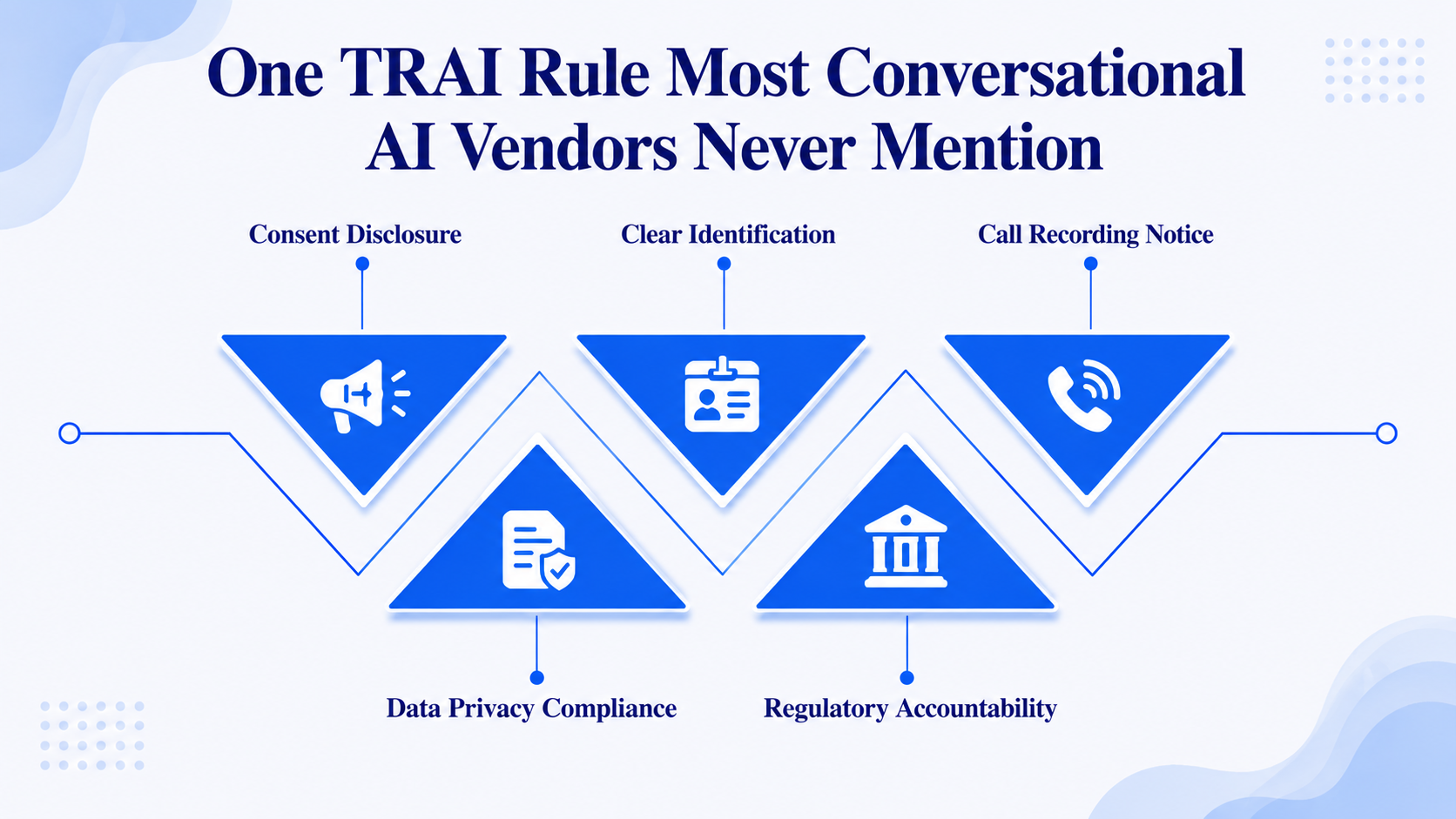
An AI customer service chatbot or voice platform that only answers inbound calls has an easy compliance story, since nobody objects to picking up the phone. The moment that same conversational AI platform places an outbound call, a reminder, a follow-up, a payment nudge, it falls under TRAI's rules on consent, calling windows, and registered sender identity, and most global vendors never mention this because it doesn't apply to their home market. This is the one compliance detail every such comparison list from outside India quietly skips.
Verify a platform's TRAI-compliant calling claim, following TRAI guidelines, before it dials a single Indian customer on your behalf. That means consent captured before any outbound number gets dialed, calls restricted to TRAI's permitted calling windows, a registered sender identity that matches your business name, and a documented opt-out path for the number being called.
A Clinic, a Property Dealer, and a Restaurant Ask the Same Question Differently
The same conversational AI platform behaves differently depending on who is calling and why, which is why generic feature lists undersell how it actually performs day to day. Judging it only on a generic demo script misses exactly these differences.
A dental clinic caller wants Saturday timings and a booking, and the answer needs to be instant with the booking landing in the clinic's calendar rather than a chat log buried in a dashboard. A property dealer treats every call as a lead worth following up, so capturing the caller's number and requirement correctly matters more than a witty response. A neighbourhood restaurant mostly gets asked if a table is free tonight, where a fast, accurate answer beats a long conversational back-and-forth every time a hungry customer calls.
Five Questions to Ask Before You Sign Anything
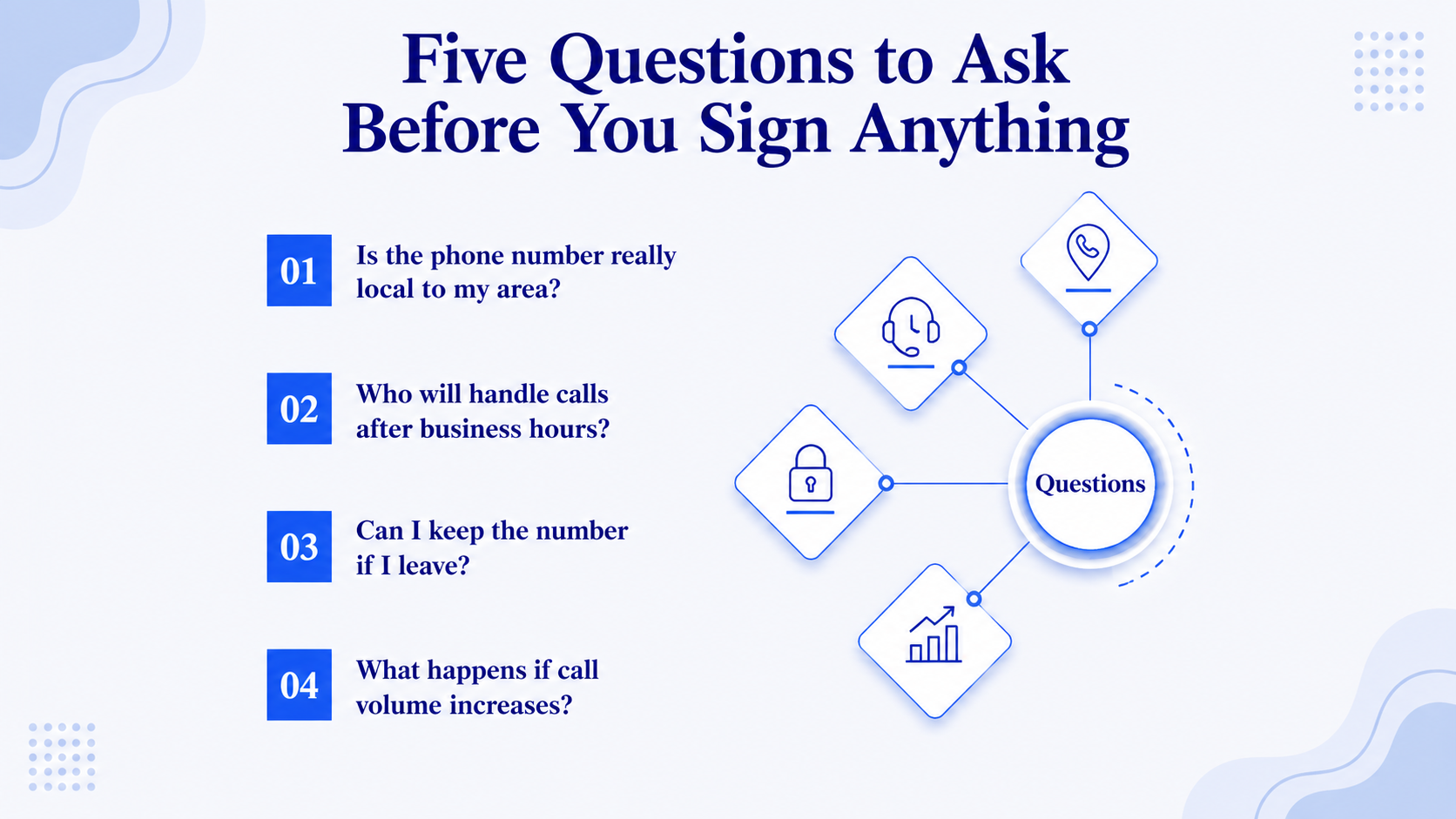
Once you've watched a demo, run the platform through a short checklist before committing budget to it. These five questions apply to any conversational AI platform you shortlist, regardless of how polished its demo looks.
Ask whether it can hold a full conversation on a phone call and not just a chat window, whether it switches languages mid-call without restarting the conversation, and whether the pricing page is specific enough to estimate next month's bill. Confirm it names TRAI or an equivalent local regulation for outbound calls, and test it on a real number before signing a yearly contract.
Conclusion
Choosing among the growing field of conversational ai tools is less about the longest feature list and more about whether it performs on the channel your customers actually use to reach you. Voice deserves the same scrutiny as chat, language depth needs to survive a real code-switching caller, and pricing should be legible before you sign anything. TRAI's rules apply the moment a platform dials out on your behalf, so compliance belongs in the evaluation, not an afterthought discovered later. Judge it on these four points and the marketing language stops mattering.
The businesses that get this right test a platform on their own calls before committing budget to it. 9278.io is built specifically for Indian phone conversations, with per-second billing and 10+ languages tested for code-switching rather than a checkbox. Run a week of your actual call volume through it and judge the result on your own transcripts, not a sales deck. Start small, read what the calls actually say, and let that decide your next platform.
Ready to see it on your own calls?
9278.io answers every call in the caller's own language, with TRAI-compliant, per-second billed calling built for Indian businesses.
Start free trial