
- An AI virtual assistant manages calendars and email well but has no way to answer a ringing business phone.
- Logic built for scheduling and typed tasks rarely survives a live Indian call in Hindi or a mixed language.
- A tool priced per user for personal productivity says nothing about what a customer call actually costs to resolve.
- An assistant for your own workload and a system for your customers' calls solve two completely different problems.
An AI virtual assistant manages a calendar, drafts emails, and organises tasks impressively well, and this article compares that against what it cannot do at all. A receptionist juggling five lines, or a lead going cold because nobody picked up the phone after 9 PM, is a problem no scheduling assistant on your laptop was ever built to solve, and it is a cost most comparison guides never even try to measure. You will learn where an AI virtual assistant earns its place, where it stops completely, and what an Indian business needs the moment a customer actually calls instead of sending an email. Read on before you assume the assistant helping you personally is also helping the customers trying to reach you.
What an AI Virtual Assistant Handles Well on Your Calendar
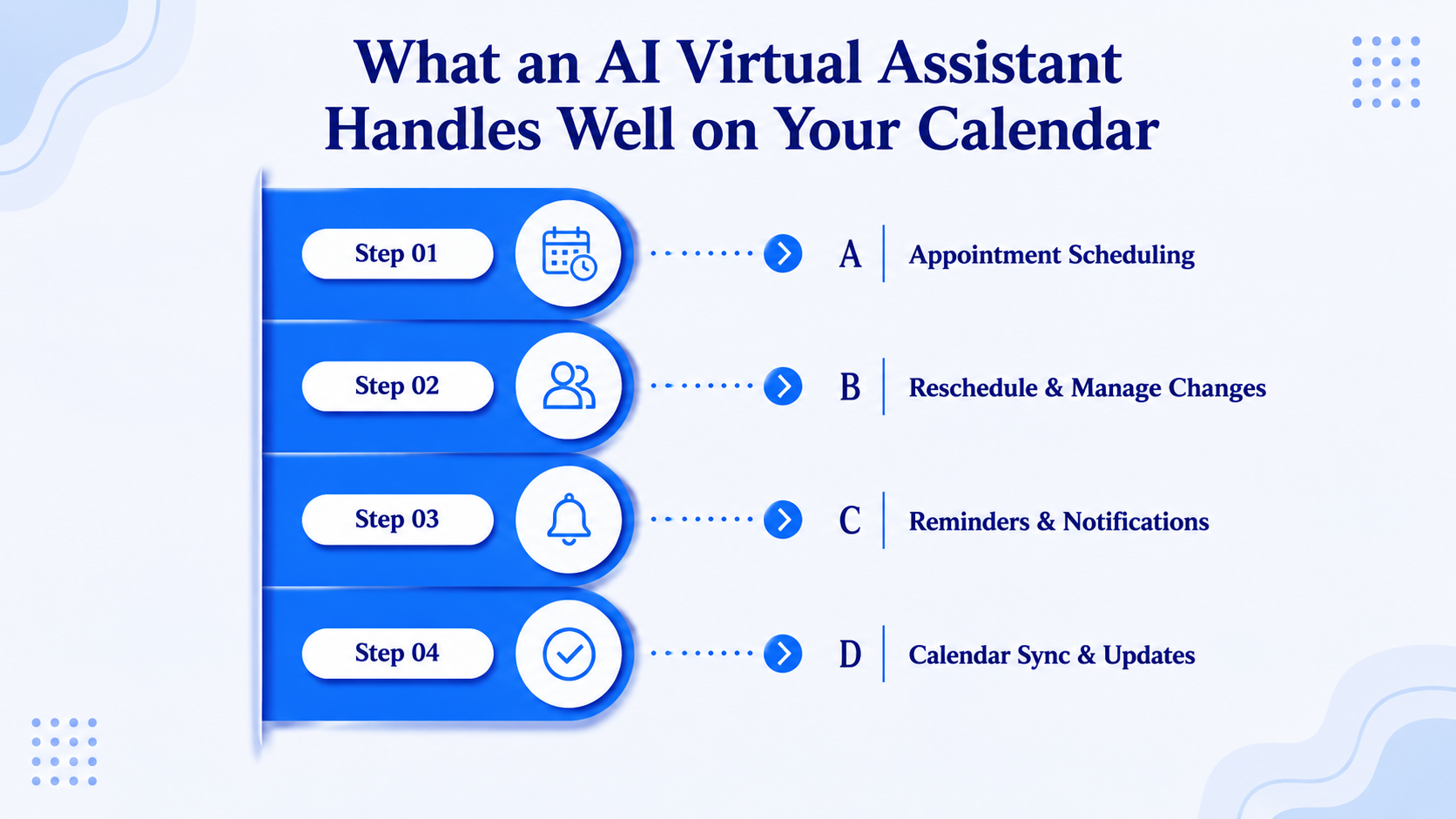
An AI virtual assistant earns its place managing a single person's day, scheduling meetings, drafting replies, and surfacing what needs attention before it becomes urgent. It works because the tasks it handles are personal and asynchronous, giving it time to draft, revise, and wait for a person to approve before anything gets sent. A professional juggling three meetings and a full inbox genuinely benefits from an AI virtual assistant clearing the calendar clutter, and that value is real and worth paying for on its own terms. None of that changes the fact that the assistant is managing one person's workload, not answering the phone for the business that person runs.
The Moment a Personal Assistant Can't Pick Up Your Business Line
The gap appears the instant a customer rings your business number instead of emailing, because an AI virtual assistant built for one person's calendar has no way to answer a call for the business as a whole. A missed call after hours or a lead lost while a receptionist juggles five lines is a cost no scheduling tool was ever built to prevent, and most roundups of the category never mention this because they were written entirely around personal productivity. Judging an AI virtual assistant by how well it manages one inbox says nothing about whether a customer calling the business ever gets an answer, and a business measuring only what the assistant touches ends up blind to the calls it never sees. An AI virtual assistant that flawlessly organises a founder's day can sit right next to a business phone line quietly losing customers, and nothing in the assistant's own reporting would ever show that gap.
Virtual AI Assistant Logic Wasn't Built for a Ringing Phone in Hindi
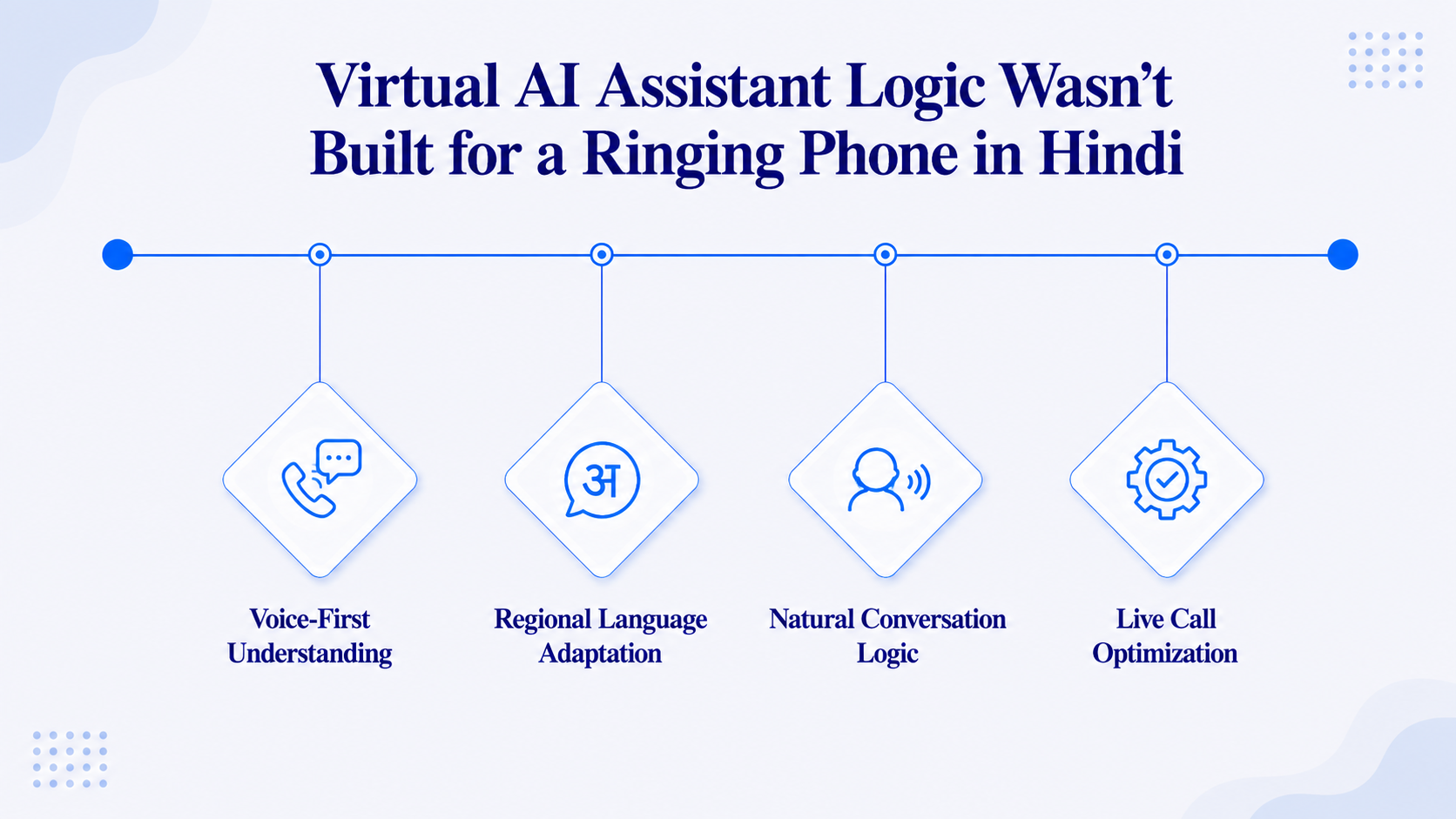
Most personal productivity tools are tuned on typed English text and structured calendar data, and that tuning does not transfer to a spoken Indian call where a customer switches from Hindi to English mid-sentence. Typed tasks give a system time to process a full request and confirm details before acting, correct a typo, or wait for approval; a live call demands the same understanding instantly, over a patchy mobile signal, with no chance to reread what was said and no draft to revise before sending. A model that scores well on calendar and email benchmarks can still stall completely the moment it has to transcribe a fast, accented sentence in real time rather than parse a message that already arrived as clean text. 9278.io supports 10+ Indian languages, including Hindi, Tamil, Telugu, Bengali, Marathi, and Punjabi, built specifically for that kind of mid-call switch, and our Hindi voice agent breakdown covers exactly this scenario in more depth.
What an AI Powered Virtual Assistant Skips About Outbound Consent
A tool that only drafts emails and books meetings has an easy compliance story, since nobody objects to a personal assistant acting on its owner's behalf whenever it likes, and no regulator has ever needed to weigh in on a calendar invite. The moment any system starts placing outbound phone calls to customers instead, a reminder, a confirmation, a payment nudge, Indian telecom rules apply in a way no personal-productivity tool's terms of service ever needed to cover, because a phone call reaches someone whether or not they asked for it. Most productivity vendors never mention this at all, since outbound phone compliance simply never came up building a tool meant to manage one person's inbox.
- Recorded consent. The customer must have agreed to that category of call before it goes out, not after someone complains about it.
- Registered sender identity. The number placing the call has to be traceable back to your business by name, not an anonymous line.
- TRAI-compliant calling windows. Outbound calls stay inside permitted hours, per TRAI guidelines, rather than whenever convenient for your team.
- DND-aware framing. A number on the do-not-disturb list still needs a transactional tone, not a promotional one, to stay compliant.
- Complaint thresholds. Five or more complaints against a number within ten days can trigger enforcement action, up to a year-long disconnection.
Counting What an AI Personal Assistant Actually Costs Per Call
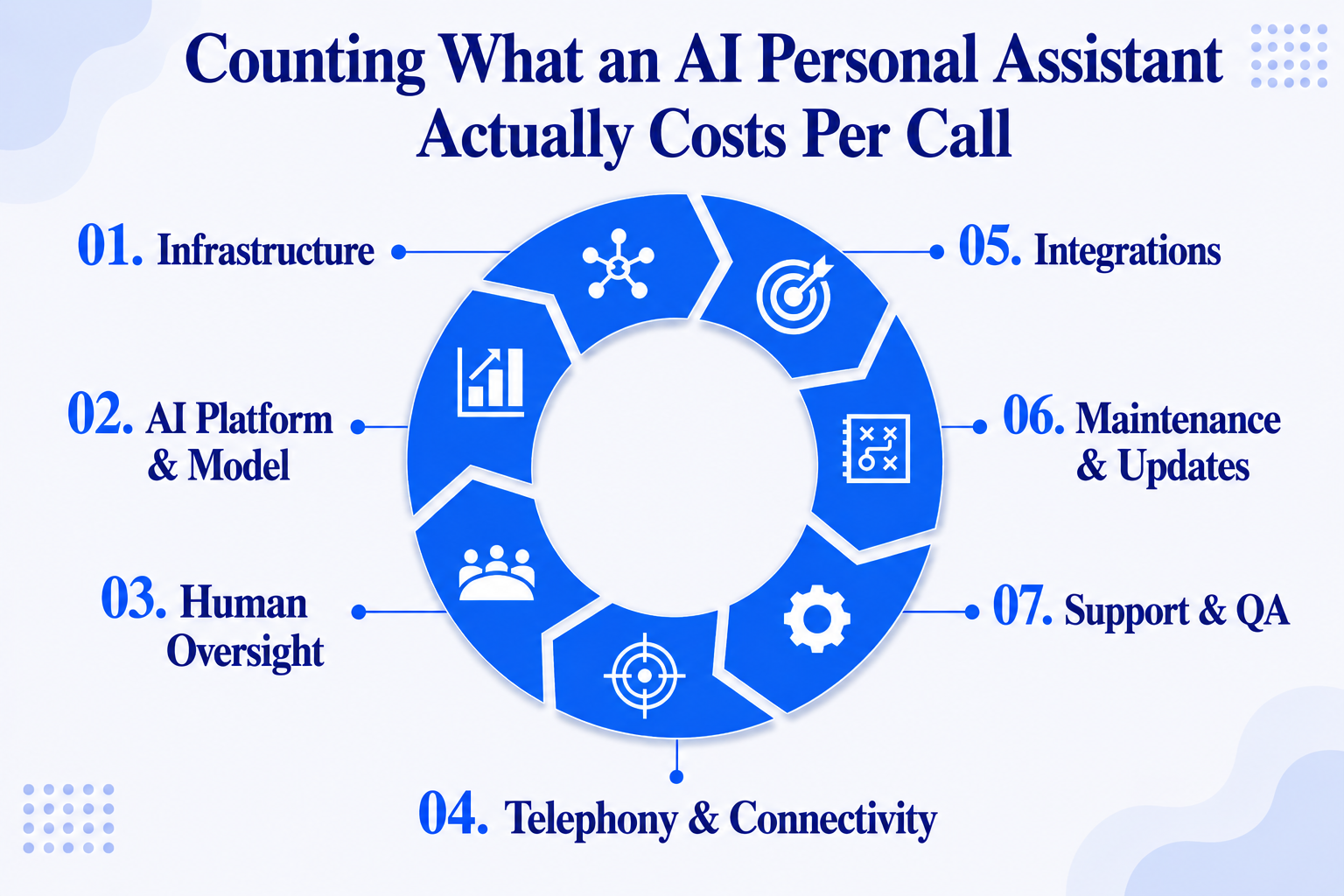
Most personal-productivity tools are priced per user per month, a model built around one person's output rather than a business answering customer calls at volume, since a single seat cannot represent a hundred simultaneous calls the way it represents one busy calendar. A seat handles unlimited scheduling and drafting across a month at no extra cost, while a phone line has to answer one caller at a time and pay for every second of actual talk time, so the two pricing models were never built to be compared directly. 9278.io prices voice calls per second instead, with plans starting around ₹2,999 a month, so a short callback costs a fraction of what a rounded-up minute would, and our pricing plans show exactly what that looks like across real call volumes.
- Per-second billing. A twelve-second call costs a fraction of a full minute instead of getting rounded up like most enterprise contracts round every call.
- No long-term contracts. A business can scale calling volume up in festival season and down afterward without renegotiating anything.
- Published starting prices. A number on the page tells you more than a "request a demo" button ever will, even a rough one.
- Separate from productivity pricing. Per-user assistant fees and per-second call pricing measure two completely different jobs.
- Growth-tier clarity. A mid-tier plan around ₹8,799 a month with ten agents shows the actual jump in cost as call volume grows.
A Consultant Who Uses Both a Personal Assistant and a Phone Line
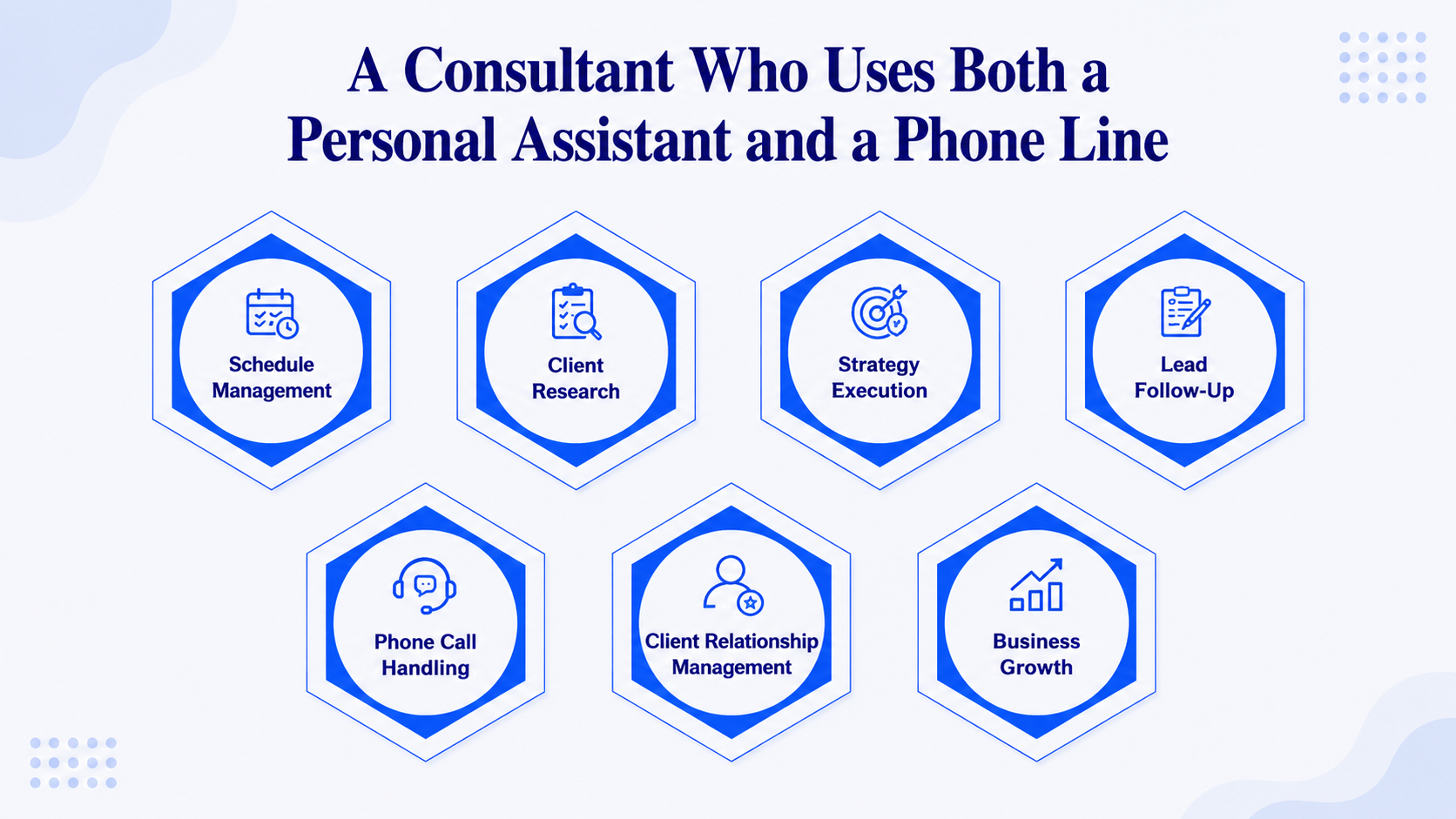
Picture a legal consultant in Bengaluru whose AI virtual assistant handles her calendar, drafts client emails, and reminds her of deadlines all day without her lifting a finger. Her office phone still rings through to whoever is free, and a new client calling to ask about availability often waits on hold or reaches voicemail instead of a person, then calls a different consultant listed right below hers. The personal assistant makes her individually more productive, but it never touches the phone line that is quietly costing her new clients every week it goes unanswered, and she has no way to know how many calls she lost this way. Adding a voice-specific system alongside her existing assistant means both jobs finally get handled, her calendar staying organised while the phone gets answered the moment it rings, and 9278.io was built specifically to be that second half of the pair.
Conclusion
An AI virtual assistant deserves its place organising a calendar and drafting emails, but it was never designed to answer a customer's phone call, and no amount of scheduling polish changes that fact. A virtual ai assistant tuned for typed tasks, an ai powered virtual assistant priced for one user, and an ai personal assistant built around a single inbox all skip the reality that business phone calls need a different system entirely. 9278.io was built specifically for that gap, with 10+ Indian languages, per-second billing, and TRAI-compliant calling as defaults rather than add-ons. Judge your AI virtual assistant on what it actually does well, and judge your phone line separately, because assuming one tool covers both jobs is how businesses keep losing calls they never even knew they were losing. Test a voice-specific system on your own real call volume for a week before assuming your AI virtual assistant is quietly covering more ground than it actually is.
Ready to see it on your own calls?
9278.io answers every call in the caller's own language, with TRAI-compliant, per-second billed calling built for Indian businesses.
Start free trial