
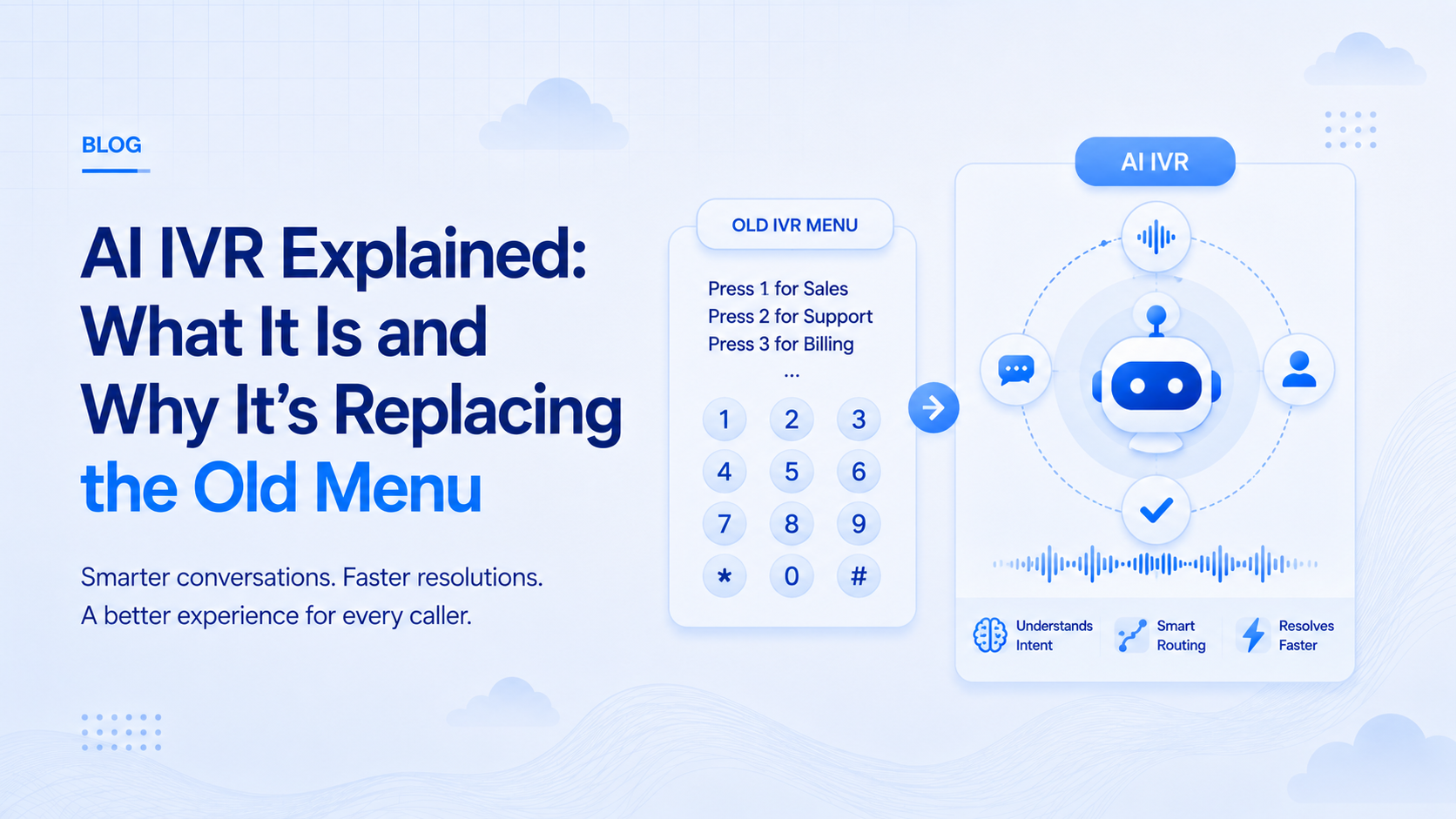
- AI IVR replaces a fixed menu tree with a system that listens to a full sentence and responds to the actual request.
- A caller asking "what is ivr" today is usually describing the frustrating kind, not the conversational kind now available.
- Multilingual claims mean little until an Indian caller switches languages mid-sentence and the system stalls.
- Outbound calls placed by AI IVR still have to follow India's consent and calling-window rules.
AI IVR is the technology replacing the old "press one for sales" menu with a system that actually listens to what a caller says, and this article explains what it is and how it changes a real call. A receptionist juggling five lines, or a customer hanging up halfway through a menu tree, is the daily cost of the version most businesses still run. You will learn how AI IVR differs from the keypad kind, what it costs to run one properly in India, and where language depth and compliance quietly decide whether it works. Read on before you assume every system sold as an upgrade actually understands a full sentence, since most vendors use the word loosely.
Press One for Frustration: What an IVR Actually Does Today
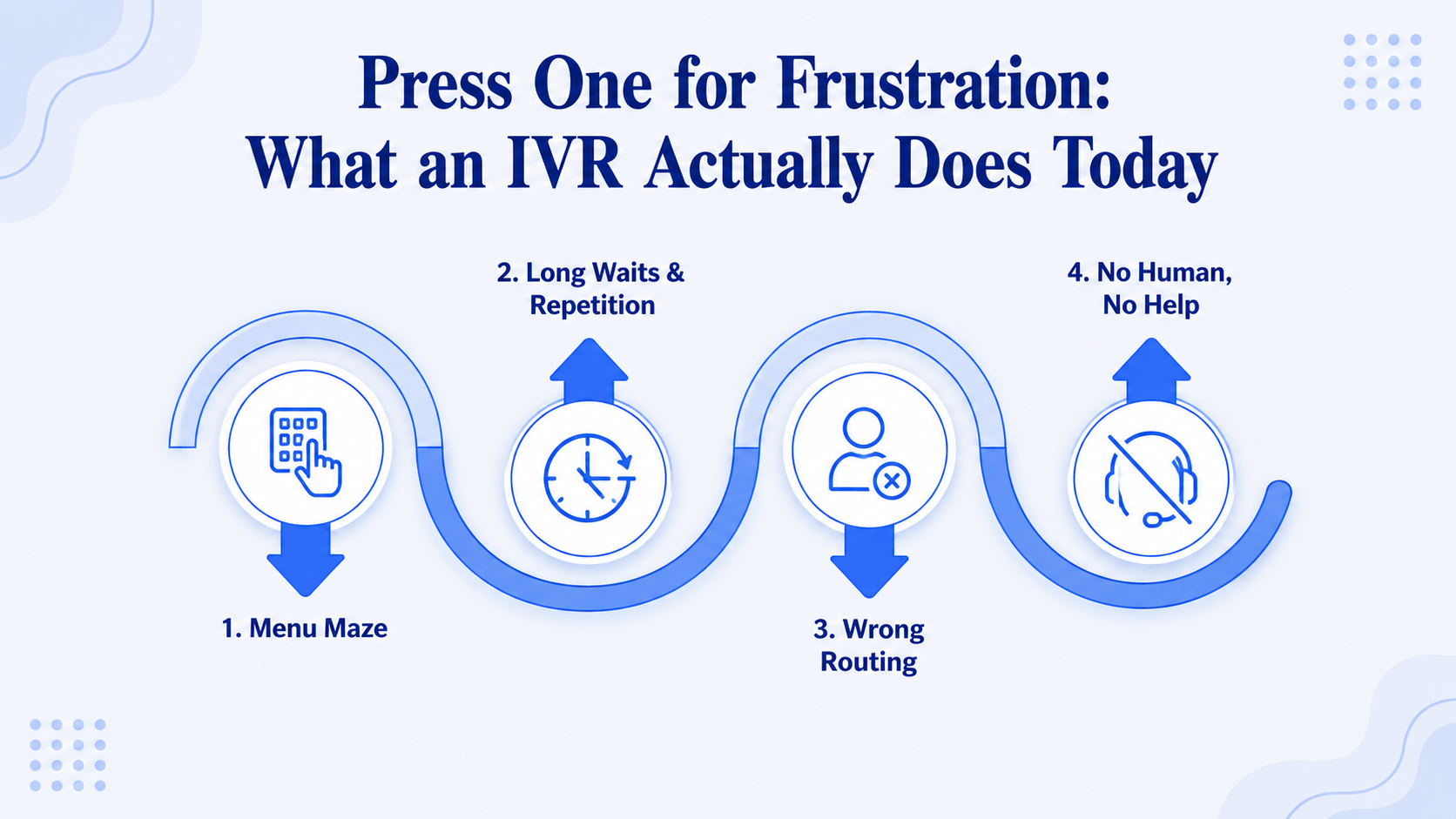
Most people who ask what is ivr are describing the version that frustrates them: a recorded menu, a keypad choice, and a caller repeating themselves to a system that cannot hear anything outside its script. That version routes calls reasonably well and resolves almost nothing on its own, which is why callers so often mash zero just to reach a person, then give up and call a competitor instead. It was built for an era when a phone system could only recognise a keypress, and two decades later a large share of Indian businesses still run exactly that version, even though the technology to fix it has existed for years. A caller who gives up rarely tries the same channel twice, which makes the old menu more expensive than its "free" sticker price suggests.
What Changes the Moment AI IVR Starts Understanding Sentences
AI IVR keeps the same job, answering a call and resolving what it can, but changes how it does that job at every step. Instead of routing a caller through a fixed tree, it listens to a full sentence, works out the intent behind it, and responds the way a person would, the same way a good receptionist does without ever reading from a script. 9278.io tunes specifically for the moment a caller interrupts or restates a request, since that correction is where most systems marketed as conversational actually break down.
- It hears without a menu. The caller says what they want in their own words, not a keypad code, even over a patchy mobile signal.
- It understands the actual request. Intent gets matched against your business's real answers, not a static decision tree that dead-ends on anything unexpected.
- It resolves the call. A balance check, a booking, or a status update happens on the same call rather than routing to a queue for someone to handle later.
- It escalates with context. A caller who needs a person gets handed off with the conversation already summarised, instead of repeating their story from scratch.
Why an IVR System Still Fails on a Hindi-English Sentence
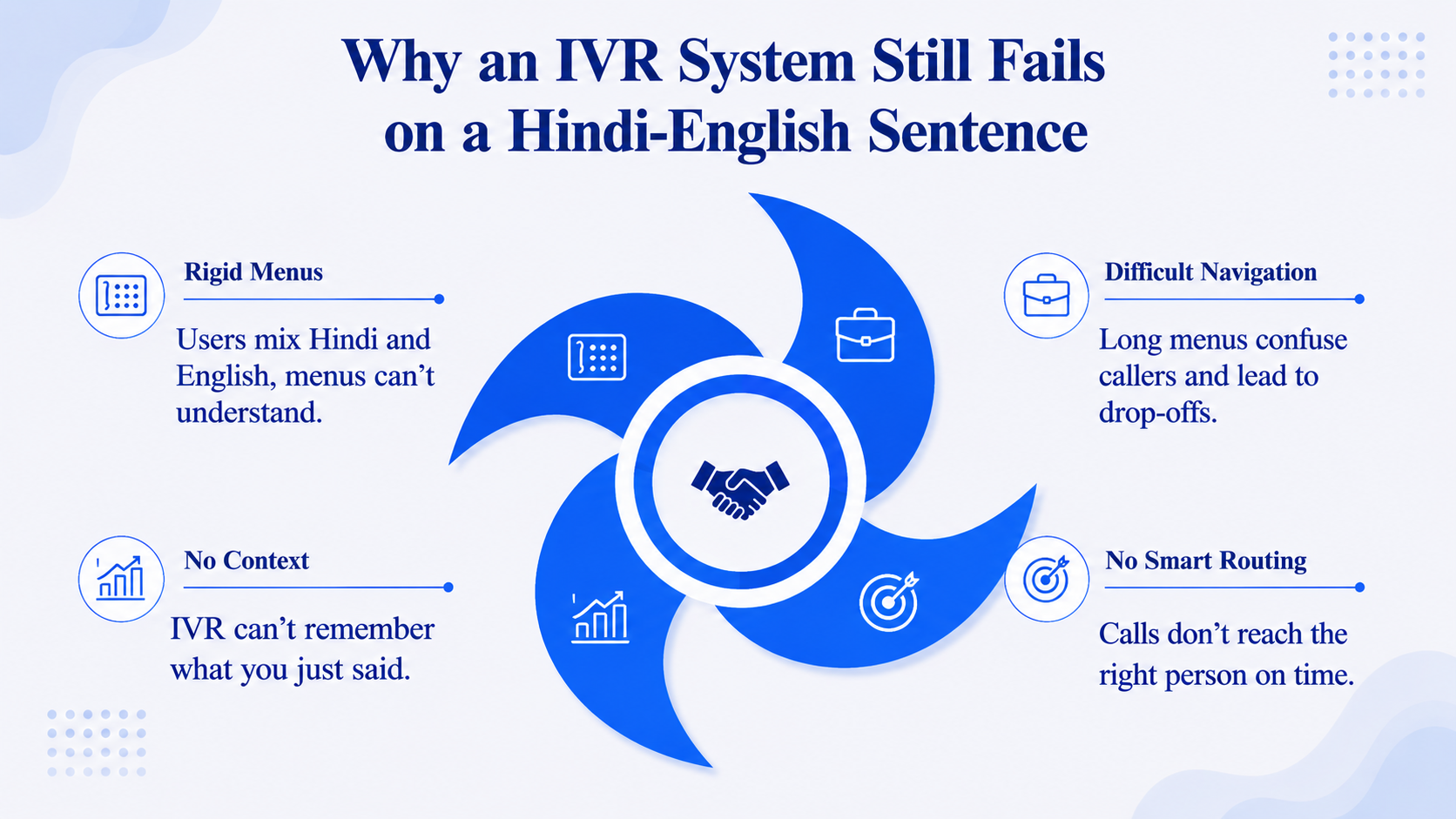
Most vendors market their systems as multilingual, and few show a live call where a caller switches from Hindi to English mid-sentence, which is exactly where a system tuned only for clean, single-language input stalls. A features page listing ten languages says nothing about whether any of them were actually tested against a real accent or a mixed-language sentence. 9278.io supports 10+ Indian languages, including Hindi, Tamil, Telugu, Bengali, Marathi, and Punjabi, built for that kind of mid-call switch rather than a features-page checkbox. Read our take on a Hindi voice agent handling this exact scenario before assuming any AI IVR's language claim survives a real conversation.
The Bill Nobody Shows You Until After You've Signed
Enterprise vendors love the phrase "contact sales," which usually means a quote sized to your company rather than your actual call volume, making the sticker price nearly meaningless until you divide it by calls actually handled. A restaurant answering forty calls a night and one answering four hundred often pay similar seat fees under that model. 9278.io publishes per-second billing instead, with plans starting around ₹2,999 a month, so the number on the page is close to the number on the invoice. Our pricing plans break down exactly what that looks like across call volumes before you commit to anything.
What an IVR System Isn't Allowed to Do Without Asking First
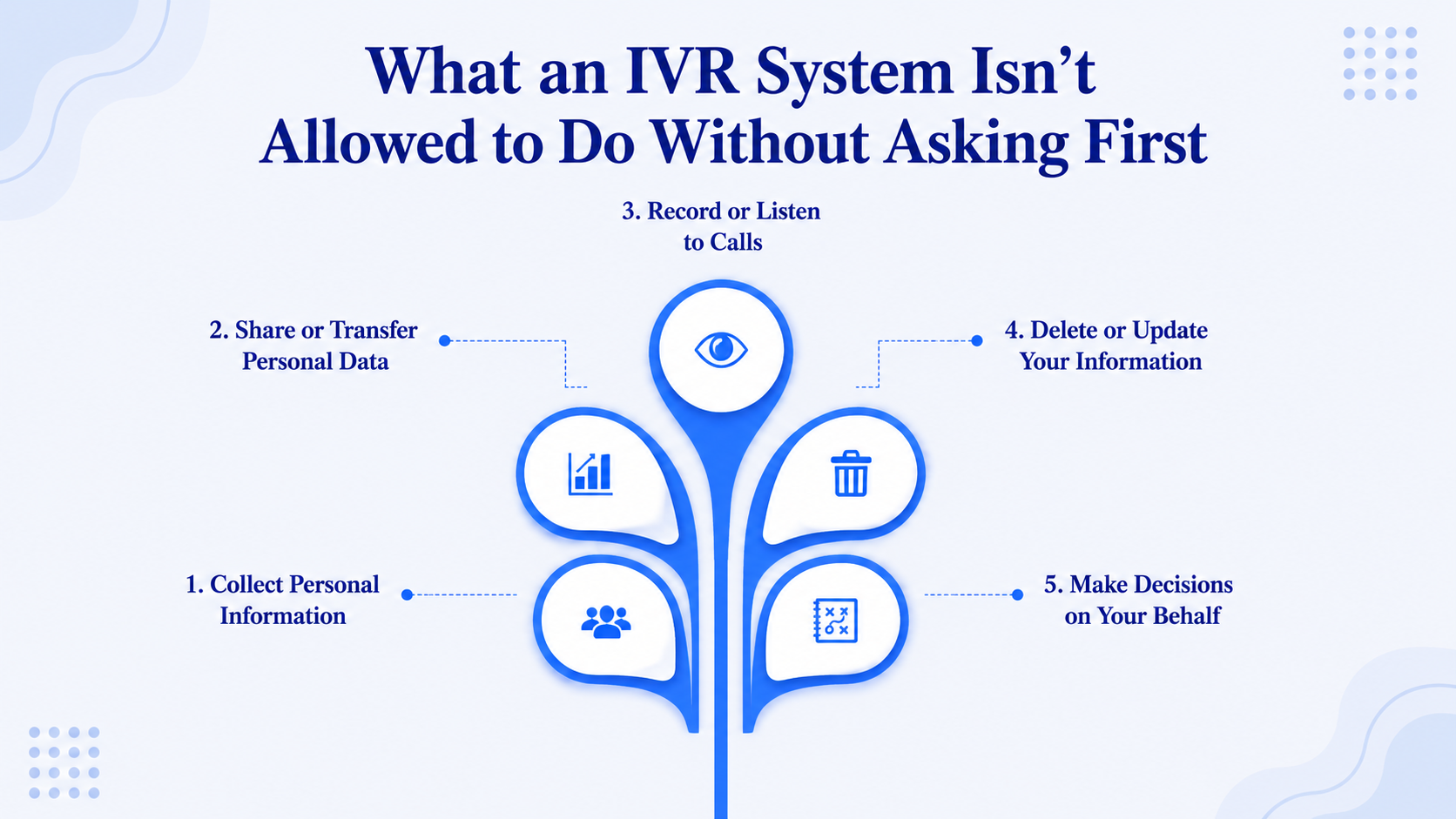
An AI IVR that only answers inbound calls has an easy compliance story, since nobody objects to a business picking up its own phone. The moment that same system dials out on its own, a reminder, a confirmation, a payment nudge, Indian telecom rules treat it the same way they treat a promotional call, regardless of how helpful the intent behind the call actually was, and the checklist below decides which side of that line you land on. Most vendors selling into India quietly skip this section entirely, since it barely applies to their home market.
- Recorded consent. The customer must have agreed to that category of call before it goes out, not after someone complains about it.
- Registered sender identity. The number placing the call has to be traceable back to your business by name, not an anonymous line.
- TRAI-compliant calling windows. Outbound calls stay inside permitted hours, per TRAI guidelines, rather than whenever convenient for your team.
- DND-aware framing. A number on the do-not-disturb list still needs a transactional tone, not a promotional one, to stay on the right side of the rule.
- Complaint thresholds. Five or more complaints against a number within ten days can trigger enforcement action, up to a year-long disconnection for repeat offenders.
A Clinic's Front Desk Before and After Switching to AI IVR
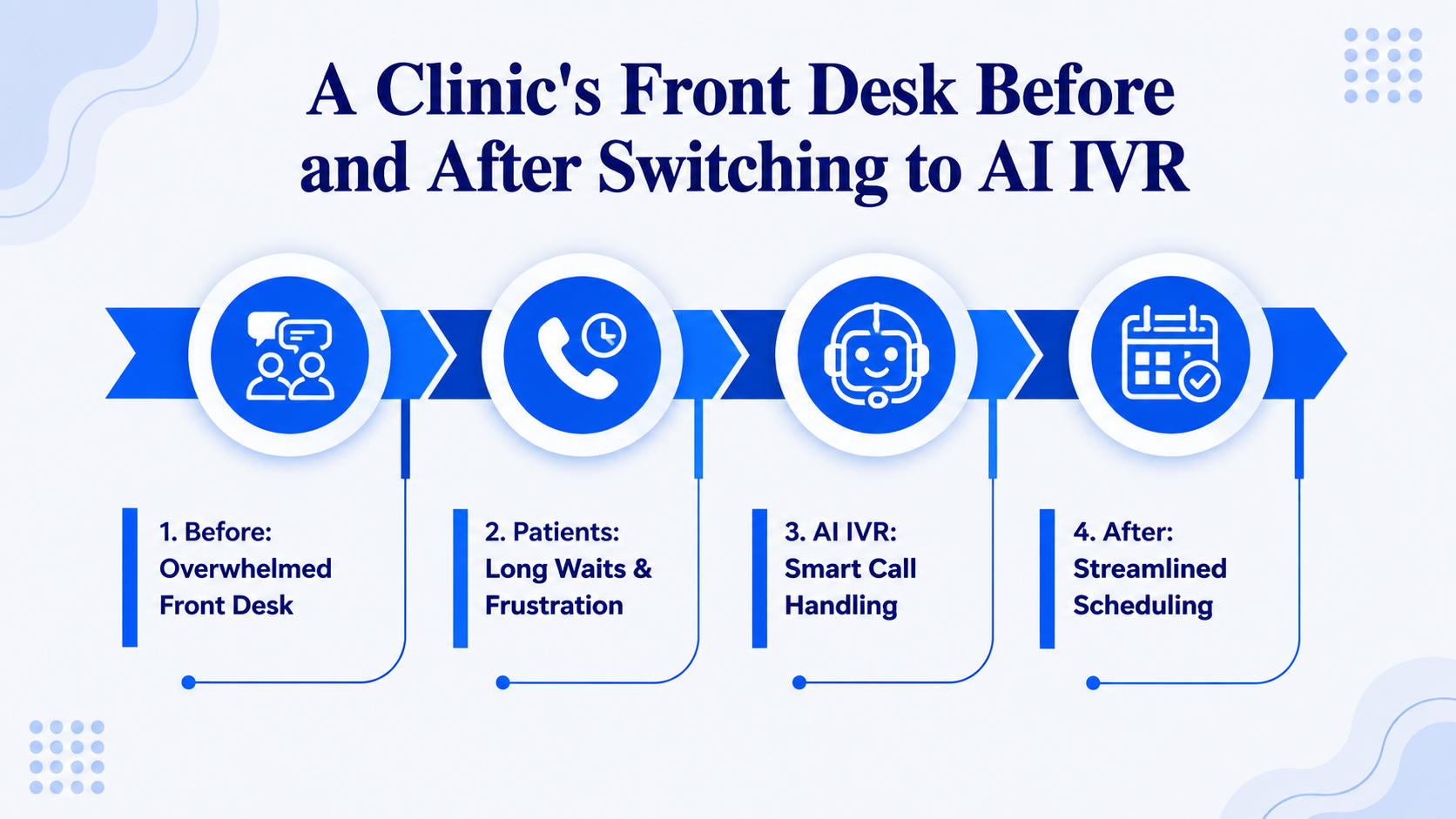
Picture a dental clinic in Pune where the front desk juggles three ringing lines while checking in a patient standing at the counter. The old keypad system routes calls but answers nothing, so a caller asking about Saturday hours just hangs up, and the desk staff spend half the morning apologising for hold times. Switching that system for AI IVR means the same caller gets an answer immediately, while the desk staff keep working with the patient in front of them, and the Monday backlog of unanswered weekend calls simply stops existing. Bookings that used to need a callback now happen on the first ring instead.
Conclusion
AI IVR earns its name only when it actually understands a full sentence rather than routing a caller through a keypad tree, and that distinction is worth checking before you buy anything described as one. AI IVR built for India needs to handle a caller switching between Hindi and English mid-sentence, publish pricing that maps to your real call volume, and follow TRAI's rules the moment it places an outbound call. 9278.io was built around exactly those three requirements, with per-second billing and 10+ Indian languages as defaults rather than upgrades. Ask what your current setup is actually doing on your own calls today, and the case for replacing it with AI IVR usually becomes obvious within a week of reading transcripts, once you see how many calls the old menu was quietly losing.
Ready to see it on your own calls?
9278.io answers every call in the caller's own language, with TRAI-compliant, per-second billed calling built for Indian businesses.
Start free trial