
- A two-minute chat response benchmark says nothing about whether AI customer support can resolve a live phone call.
- A system that only reads from a script stalls the moment a caller asks something unscripted.
- Pricing per seat rarely matches the true cost of a call actually resolved.
- Outbound follow-up calls still have to meet India's consent and calling-window rules, whichever platform places them.
AI customer support gets measured almost entirely by chat response times, and this article looks at why that metric says nothing about a phone call. A missed call after 9 PM or a lead going cold because nobody picked up is the everyday cost most response-time benchmarks never touch, and it is a cost most comparison guides never even try to measure. You will learn what resolution actually means on a live call, where language depth and follow-up compliance decide whether it works in India, and what a call genuinely costs to resolve. Read on before you judge a phone-based system by a metric built for typing, not talking.
The Two-Minute Response Metric That Means Nothing on a Phone Call
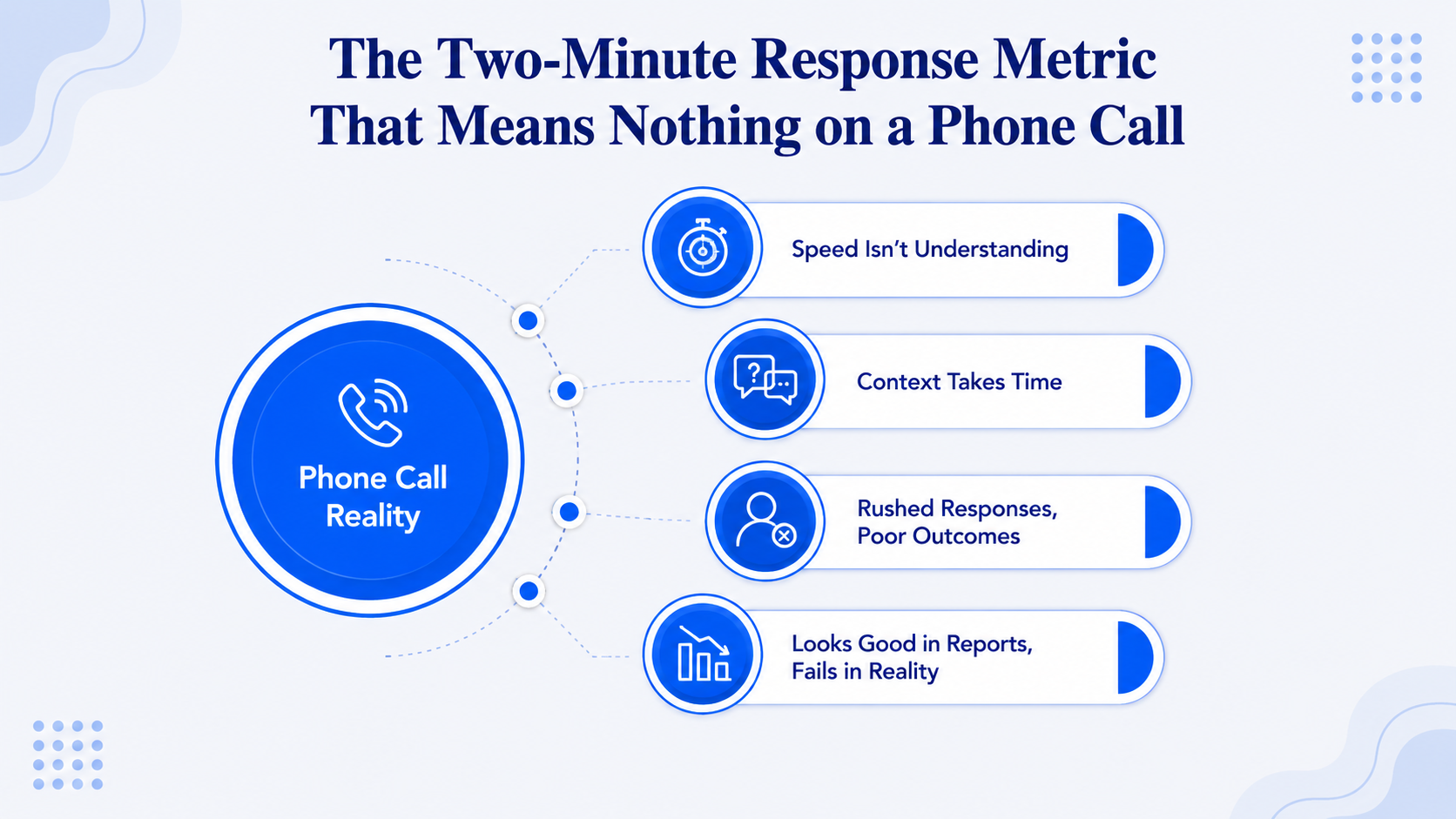
Most AI customer support guides cite a two-minute first-response benchmark, borrowed directly from chat and ticket systems where a reply can wait. A phone call has no such patience; a caller who is not heard within seconds hangs up, and there is no queue position to measure against. Judging a voice system by a chat metric misses the entire point of the channel, because the real question on a call is whether the caller's issue got resolved before they hung up, not how fast a message appeared on a screen. Response-time benchmarks were built for a world of typed messages sitting in an inbox, where a customer expects to wait and checks back later, and porting that same yardstick onto a live conversation quietly hides the one number that actually matters on a call. A support team that hits every chat SLA on paper can still be losing callers by the dozen if nobody is tracking what happened after the phone actually rang. Judging AI customer support on a borrowed metric is how a business ends up confident about a channel that is quietly failing every day.
What Resolution Actually Looks Like When AI Customer Support Picks Up
A support ticket can sit for an hour with nobody noticing, but a phone call cannot, which is why resolution on a live line means something different entirely. The caller needs an answer in one pass, not a queue position or a promise to follow up later, and AI customer support only earns its place if it gets the whole interaction right the first time. Four things need to happen in order, and skipping any one of them shows up immediately as a frustrated caller repeating themselves or hanging up before the issue is actually fixed. 9278.io tunes specifically for the moment a caller interrupts or restates a request, since Indian callers frequently correct themselves mid-sentence rather than waiting for the system to finish speaking.
- It hears without a menu. The caller speaks a full sentence, not a keypad option, even over background noise or a patchy signal.
- It understands the real request. Intent gets matched to your business's actual answers, not a scripted decision tree that dead-ends on anything unexpected.
- It resolves on the same call. A booking, a refund status, or an order update happens before the call ends, not in a follow-up nobody sends.
- It escalates with context. A caller who needs a person gets handed off with the conversation already summarised, not repeated from scratch.
Ai For Customer Service Still Stumbles on a Regional Accent
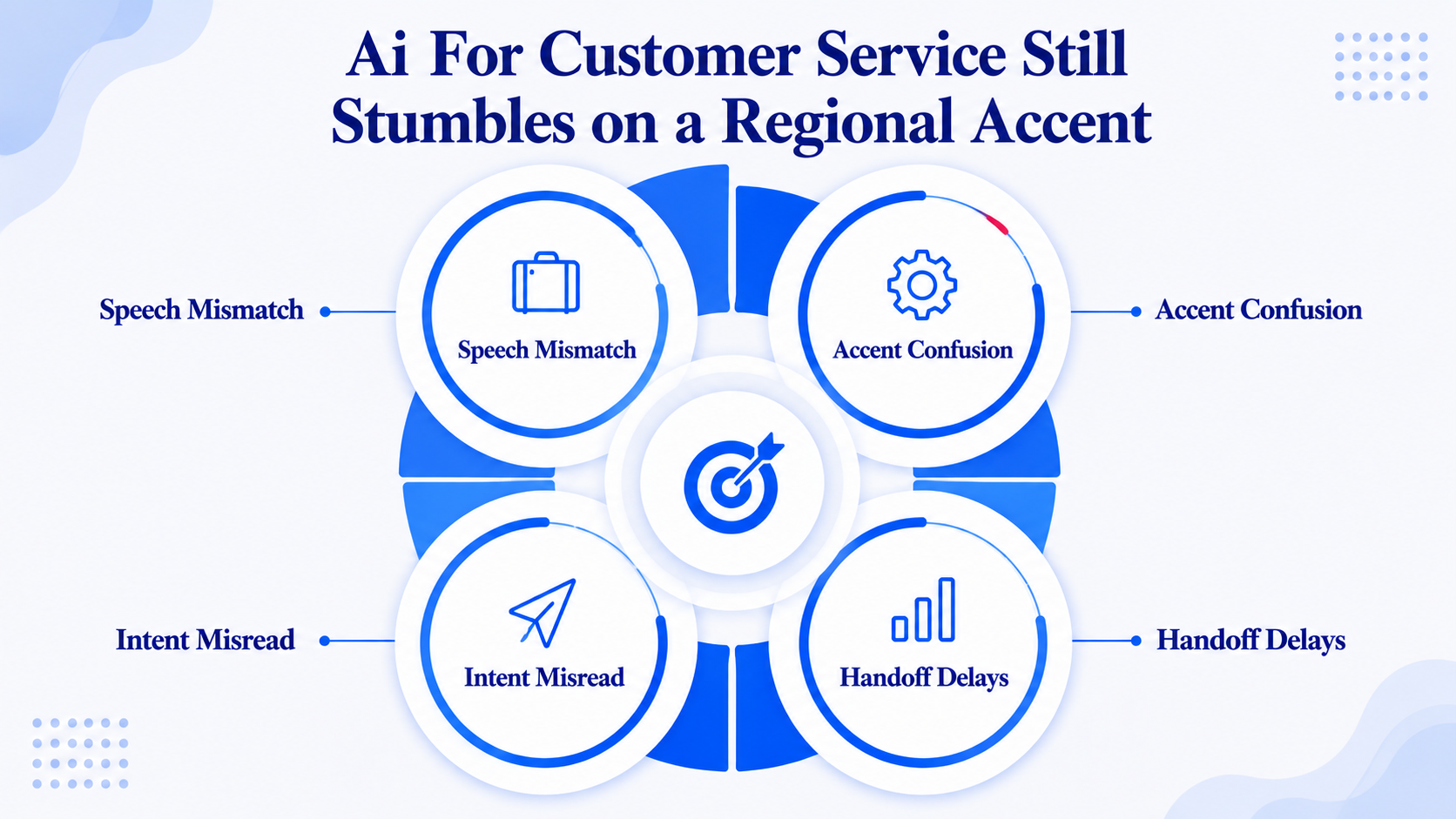
Most vendors show a polished English demo and never a live call where a caller switches from Hindi to English mid-sentence, which is ordinary on an Indian call and exactly where a system tuned only for clean, single-language input stalls for good. A features page listing ten languages says nothing about whether any of them were actually tested against a real regional accent or a sentence that mixes two languages at once. 9278.io supports 10+ Indian languages, including Hindi, Tamil, Telugu, Bengali, Marathi, and Punjabi, built for that kind of mid-call switch rather than a features-page checkbox, and read our take on a Hindi voice agent handling this exact scenario before trusting any language claim.
The Follow-Up Call Rule Most Support Playbooks Skip
Answering inbound calls has an easy compliance story, since nobody objects to a business picking up its own phone. The moment that same AI customer support places an outbound follow-up, a payment reminder, a satisfaction check, a renewal nudge, Indian telecom rules treat it the same way they treat a promotional call, regardless of how helpful the intent behind it actually was. Most support playbooks written for a Western market skip this entirely, because outbound follow-up calls in those markets do not carry the same regulatory weight they do in India.
- Recorded consent. The customer must have agreed to that category of call before it goes out, not after someone complains about it.
- Registered sender identity. The number placing the call has to be traceable back to your business by name, not an anonymous line.
- TRAI-compliant calling windows. Outbound calls stay inside permitted hours, per TRAI guidelines, rather than whenever convenient for your team.
- DND-aware framing. A number on the do-not-disturb list still needs a transactional tone, not a promotional one, to stay compliant.
- Complaint thresholds. Five or more complaints against a number within ten days can trigger enforcement action, up to a year-long disconnection for repeat offenders.
Counting the Real Cost of Customer Service AI Per Resolved Call
Most customer service ai gets priced per seat or per agent, a model built around a human headcount rather than call volume, which makes the sticker price nearly meaningless until you divide it by calls actually resolved. A support desk answering thirty calls a day and one answering three hundred often pay similar seat fees under that model, and the business handling far more volume ends up with the better deal by accident rather than design. 9278.io prices per second instead, with plans starting around ₹2,999 a month, so a short call costs a fraction of what a rounded-up minute would, and our pricing plans show exactly what that looks like across real call volumes, including the growth tier once AI customer support needs to scale past a couple of agents. A published starting price, even a rough one, tells a business more about real cost than a "request a demo" button ever will.
A Support Desk's Tuesday Before and After AI Customer Support
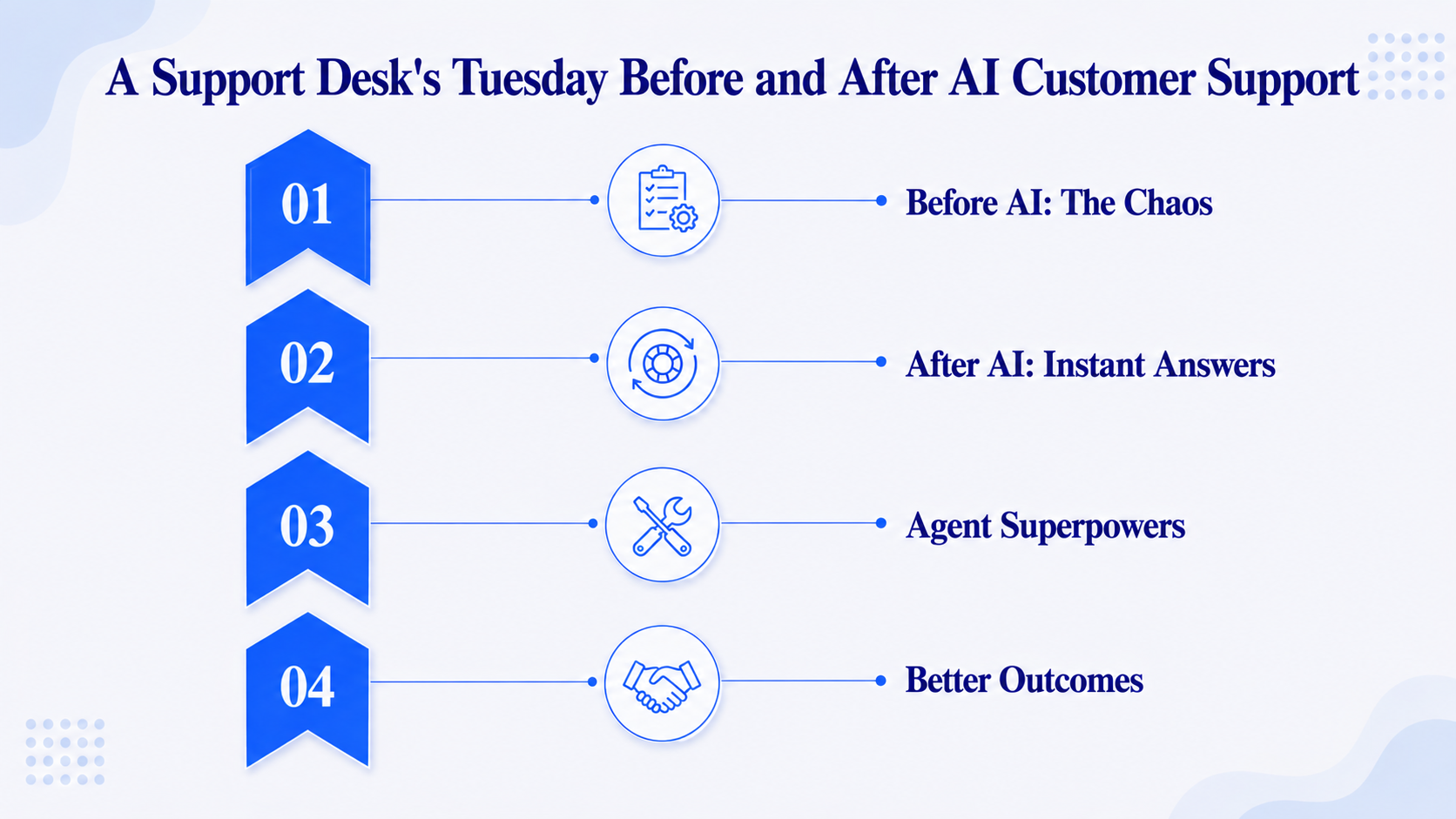
Picture a support desk in Pune fielding order-status calls while also replying to email tickets, with the phone line treated as the channel nobody has time to properly staff. A caller asking where their order is waits on hold behind two others, and more than a few just hang up and message a competitor instead, taking their order with them. The desk staff know the phone is losing customers, but between the ticket queue and the calls already in progress, nobody has a spare minute to fix it, and the problem just repeats itself the following Tuesday. Switching that phone line to AI customer support means the same caller gets an answer immediately, while the desk keeps working through the email backlog instead of splitting attention across both, and the following Tuesday looks nothing like the one before it. Nobody at the desk notices the technology; they notice that the phone stops being the thing everyone dreads answering.
Conclusion
AI customer support only proves itself on the channel your customers actually use, and for most Indian businesses that channel is still the phone rather than a chat widget. Ai customer service measured by chat response times tells you nothing about whether a caller's issue got resolved, and customer service ai priced per seat rarely reflects what a call actually costs to close. Language depth, TRAI-compliant follow-ups, and per-second pricing decide whether ai for customer service works here, not a benchmark built for typing. 9278.io treats all three as defaults rather than upgrades, built specifically for Indian call volume from the start, with 10+ Indian languages and per-second billing already baked into every plan. Test any AI customer support platform against your own real calls for a week before trusting a chat-based benchmark to predict how it performs on the phone, and let the transcripts decide rather than a metric borrowed from a different channel. The right AI customer support setup for your call volume usually becomes obvious once you see it handle a genuinely unscripted conversation instead of a demo script.
Ready to see it on your own calls?
9278.io answers every call in the caller's own language, with TRAI-compliant, per-second billed calling built for Indian businesses.
Start free trial