

- The phrase "virtual receptionist" covers an auto-attendant, a remote human team and an AI agent — three unrelated products.
- An auto attendant routes calls but cannot answer a single question a caller asks.
- Overseas human services usually work in English and in their own time zone, which is the main fit problem in India.
- You can forward your existing number instead of replacing it, so nothing on your signage changes.
A virtual receptionist is any service that answers your business calls without occupying a desk in your office, and this guide separates the three very different products sold under that one label. It matters because the phrase hides an enormous range: one option is a keypad menu bundled free with your phone plan, another is a trained human in a different time zone billing by the minute, and the gap between them decides whether your 9 PM caller reaches anyone at all. You will learn what each type genuinely does, what each costs an Indian business in rupees, where overseas services quietly fail on Indian calls, and how to switch without giving up the number on your signage. Choose from the wrong category and you will pay for a receptionist who cannot answer a single question about your business.
Three Products, One Name: Decoding "Virtual Receptionist"
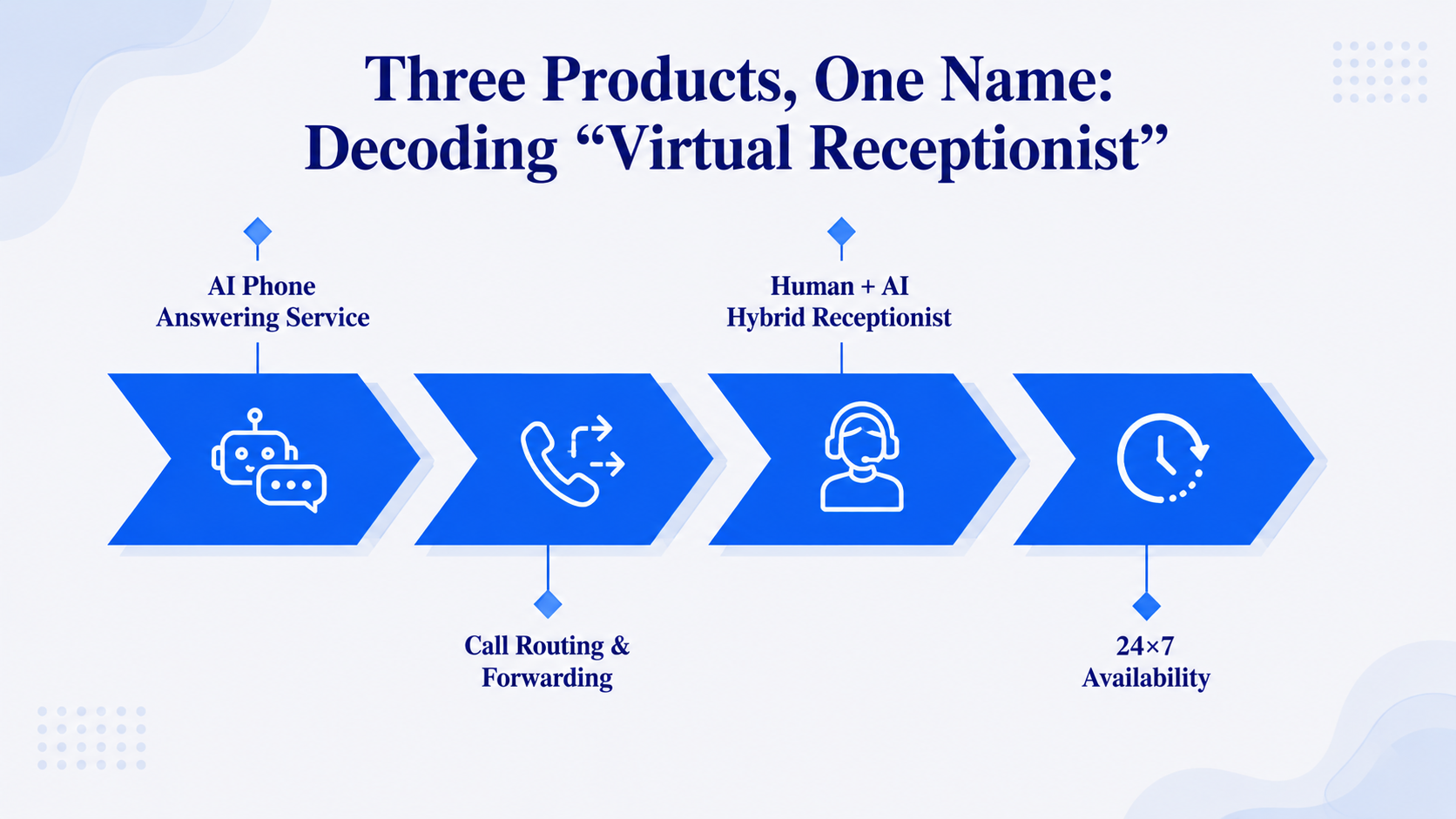
Vendors use the term loosely because it sells, so buyers compare prices across products that do different jobs. Before comparing anything, work out which of the three you are actually looking at. The quickest test is to ask what happens when a caller asks an unscripted question.
That single question separates them cleanly. One will play a menu, one will put a person on the line, and one will answer directly. Each is a legitimate choice for a different business, and knowing which virtual receptionist you are buying is most of the decision.
The automated menu
Press one for sales, two for support. It routes calls efficiently and costs almost nothing, but it cannot answer questions, and callers who do not fit a menu option simply hang up. It is the cheapest virtual receptionist available and comfortably the least capable.
The remote human team
Trained people answer as your company from another office, often another country. They handle nuance well and cost the most, usually billed per minute or per call with a monthly minimum.
The AI agent
Software holds the conversation, answers from what you have taught it, and books or logs the outcome. It handles many calls at once and does not keep office hours, which is where an AI receptionist pulls ahead for after-hours volume.
Can a Remote Receptionist Handle a Caller Who Switches to Marathi?
This is the question that decides most Indian buying decisions, and almost no global comparison page addresses it. A remote receptionist team staffed in Manila or Ohio answers beautifully in English and stops dead when your caller opens in Marathi, Tamil or Hinglish. That is not a criticism of the people, just a mismatch between who they hired and who calls you.
Time zones compound it. A service built around US business hours is asleep during your evening rush, which is exactly when salaried Indian customers make enquiries. An online receptionist marketed as "24/7" often means a thinner overnight shift, so ask specifically who answers a Sunday evening call from Nagpur and in which language. A virtual receptionist that cannot reply in your caller's language is not cheaper, only quieter.
What Each Type Actually Costs an Indian Business
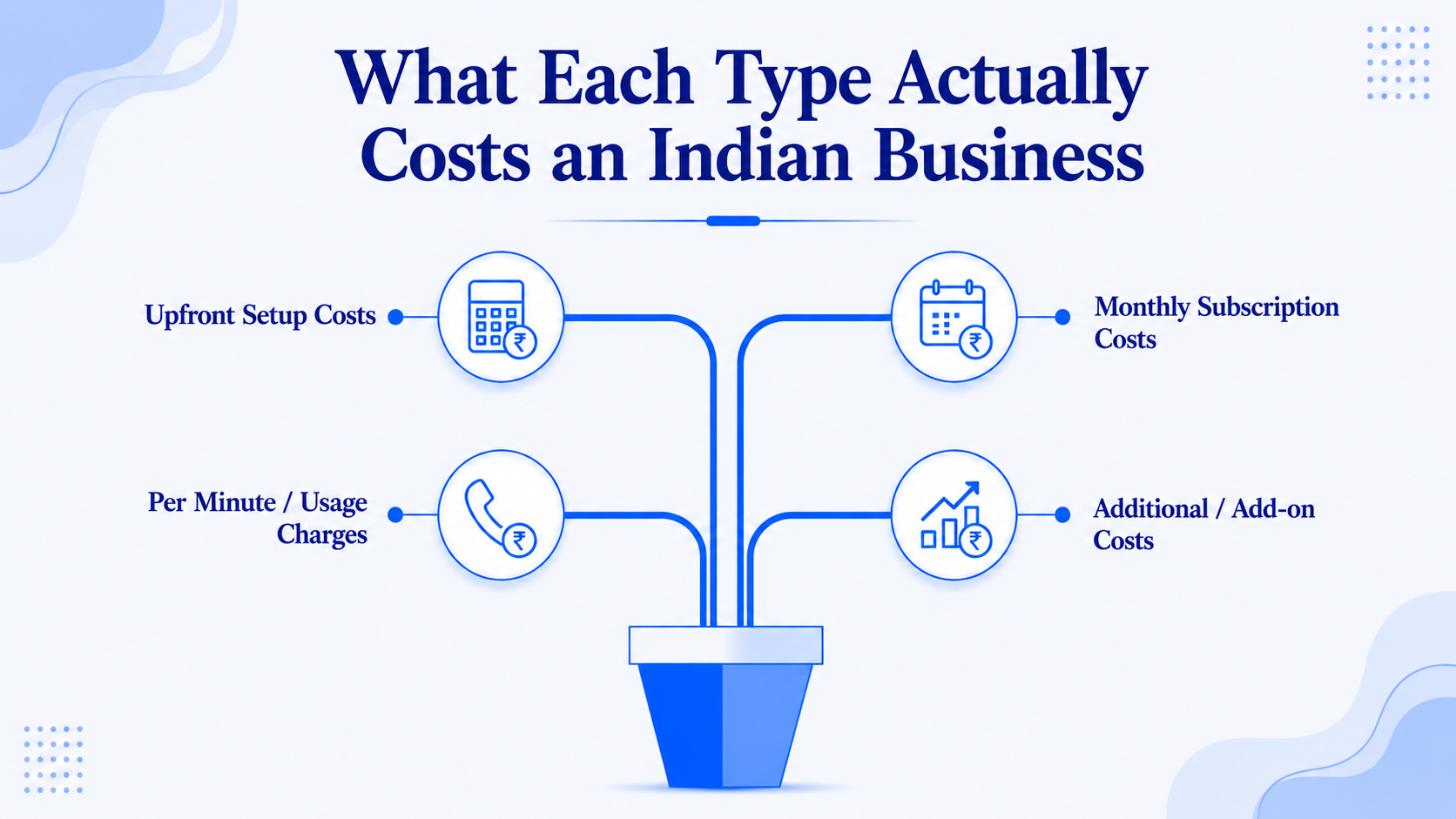
Pricing is where the three options stop looking comparable. Compare them on cost per answered call rather than on the monthly headline, because the billing models are not alike. Our pricing breakdown works through the arithmetic in more detail.
Watch what is excluded rather than what is listed. Overage rates, number rental and minimum commitments decide the real bill, and a virtual receptionist billed per second rather than per rounded minute changes the total sharply. Platforms such as 9278.io publish those rates openly, which makes the comparison quicker.
- Auto attendant. Usually bundled free or near-free with a business phone plan, because it is a routing feature rather than a service.
- Overseas human service. Typically billed per minute or per call with a monthly minimum, and priced in dollars, which makes it the most expensive option by a wide margin for Indian volumes.
- India-first AI plans. Start around ₹2,999 a month for two agents and 250 included minutes, with higher tiers lowering the effective per-minute rate.
- Your phone number. Budget roughly ₹400 a month for an Indian number, whichever option you choose.
- The rounding trap. Per-second billing matters more than the advertised rate, because answering produces many very short calls.
A Day in the Life: Where a Virtual Receptionist Earns Its Fee
Picture an ordinary Tuesday at a dental clinic in Indore. The front desk is checking in a patient, two lines ring at once, and a third caller wants to know whether the clinic is open on Saturday. Nobody is doing anything wrong; there are simply more calls than hands.
A virtual receptionist takes the overflow rather than replacing the person at the desk. It answers the Saturday question instantly, books the caller who wants an appointment, and takes a number from the one who needs the dentist personally. The staff member keeps working with the patient in front of her, and none of those three callers hears a busy tone or rings a competitor instead. Overflow rather than replacement is the honest case here, which is why 9278.io positions agents alongside staff instead of in place of them.
The Mistake of Buying a Digital Assistant When You Needed a Receptionist
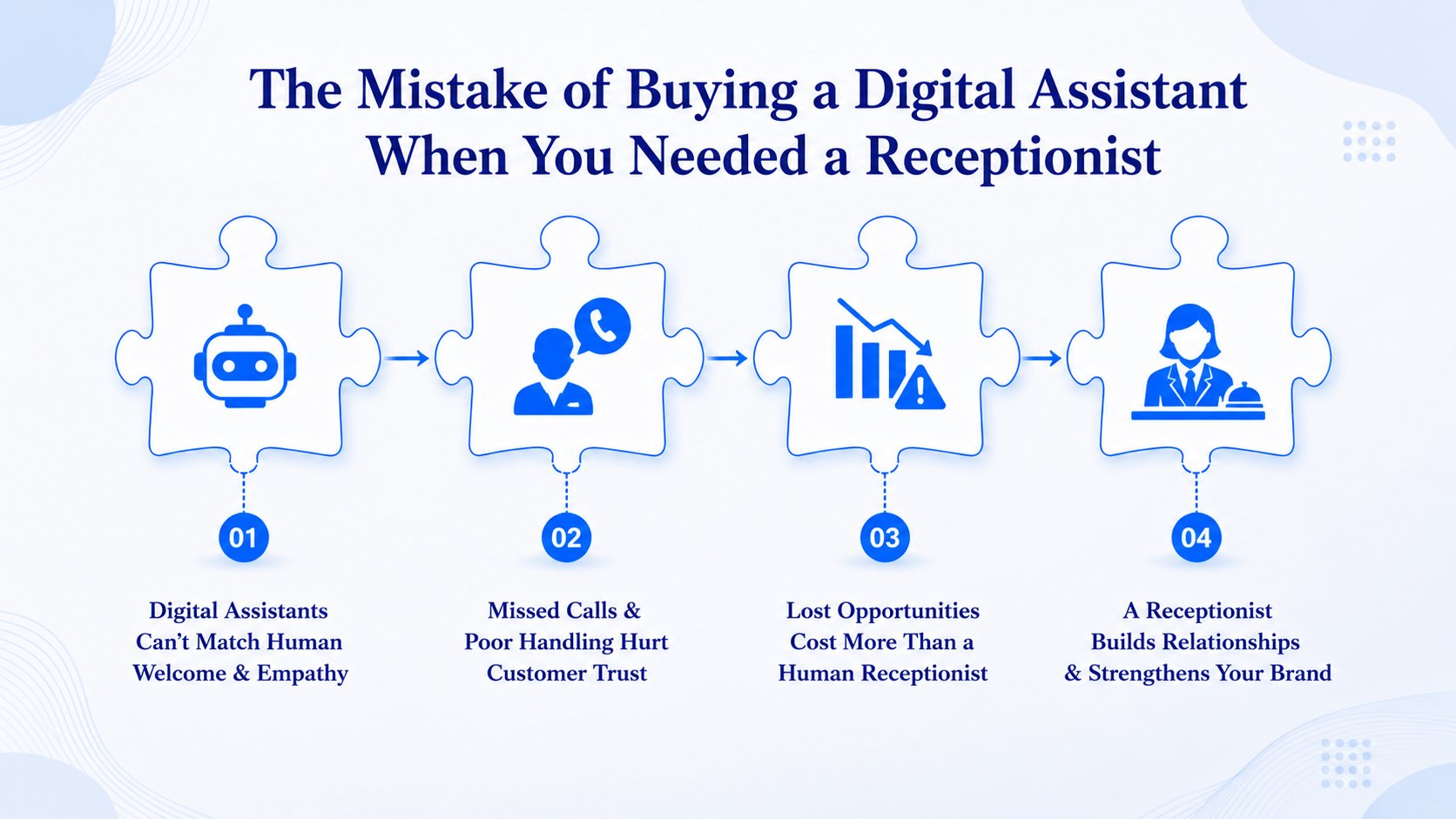
The most common purchase error is category confusion. A digital assistant that manages calendars, drafts emails and organises tasks is genuinely useful, and it will not answer your phone. Businesses buy one, discover calls still go unanswered, and conclude the whole category failed them. What they actually needed was a virtual receptionist, which is a different purchase entirely.
The same confusion runs the other way with menus. An auto attendant is a routing tool descended from IVR systems, not a receptionist, and no amount of configuration will make it answer a question it was never designed to hear. Decide first whether you need routing, admin help, or an actual conversation.
Test for routing
If every caller already knows which department they want, a menu is enough and anything more is wasted spend.
Test for admin help
If your problem is a cluttered calendar rather than a ringing phone, a digital assistant is the right buy and a receptionist is not.
Test for conversation
If callers ask questions, need booking, or hang up when they hit a menu, only a human or AI virtual receptionist will solve it.
Setting Up a Virtual Receptionist Without Losing Your Existing Number
The fear that stops most owners is losing the number printed on their board, cards and Google listing. You do not have to give it up. Forwarding keeps everything exactly as it is and lets you test properly before announcing anything, which is why self-serve platforms such as 9278.io let you run this in an afternoon.
Nothing here is irreversible. If the virtual receptionist does not suit your callers, you switch the forwarding off and calls return to ringing your desk exactly as before.
- Keep your number. Forward it to the service rather than replacing it, so no listing or signage changes.
- Start after hours only. Route evening and Sunday calls first, where the current alternative is nobody answering.
- Write your real answers. Timings, prices, directions and policies, phrased the way your staff actually say them.
- Set the handover rule. Decide which callers go straight to a person, and name who receives them.
- Call it yourself. Test on a real mobile over your own network before any customer does.
- Read the first week. The questions it fumbled become your next round of edits.
Will Your Customers Notice the Difference?
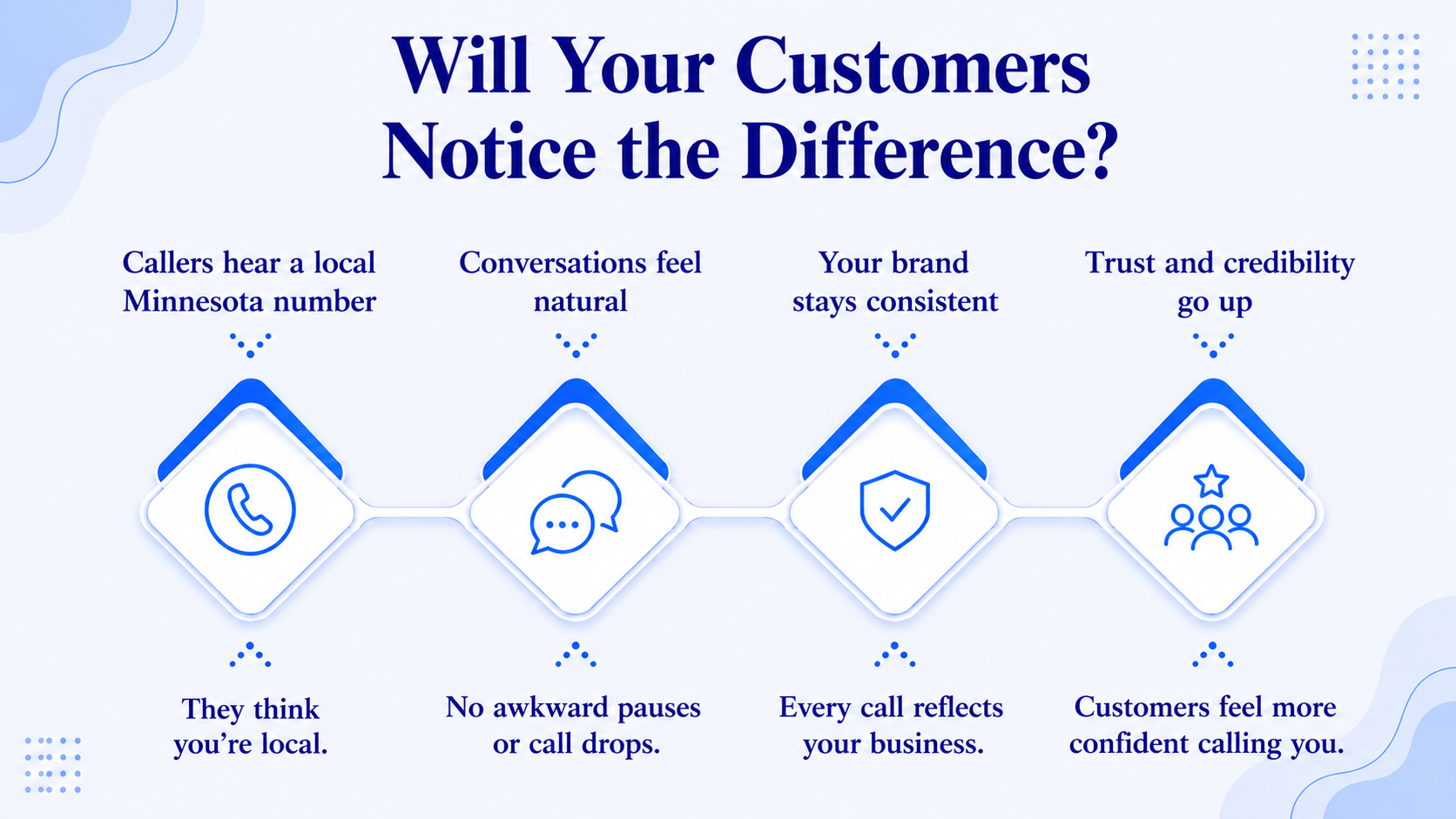
Most owners worry that callers will feel fobbed off. In practice, what people notice is whether their question got answered, not who answered it. Someone who rings at 8 PM, gets a clear reply about Saturday timings and books a slot rarely stops to interrogate what was on the other end of the line.
The complaints come from a different failure altogether. Callers object when they are trapped in a loop, made to repeat themselves, or told something that later turns out to be wrong. Get the answers right and hand over cleanly when you cannot, and the question of who picked up stops mattering to almost everyone.
Conclusion
A virtual receptionist is not one product, and most bad purchases come from comparing prices across three categories that do different jobs. An auto attendant routes, a remote human converses at a premium in English, and an AI agent answers in your customers' languages at Indian rates without keeping office hours. Work out which of the three your callers actually need, compare on cost per answered call rather than the monthly figure, and check who picks up on a Sunday evening before you sign. Platforms like 9278.io are self-serve and billed per second, so you can forward your existing number, run a week of real evening calls, and judge the result on your own transcripts. Answer the calls you are currently losing, and the right category will be obvious within days.
Ready to see it on your own calls?
9278.io answers every call in the caller's own language, with TRAI-compliant, per-second billed calling built for Indian businesses.
Start free trial