
- Text-to-speech does three jobs before any sound exists: it normalises text, plans how it should sound, then generates audio.
- Pronunciation of Indian names and localities is a dictionary problem, not a model-quality problem.
- Rupee amounts break by default because most systems group numbers the Western way.
- On a live call, the first audio needs to arrive in roughly 300 milliseconds to feel natural.
Text-to-speech is the technology that turns written words into a spoken voice, and this guide covers what happens between the sentence and the sound. It matters because a caller decides in the first few seconds whether they are talking to a real business or a machine reading a script, and a mispronounced name or a badly read amount ends that call early. You will learn how a voice is built, why Indian names and lakh-crore figures break most systems, how recorded prompts differ from live synthesis, and what latency to insist on. Most articles stop at making an audio file; this one deals with a voice that has to perform live, on an Indian phone line, without a second take.
From Written Line to Spoken Sentence: What Happens in Between
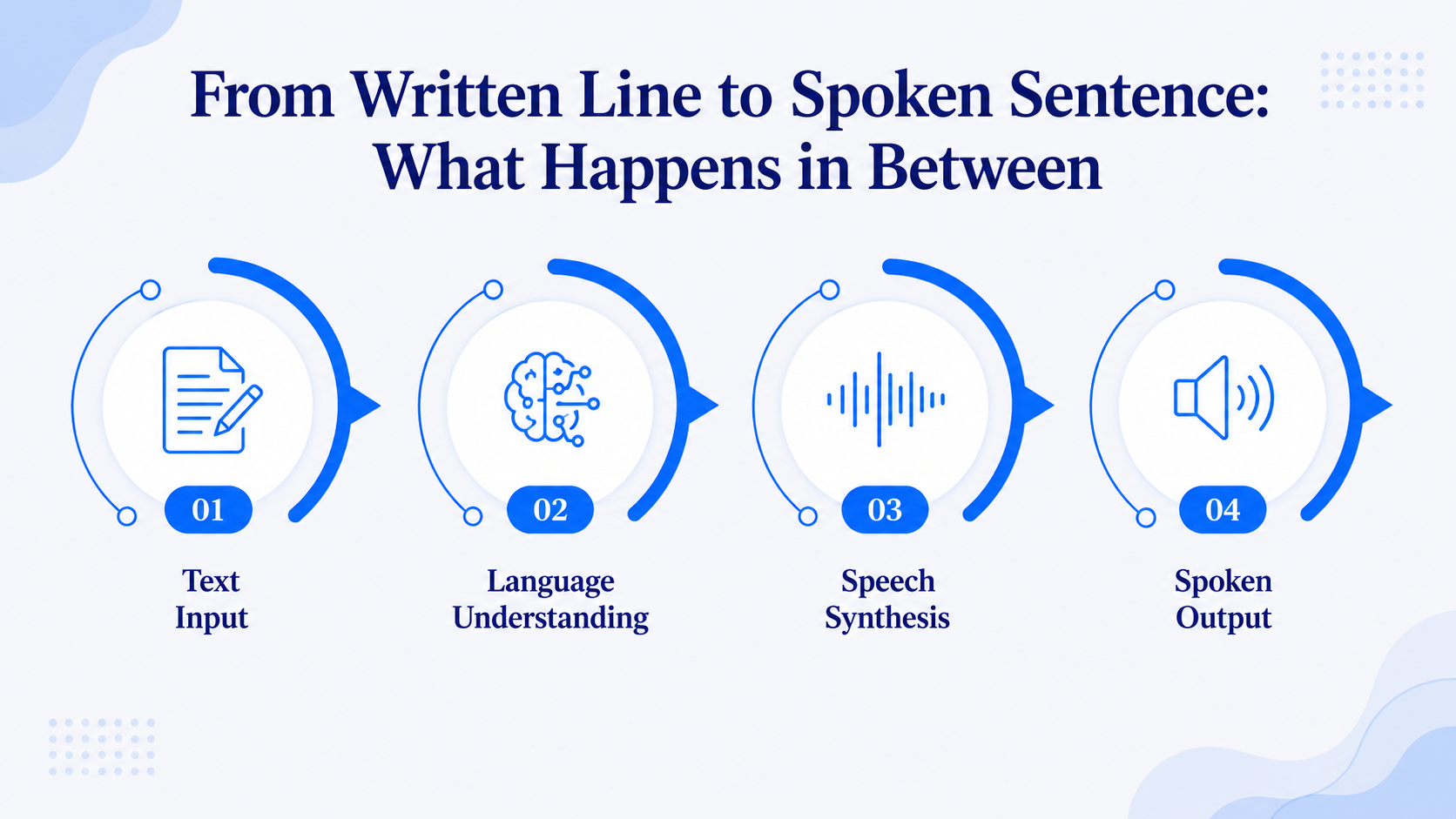
A text-to-speech engine never reads letters aloud. It rewrites the sentence into something speakable, decides how that sentence should be delivered, and only then produces sound. Each stage introduces its own kind of error, which is why a voice can sound flawless on one sentence and wrong on the next.
Most text-to-speech failures on Indian calls trace back to that first stage. The voice sounds fine; it simply said the wrong words, because nobody told it how your locality names and rupee figures should be expanded.
Rewriting the text
Numbers, abbreviations and symbols get expanded into words first. "Dr." becomes "Doctor," and "₹2,999" has to become a spoken amount. Get this wrong and the voice quality no longer matters.
Planning the delivery
The system marks where the stress falls, where the pauses go, and whether the sentence rises or drops at the end. This is what separates a question from a statement, and a warm line from a flat one.
Producing the audio
A neural model turns that plan into a waveform. Modern voice synthesis does this in one pass rather than stitching together recorded fragments, which is the main reason today's voices no longer sound clipped.
Why Do AI Voices Still Stumble on Indian Names?
An engine pronounces an unfamiliar word by guessing from its spelling, using rules learned mostly from English. That guess works for "Smith" and fails for "Kanchipuram." The same weakness runs in the other direction too, which our guide to speech-to-text covers from the listening side.
None of this reflects badly on the model. A text-to-speech engine that handles American English perfectly has simply never met your customer list.
- Regional names. Personal and place names outside the training data get sounded out letter by letter.
- Silent and doubled letters. Spellings like "Jharkhand" or "Chhattisgarh" rarely map cleanly onto English pronunciation rules.
- Your own vocabulary. Product names, scheme names and housing societies are unique to your business and unknown to any general model.
- Mixed scripts. A Hindi sentence with an English brand name inside it forces the voice to switch accent mid-phrase.
- The fix is a list, not a bigger model. A custom pronunciation dictionary solves most of this in an afternoon.
Lakhs, Crores, and the Numbers Every Voice Reads Wrong
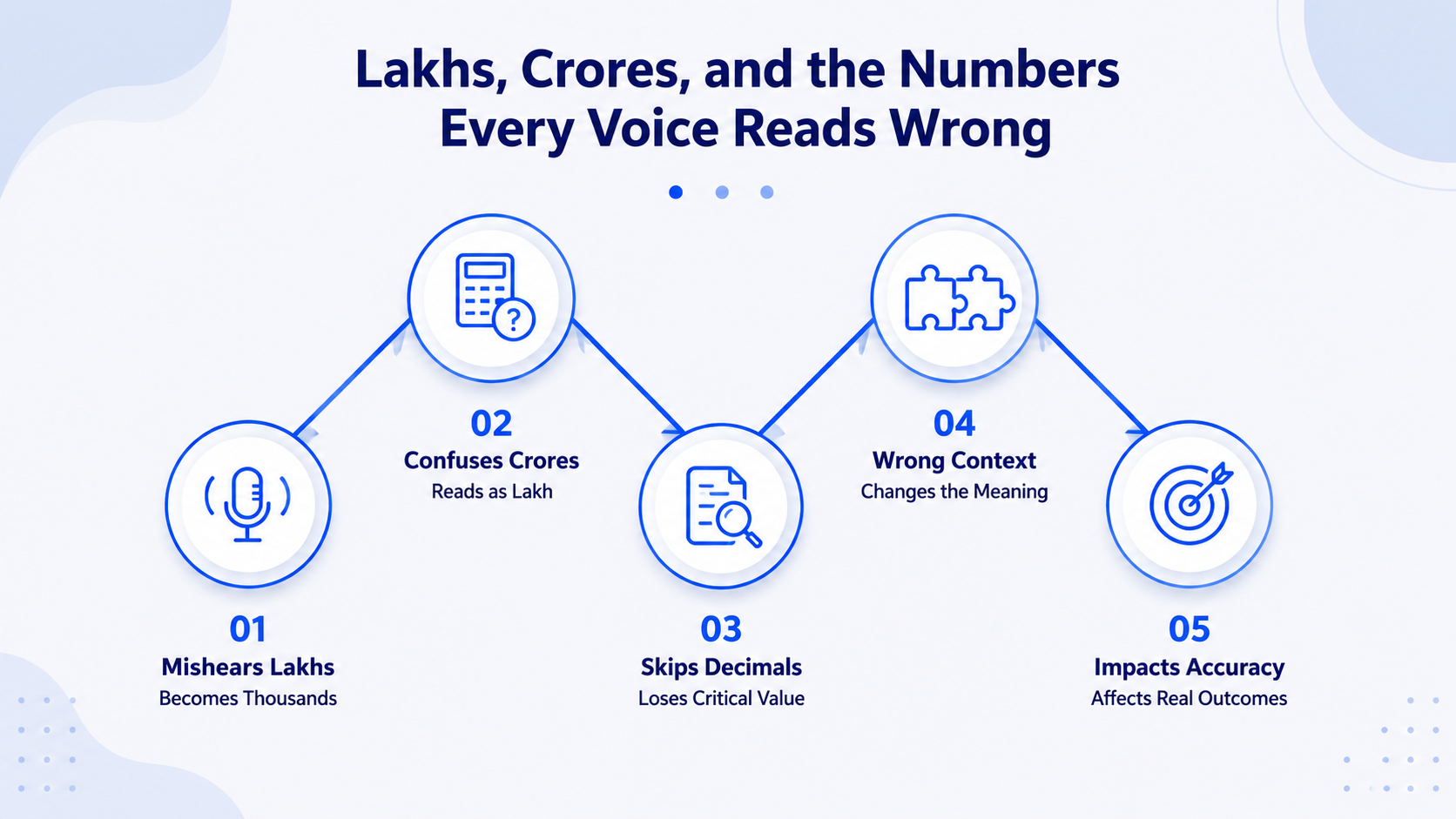
Ask a default text-to-speech system to read 250000 and it will almost always say "two hundred fifty thousand." Your caller in Nagpur is waiting to hear "two lakh fifty thousand." The words are technically correct and practically useless, because the listener has to stop and convert while the agent keeps talking.
The same trap catches phone numbers read as one long figure instead of digit groups, dates spoken in American order, and EMI amounts rounded into something the customer never agreed to. None of this is a limitation of speech generation itself — it is a formatting decision made before the audio is produced, and it is fixable. Voice agents that handle Indian conversations well, such as those covered in our guide to Hindi voice agents, treat number formatting as a first-class setting rather than an afterthought.
Recorded Prompts vs Live Text-to-Speech: What Each One Costs You
Older phone systems play recorded audio files. A voice agent generates the sentence as it goes. Both have a place, and picking the wrong one is expensive in different ways.
For most Indian businesses the answer is both. Keep a handful of recordings for the lines that never change, and let text-to-speech handle everything that depends on who is calling and why. Platforms such as 9278.io ship both inside the same agent, so the choice is made per sentence rather than per system.
Where recordings still win
Fixed lines that never change — a greeting, a legal disclaimer, a hold message — are worth recording once. The audio is predictable and costs nothing per call.
Where recordings fall apart
The moment a sentence contains a caller's name, an order number or a balance, recordings cannot help. Stitching fragments together produces that unmistakable jumpy IVR sound.
Where live synthesis earns its keep
Live text-to-speech handles sentences nobody scripted, which is the entire point of a conversation. The cost is latency, and that is the trade-off worth understanding next.
The First 300 Milliseconds Decide If the Caller Stays
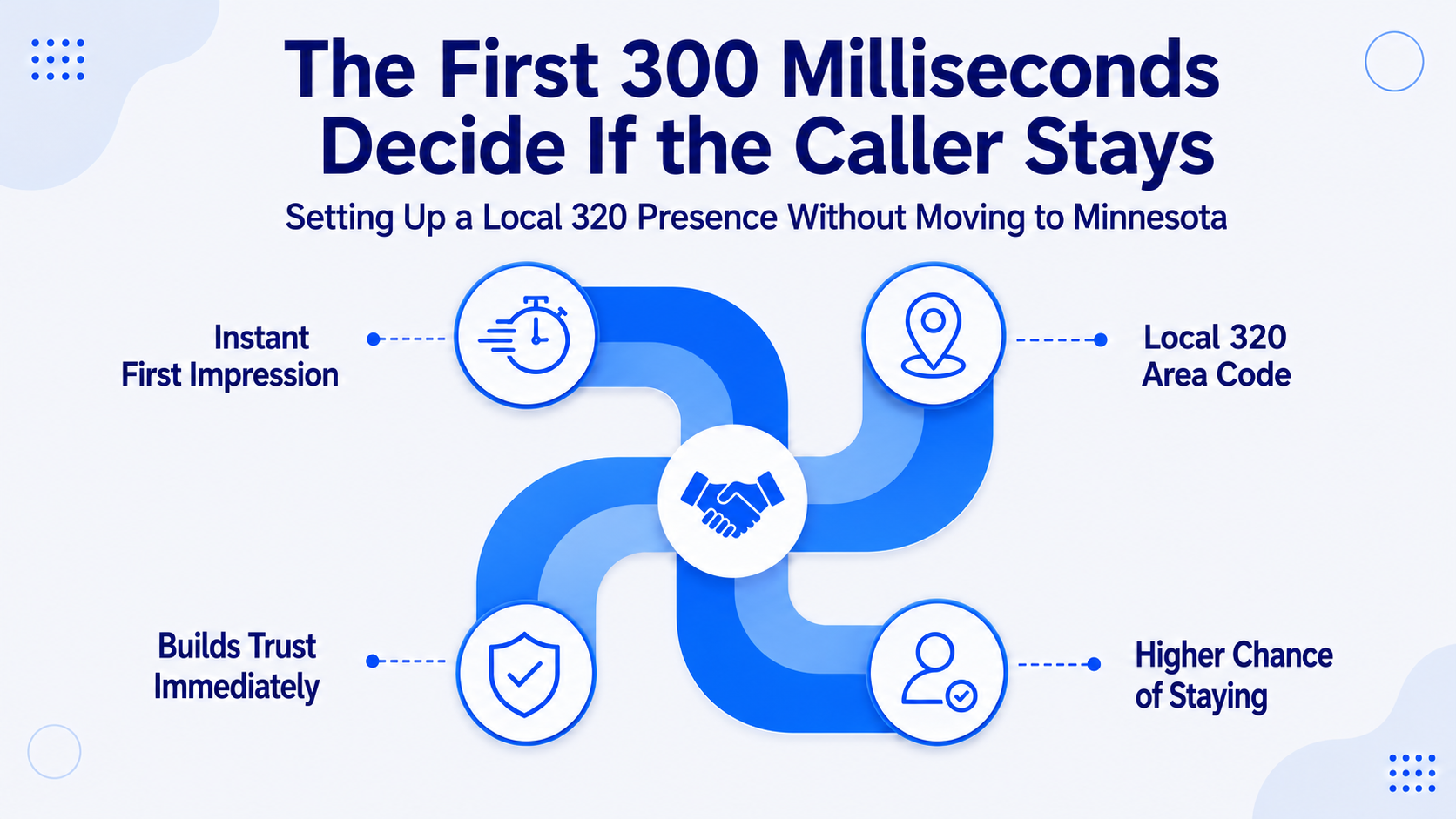
People expect a reply in about a third of a second. Past that, callers assume the line dropped, repeat themselves, or talk over the answer just as it begins. For text-to-speech the number that matters is time to first audio — not how long the full sentence takes to generate, but how quickly the first syllable reaches the caller's ear.
That budget gets spent on network travel, model processing and audio buffering. A request routed from Bengaluru to a North American data centre can burn most of it before any speech generation starts, which is why infrastructure inside India makes such a visible difference. Platforms like 9278.io run sub-300ms responses from Mumbai and Hyderabad over WebRTC audio, and streaming the audio out in chunks rather than waiting for the whole sentence is what keeps the reply inside that window.
The Myth That a Human-Sounding Voice Needs a Human Recording
For years the honest advice was to hire a voice artist, because synthetic voices gave themselves away in a sentence. That gap has closed far enough that most callers no longer notice, and the reasons are worth knowing before you pay for studio time you may not need.
The commercial case matters too, because studio recording locks you into a script. Every new offer, price change or language means booking the artist again, while text-to-speech built on modern voice synthesis lets you edit a sentence and hear it read back immediately.
What actually changed
Older systems assembled speech from recorded pieces, so the joins were audible. Neural speech synthesis generates the waveform directly, which removed the seams that used to give the game away.
What still gives it away
Not the voice itself, but the details around it: a mangled name, a wrongly grouped number, a pause in the wrong place, or a reply that arrives a beat too late. Fix those four and a synthetic voice stops announcing itself.
Choosing a Text-to-Speech Voice Your Customers Will Trust

Voice choice is usually treated as a branding decision and judged in a quiet room on good speakers. Your callers will hear it compressed, on a mobile, in traffic. Test any AI voice the way it will actually be heard, and run your own sentences through it rather than the vendor's demo script.
A good text-to-speech setup should also let you fix whatever you find. Custom pronunciations, number formatting and voice selection ought to be settings you control yourself, not a support ticket. Platforms like 9278.io keep them in the dashboard.
- Test on a real call. Judge the voice over an actual phone line, not a laptop preview.
- Use your own words. Feed it your customer names, localities and product names, not a generic paragraph.
- Check the numbers. Have it read rupee amounts, dates and phone numbers before anything else.
- Listen for the switch. A voice that keeps its accent when English words appear mid-sentence sounds local; one that flips sounds imported.
- Time the first syllable. Measure when audio starts, not when the sentence finishes.
- Confirm the calling side. Check that outbound activity stays within TRAI rules before you scale anything.
Conclusion
Text-to-speech has stopped being the weak link in a phone conversation, and the remaining problems are mostly ones you can fix yourself. Pronunciation is a dictionary you can extend, number formatting is a setting you can correct, and latency is an infrastructure question you can ask before signing anything. What separates a voice that sounds local from one that sounds imported is rarely the model — it is whether someone bothered to teach it your names, your amounts and your languages. The quickest way to find out where you stand is to write down ten sentences your business actually says on calls, complete with names and figures, and listen to any system read them aloud. Platforms like 9278.io let you test that on real traffic with per-second billing, so hearing the answer costs you an afternoon rather than a contract.
Ready to see it on your own calls?
9278.io answers every call in the caller's own language, with TRAI-compliant, per-second billed calling built for Indian businesses.
Start free trial